


Listen to the article
In a tense Homeland Security hearing on Wednesday, lawmakers from both parties clashed over the root causes of recent violence against law enforcement officers, particularly those working for U.S. Immigration and Customs Enforcement (ICE).
The committee hearing, which was intended to examine safety concerns for service members across various agencies, quickly centered on the contentious public discourse surrounding ICE operations and the impact it may have on officer safety.
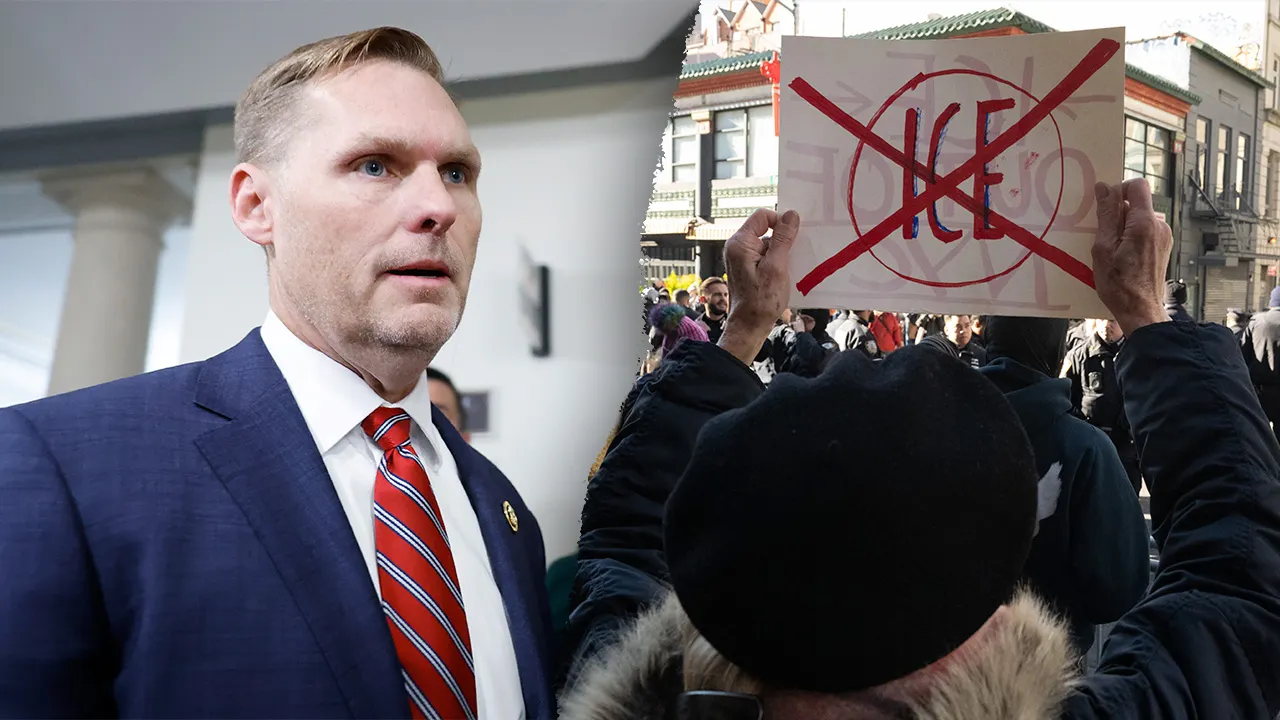
Representative Michael Guest (R-Miss.) expressed concern that Democratic criticism of ICE has fostered an environment that makes violence against officers more likely. “Some of it is rhetoric that we’ve seen come out of many people in the Democrat Party,” Guest stated. “There have been examples where we’ve had governors, mayors, members of Congress who have had very derogatory things to say about particularly ICE and federal law enforcement.”
Guest acknowledged that not all Democrats share these views but argued that public criticism creates “a very dangerous situation” for officers. He traced the problem back to the “defund the police” movement that gained prominence in recent years.
The hearing featured testimony from key law enforcement representatives, including Michael Hughes of the Federal Law Enforcement Officers Association, Patrick Yoes of the Fraternal Order of Police, Jonathan Thompson of the National Sheriffs’ Association, and Daniel Hodges, an officer with the D.C. Metropolitan Police Department.
Hughes reinforced Guest’s concerns about inflammatory rhetoric, making a distinction between legitimate criticism and what he sees as dangerous vilification. “Constructive criticism of law enforcement is healthy and accountability is essential. But what we are seeing today from some public figures, segments of the media, and even some elected officials is not accountability, it is vilification,” Hughes testified.
“When officers are depicted as political actors or adversaries rather than public servants, that rhetoric fuels hostility and makes already difficult jobs even more dangerous,” he added.
Democratic lawmakers, while uniformly condemning recent attacks on law enforcement—including the shooting of National Guard members in Washington, D.C.—shifted focus to operational tactics they believe contribute to the problem. They specifically questioned ICE’s use of masks and plainclothes operations that obscure agents’ identities as law enforcement.
Representative Lou Correa (D-Calif.) highlighted FBI memos documenting criminals impersonating ICE agents and recounted a dangerous incident from his district in Santa Ana. “Recently, a masked ICE agent—plainclothes—pointed a gun at a woman that he claimed was following and recording him. Local Santa Ana police officers responded to the call. You can imagine what almost happened,” Correa said, describing how close the situation came to a potential shootout between law enforcement agencies.
“This is not the way you instill trust in our society,” Correa emphasized.
Democratic concerns extended beyond operational tactics to accountability measures. Representative Dan Goldman (D-N.Y.) presented video evidence suggesting ICE had reinstated an agent who had allegedly assaulted a suspect. Goldman has introduced legislation called the No Secret Police Act that would prohibit federal law enforcement agents from concealing their identities.
“You’re creating a toxic environment that is naturally going to lead to more violence and more confrontation,” Goldman told Fox News Digital.
Representative Guest defended the covert nature of some ICE operations, arguing that such tactics are necessary for agent safety. “I believe that the reason that those agents are acting in that manner is because of the threats that they received, concerns for their personal safety, safety of their family,” Guest explained.
“We as taxpayers are asking them to do a very dangerous job, a job in which now they’ve been demonized by elected officials from the left,” he added.
The hearing underscores the deep political divide in approaches to law enforcement oversight, particularly regarding immigration enforcement. While Republicans focus on the impact of critical rhetoric on officer safety, Democrats emphasize that controversial operational tactics may be exacerbating tensions between communities and law enforcement agencies.
As incidents of violence against law enforcement continue to concern officials across the political spectrum, the debate over how to best protect officers while maintaining appropriate accountability measures remains unresolved.
Fact Checker
Verify the accuracy of this article using The Disinformation Commission analysis and real-time sources.

10 Comments
The concern over officer safety is understandable, but pinning it solely on political rhetoric feels like an oversimplification. There are complex societal issues at play that require thoughtful, bipartisan solutions – not just finger-pointing. A calmer, more constructive dialogue is needed.
I agree. Resorting to partisan blame games rarely leads to productive outcomes. All sides need to approach this with open minds and a genuine commitment to finding common ground that prioritizes public safety and justice.
Interesting discussion on the potential impact of political rhetoric on law enforcement safety. While criticism of government agencies can be legitimate, it’s crucial that it’s done in a constructive way that doesn’t put officers at risk. Finding common ground is key.
I agree, the discourse around these issues needs to be more measured and responsible. Inflammatory language that could incite violence is never acceptable, regardless of political affiliation.
This is a sensitive topic that deserves careful, impartial analysis. While political rhetoric can influence social dynamics, directly connecting it to potential violence against law enforcement seems like an oversimplification. A more nuanced, evidence-based discussion is needed.
Rhetoric and public discourse can certainly influence social dynamics, but directly linking it to potential violence against law enforcement seems like a stretch. There are likely many factors at play here. A more nuanced, evidence-based analysis would be helpful to understand the roots of these problems.
This is a complex topic with valid concerns on both sides. It’s troubling to see political divisions potentially putting public servants in harm’s way. Hopefully cooler heads can prevail and all parties can work to find solutions that protect law enforcement while also addressing legitimate grievances.
Well said. Maintaining civil, fact-based dialogue is crucial, even on highly charged issues. Resorting to inflammatory rhetoric or threats only serves to further inflame tensions and erode public trust.
The safety of our public servants is paramount, but placing blame solely on political rhetoric is an overly reductive approach. There are likely deep-seated societal issues at play that warrant a more holistic, bipartisan examination. Finding constructive solutions should be the priority.
Well said. Demonizing the ‘other side’ is rarely productive. A calm, fact-based dialogue that seeks to understand root causes and identify common ground is the best path forward on this complex issue.