


Listen to the article
As key climate activists soften their stance, Ocasio-Cortez remains silent on Green New Deal deadline
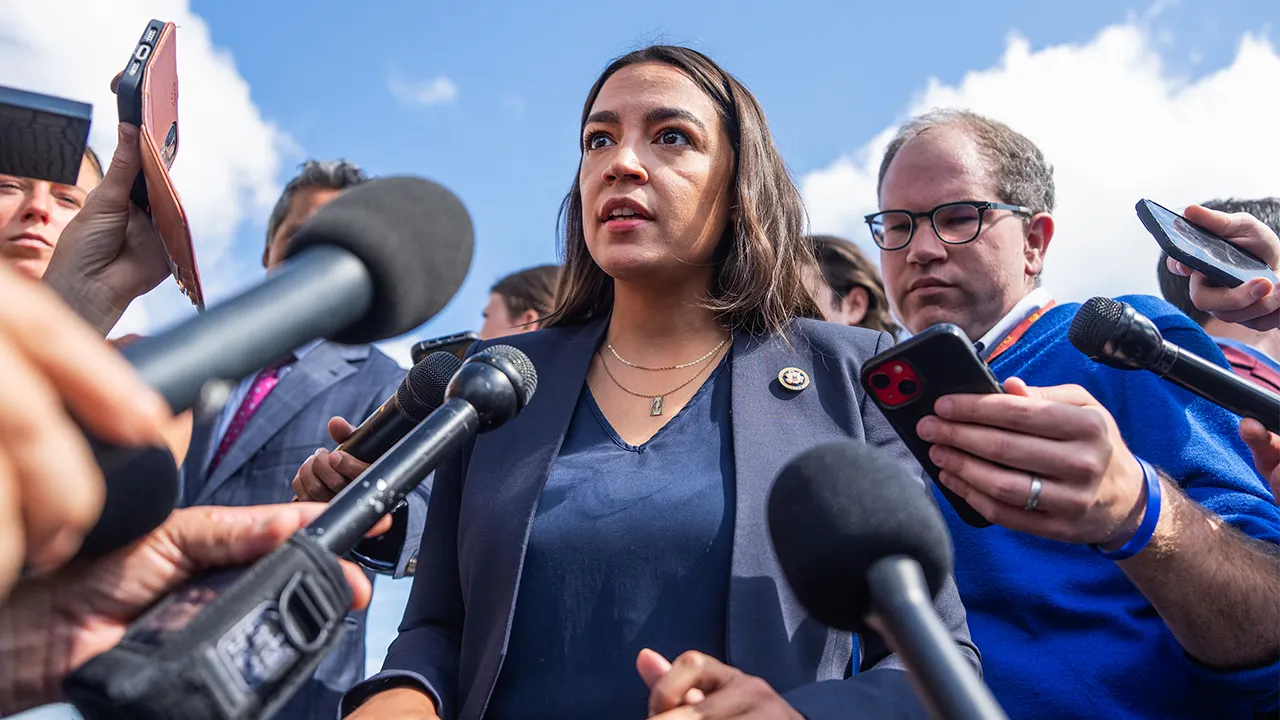
Representative Alexandria Ocasio-Cortez has maintained public silence on whether she still stands by the urgent 10-year climate action timeline she outlined when introducing the Green New Deal in 2019, even as prominent environmental advocates like Bill Gates shift their messaging on climate priorities.
When Ocasio-Cortez first unveiled the Green New Deal in Congress, she framed climate change as an existential threat requiring immediate and sweeping changes to U.S. energy policy within a decade. The proposal called for a rapid transition to renewable energy sources and significant infrastructure overhauls to reduce dependency on fossil fuels including coal, oil, and natural gas.
“Millennials and Gen Z are looking up, and we’re like: ‘The world is gonna end in 12 years if we don’t address climate change,'” Ocasio-Cortez said at the time, referencing a UN Intergovernmental Panel on Climate Change report that predicted the planet would reach a crucial warming threshold by 2030. She compared the climate challenge to “our World War II,” suggesting the financial costs should be secondary to the urgent need for action.
Six years after making these statements, Ocasio-Cortez has become one of the Democratic Party’s most recognizable figures, with speculation she could be a presidential contender in 2028. Despite her rising political profile, she did not respond to recent inquiries about whether she still believes in the timeline she previously emphasized.
The congresswoman’s silence comes at a time when global temperature data shows concerning trends. According to the World Meteorological Organization, 2024 was the warmest year on record globally, with the earth’s average temperature already rising by 2.79 degrees Fahrenheit — surpassing the 2.7-degree threshold mentioned in the reports Ocasio-Cortez cited, though without the catastrophic outcomes she had warned about.
While Ocasio-Cortez hasn’t publicly addressed her previous deadline rhetoric, she continues to advocate for climate-focused policies. On her official website, she highlights her role in securing the “biggest ever investment in climate change” — $369 billion in federal funding aimed at creating 9 million green jobs and achieving net zero carbon emissions by 2030. In March 2024, she joined Senator Bernie Sanders to reintroduce the “Green New Deal for Public Housing Act,” demonstrating her ongoing commitment to climate initiatives.
The congresswoman’s silence on her earlier timeline predictions stands in contrast to Bill Gates, who has recently modified his approach to climate advocacy. In an essay published in October, the Microsoft co-founder and philanthropist suggested resources should be balanced between climate mitigation and improving lives in warming regions of the world, particularly in poor countries.
“Although climate change will have serious consequences — particularly for people in the poorest countries — it will not lead to humanity’s demise,” Gates wrote, marking a notable shift from more alarmist rhetoric. “This is a chance to refocus on the metric that should count even more than emissions and temperature change: improving lives.”
Gates hasn’t abandoned climate concerns entirely. He emphasized that “every tenth of a degree of heating that we prevent is hugely beneficial because a stable climate makes it easier to improve people’s lives.” However, his foundation has increasingly directed its billions toward broader health care, education, and development initiatives worldwide.
The evolving messaging from climate advocates like Gates highlights a complex tension in environmental politics between maintaining urgency around climate action while acknowledging that apocalyptic predictions can undermine credibility when specific deadlines pass without the forecasted consequences.
For Ocasio-Cortez, who built significant political capital on her climate activism, the question remains whether she will address her previous timeline claims or recalibrate her messaging as her political influence continues to grow within the Democratic Party.
Fact Checker
Verify the accuracy of this article using The Disinformation Commission analysis and real-time sources.

30 Comments
If AISC keeps dropping, this becomes investable for me.
Good point. Watching costs and grades closely.
I like the balance sheet here—less leverage than peers.
Good point. Watching costs and grades closely.
Good point. Watching costs and grades closely.
Uranium names keep pushing higher—supply still tight into 2026.
Good point. Watching costs and grades closely.
Uranium names keep pushing higher—supply still tight into 2026.
Good point. Watching costs and grades closely.
Uranium names keep pushing higher—supply still tight into 2026.
The cost guidance is better than expected. If they deliver, the stock could rerate.
Good point. Watching costs and grades closely.
Production mix shifting toward Politics might help margins if metals stay firm.
Good point. Watching costs and grades closely.
Good point. Watching costs and grades closely.
I like the balance sheet here—less leverage than peers.
Exploration results look promising, but permitting will be the key risk.
Good point. Watching costs and grades closely.
Exploration results look promising, but permitting will be the key risk.
Good point. Watching costs and grades closely.
Good point. Watching costs and grades closely.
If AISC keeps dropping, this becomes investable for me.
Exploration results look promising, but permitting will be the key risk.
Good point. Watching costs and grades closely.
Good point. Watching costs and grades closely.
Uranium names keep pushing higher—supply still tight into 2026.
Good point. Watching costs and grades closely.
Exploration results look promising, but permitting will be the key risk.
Good point. Watching costs and grades closely.
Uranium names keep pushing higher—supply still tight into 2026.