


Listen to the article
President Trump’s approach to the Russia-Ukraine war mirrors his Israel-Gaza strategy, focusing on quick agreements with terms favoring one side while leaving critical details unresolved, according to officials familiar with the negotiations.
“You know what the deadline is to me? When it’s over,” Trump told reporters aboard Air Force One Tuesday, displaying the same direct style he employed in brokering the Israel-Hamas ceasefire.
The formula appeared successful in the Middle East, earning Trump a moment to claim victory from the podium of the Israeli parliament. Even during that address, he made clear that resolving Europe’s largest armed conflict since World War II was next on his priority list.
U.S. special envoy Steve Witkoff quickly moved to implement this approach, telling Russian President Vladimir Putin’s foreign policy adviser Yuri Ushakov in an October 14 phone call, “Maybe we set out like a 20-point peace proposal, just like we did in Gaza.” This conversation, later leaked to Bloomberg News, revealed the administration’s blueprint for negotiations.
The result was a 28-point plan heavily tilted toward Russian interests that alarmed European allies, who were not consulted. Trump initially demanded Ukraine accept it by November 27 – Thanksgiving in the U.S. – but has since softened his stance on that deadline.
“I thought (a Russia-Ukraine deal) would have been an easier one, but I think we’re making progress,” Trump acknowledged during the White House turkey pardon ceremony. Hours later, he downgraded the document’s status, saying it “was not a plan, just a concept.”
Meanwhile, Putin has shown little interest in compromise, launching waves of bombings on Ukraine even as American negotiators pushed for an end to hostilities.
Political analysts suggest Trump’s primary goal may not be lasting peace. “Trump’s approach emphasizes the proclamation of a ceasefire, not its observance,” wrote Mariia Zolkina, an analyst at the Kyiv-based Ilko Kucheriv Democratic Initiatives Foundation. “Donald Trump is not interested in whether the ceasefire will be sustainable.”
Both the Gaza and Ukraine proposals share key characteristics: they favor one side heavily, provide vague frameworks for reconstruction, establish “peace boards” headed by the president, and lack clear enforcement mechanisms.
“There’s a kind of naivete in believing that by intervening at that level, by imposing your will on something like this, that you will reach some form of long-term conclusion,” said Fabian Zuleeg, chief executive of the Brussels-based European Policy Centre think tank. He suggested both proposals reflect Trump’s personal interests: “In the end, the focus is solely on what Trump thinks he will get out of this in terms of reputation and money.”
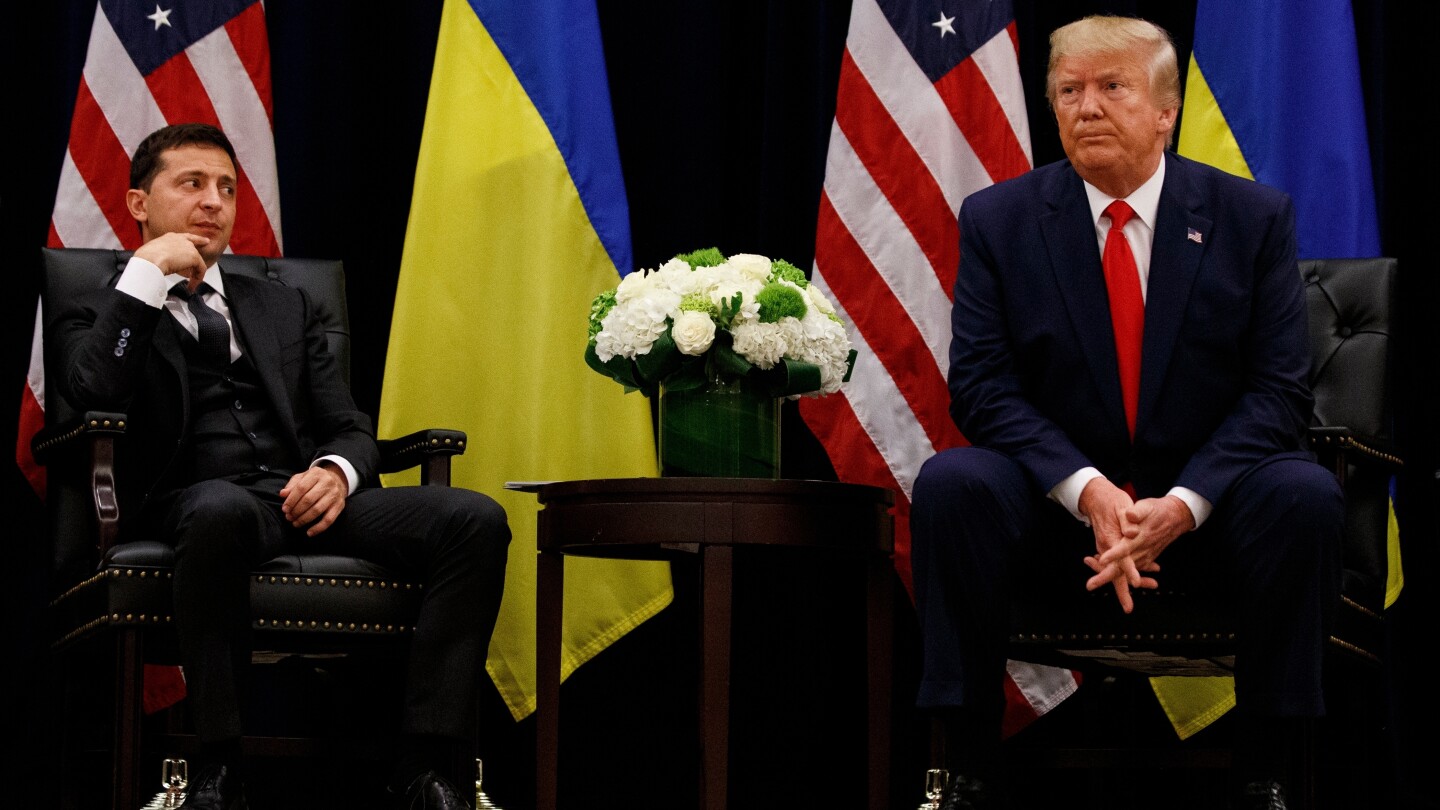
The differences between the two negotiations are significant. While regional powers supported the Gaza ceasefire, European leaders feel excluded from the Russia-Ukraine talks. The draft presented to Ukrainian President Volodymyr Zelenskyy heavily favors Russia, calling for Ukraine to surrender territory in the Donbas region that Russia doesn’t fully control, drastically reduce its military, and accept Russian oversight of NATO and EU expansion.
European officials worry Trump is sacrificing their security interests. “He appears perfectly ready to sacrifice Ukraine’s security and Europe’s in the process,” said Hannah Neumann, a German member of the European Parliament.
Trump is now sending envoys on “shuttle diplomacy” missions, with Witkoff planning to visit Moscow next week, possibly accompanied by Jared Kushner, who helped craft the Gaza plan. Army Secretary Dan Driscoll will meet with Ukrainian officials.
Unlike Israeli Prime Minister Netanyahu, who eventually yielded to Trump’s pressure for a ceasefire, Putin has remained unmoved despite Trump’s attempts at personal diplomacy, including a high-profile summit in Alaska where the Russian leader received red-carpet treatment.
A U.S. official defended the administration’s approach, arguing that the plan represents concessions from Putin because he would be giving up his claim that all of Ukraine should be part of Russia. The official added that understanding the Russian perspective is essential to reaching a deal, even if the administration doesn’t affirm Putin’s position.
As negotiations continue without breakthrough, Trump’s deadline has passed, and the conflict persists, raising questions about whether his deal-making approach can translate from the Middle East to Eastern Europe’s complex geopolitical landscape.
Fact Checker
Verify the accuracy of this article using The Disinformation Commission analysis and real-time sources.

14 Comments
Interesting approach by Trump, using the Gaza ceasefire model to try and resolve the Russia-Ukraine conflict. It will be crucial to address the critical details and not just focus on a quick agreement favoring one side. Hopefully a more balanced and sustainable solution can be found.
You raise a good point. A ceasefire alone is not enough – the long-term issues need to be addressed to achieve a lasting peace.
While Trump’s experience in brokering the Israel-Hamas ceasefire could offer some insights, the Russia-Ukraine conflict has very different underlying dynamics. A more nuanced and comprehensive strategy will be needed to resolve this crisis effectively.
Agreed. Trying to apply a one-size-fits-all solution is unlikely to work in a conflict as multifaceted as the Russia-Ukraine war.
The Russia-Ukraine war has far-reaching geopolitical implications, and a quick ceasefire agreement may not address the deeper issues. It will be important for the US to work closely with European allies to develop a more sustainable conflict resolution approach.
While Trump’s experience in brokering ceasefires may provide some insights, the Russia-Ukraine conflict requires a more nuanced and multilateral approach. Engaging with all parties, including European allies, to address the root causes will be crucial.
The Russia-Ukraine war is a complex geopolitical issue, and using a model from the Israel-Gaza conflict may not be the best approach. Careful diplomacy and addressing the unique dynamics of this situation will be crucial for any meaningful progress.
The Russia-Ukraine war is a complex geopolitical issue, and using a model from a different regional conflict may not be the best approach. Careful diplomacy and a comprehensive strategy tailored to the unique dynamics of this situation will be essential.
Agreed. A one-size-fits-all solution is unlikely to work, and a more nuanced, context-specific approach is needed.
It’s concerning to hear that the proposed 28-point peace plan was heavily tilted toward Russian interests and not developed in consultation with European allies. A truly balanced and inclusive negotiation process will be essential for any lasting solution.
Absolutely. Excluding key stakeholders and favoring one side’s interests is unlikely to lead to a durable resolution.
While Trump’s experience in brokering ceasefires could provide some insights, the Russia-Ukraine conflict requires a more comprehensive and multilateral approach. Engaging all stakeholders, including European allies, to address the root causes and achieve a sustainable solution will be essential.
Well said. A balanced and inclusive process is the best path forward in resolving this complex geopolitical crisis.
The proposal to use a 28-point plan similar to the Gaza ceasefire is concerning, as it seems to favor Russian interests and was not developed in consultation with European allies. A more balanced and inclusive negotiation process will be crucial for any lasting resolution.