


Listen to the article
Democratic Presidential Hopefuls Break Tradition with Early Campaign Signals
In a departure from political tradition, several Democratic figures eyeing the 2028 presidential race are openly acknowledging their ambitions rather than maintaining the customary veneer of disinterest that candidates typically adopt years before an election.
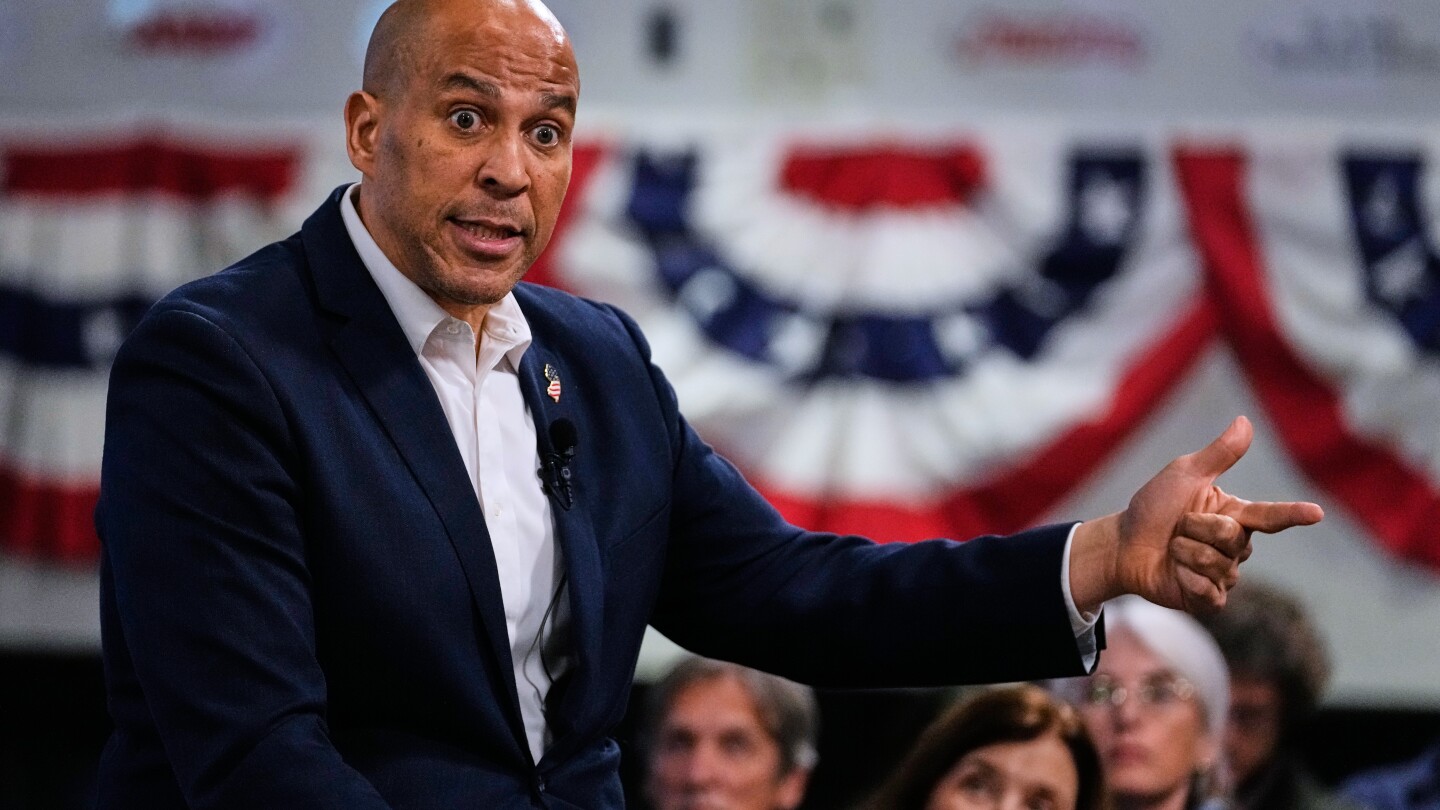
“Of course I’m thinking about it. I haven’t ruled it out,” New Jersey Sen. Cory Booker candidly told Fox News during a recent trip to early-voting New Hampshire, though he emphasized his immediate focus remains on his 2026 Senate reelection bid.
California Gov. Gavin Newsom has been similarly forthright when questioned about his presidential aspirations. “I’d be lying otherwise. I’d just be lying and I can’t do that,” Newsom told CBS when asked whether he would consider a run after next year’s midterms.
This transparent approach marks a significant shift from the long-standing political playbook where potential candidates would crisscross the country ostensibly to support other politicians while carefully deflecting questions about their own ambitions.
The emerging 2028 Democratic primary landscape stands in stark contrast to the Republican side, where potential candidates maintain lower profiles amid expectations that President Donald Trump will play kingmaker in selecting his successor.
“Old rules just don’t apply to anything anymore,” said Jess O’Connell, a Democratic strategist who advised Pete Buttigieg’s 2020 presidential campaign. “You’ve got to be out there every single day fighting and sharing your vision. The more runway they have to talk to people in this moment and to communicate about meeting the needs of the future, the better.”
Political observers attribute this shift to several factors, including the wide-open nature of the Democratic field following President Biden’s decision not to seek reelection. With no clear front-runner or party standard-bearer, potential candidates are jockeying early for visibility in what promises to be a crowded race.
“I think the Democratic primary is going to be the longest primary of our life. It’s hard to recall a field that is this wide open,” said Alex Conant, a veteran of Republican presidential campaigns for Marco Rubio and Tim Pawlenty. “The more crowded it is, the more important it is to start early.”
The Trump presidency has also reshaped voter expectations around political communication, placing a premium on authenticity over polished, evasive responses. “One of the takeaways from Trump is that people want authenticity,” Conant noted. “Voters are rejecting candidates who sound like politicians, so the rhetorical tricks that politicians have used for decades to avoid answering questions now just irritates voters.”
Not all potential candidates are embracing this open approach, however. Illinois Gov. JB Pritzker recently dodged questions about his timeline during an interview with journalist Kara Swisher, who responded with “Blah, blah” as he tried to pivot to discussing the Democratic bench.
Pennsylvania Gov. Josh Shapiro has been similarly circumspect, refusing to acknowledge White House ambitions despite widespread speculation. During a recent appearance on “The Breakfast Club” podcast, however, Shapiro hinted at his continued political aspirations after reflecting on an arson attack at his official residence: “You can’t walk away now, with everything that’s on the line… This is not a time to quit.”
Shapiro’s perceived national ambitions have already become a target for potential GOP gubernatorial rival Stacy Garrity. “We need somebody that is more interested in Pennsylvania and not on Pennsylvania Avenue,” Garrity said recently on a conservative Philadelphia radio program.
This highlights one of the primary risks for sitting governors and senators with presidential aspirations – the perception that they’re more focused on their next job than their current one. Mike DuHaime, a longtime GOP strategist, pointed to 2013 when Chris Christie’s opponent in the New Jersey governor’s race used Christie’s national profile as a campaign issue.
Beyond Kentucky’s Andy Beshear, former Chicago Mayor Rahm Emanuel, and Hawaii Gov. Josh Green have also indicated they’re considering presidential bids, creating an unusually early and crowded field of potential candidates.
O’Connell, the Democratic strategist, noted that many prospective candidates must balance their day jobs with national ambitions. While confronting Trump might generate headlines, it could have negative consequences for their constituents if the Republican president retaliates.
Her advice to 2028 hopefuls: “What I would advise anyone who wants to be president in 2028 is to roll up your sleeves and help.”
Fact Checker
Verify the accuracy of this article using The Disinformation Commission analysis and real-time sources.

14 Comments
I’m curious to see if this more transparent approach from potential 2028 candidates catches on with Republicans as well. It could mark a shift in how future presidential races are run on both sides of the aisle.
That’s a good point. If it proves effective, we could see a broader move toward more upfront campaigning, rather than the traditional coyness. It will be interesting to observe.
This early posturing could shake up the traditional primary process. It will be fascinating to see how it plays out, especially if more candidates join the fray sooner than expected.
Agreed. The typical election cycle timelines could get disrupted, which could have downstream effects on policy debates and the nomination process.
While the early posturing is intriguing, I hope the candidates don’t lose sight of the pressing issues facing the country in the nearer term. The 2028 race is still several years away.
Absolutely. The candidates should stay focused on their current roles and responsibilities rather than getting too caught up in future ambitions at this stage.
The mining and commodities sectors will surely be watching the 2028 race closely, given the role energy and natural resources policy could play. Transparency from candidates on their plans is probably appreciated.
Absolutely. With the transition to renewable energy and the demand for critical minerals, the next president’s stance on mining and extraction will be crucial.
As someone with an interest in the mining and energy sectors, I’ll be closely following how the 2028 candidates position themselves on issues like resource extraction, environmental regulations, and the green energy transition.
Same here. Those policy positions could have major implications for industries like oil, gas, and critical minerals. It’s an important area to watch.
It’s an interesting strategy shift, though I wonder if it could backfire and make candidates seem overeager. Time will tell if voters respond well to this more forthright approach.
That’s a fair point. Voters may see it as opportunistic or premature. Striking the right balance will be important for any candidate looking to get an early jump on 2028.
Interesting to see how potential 2028 Democratic candidates are being more upfront about their ambitions. It’s a shift from the usual coy playbook, though I suppose transparency has its merits.
I agree, it does seem like a departure from the traditional political script. Curious to see if this more open approach catches on with other aspiring candidates.