


Listen to the article
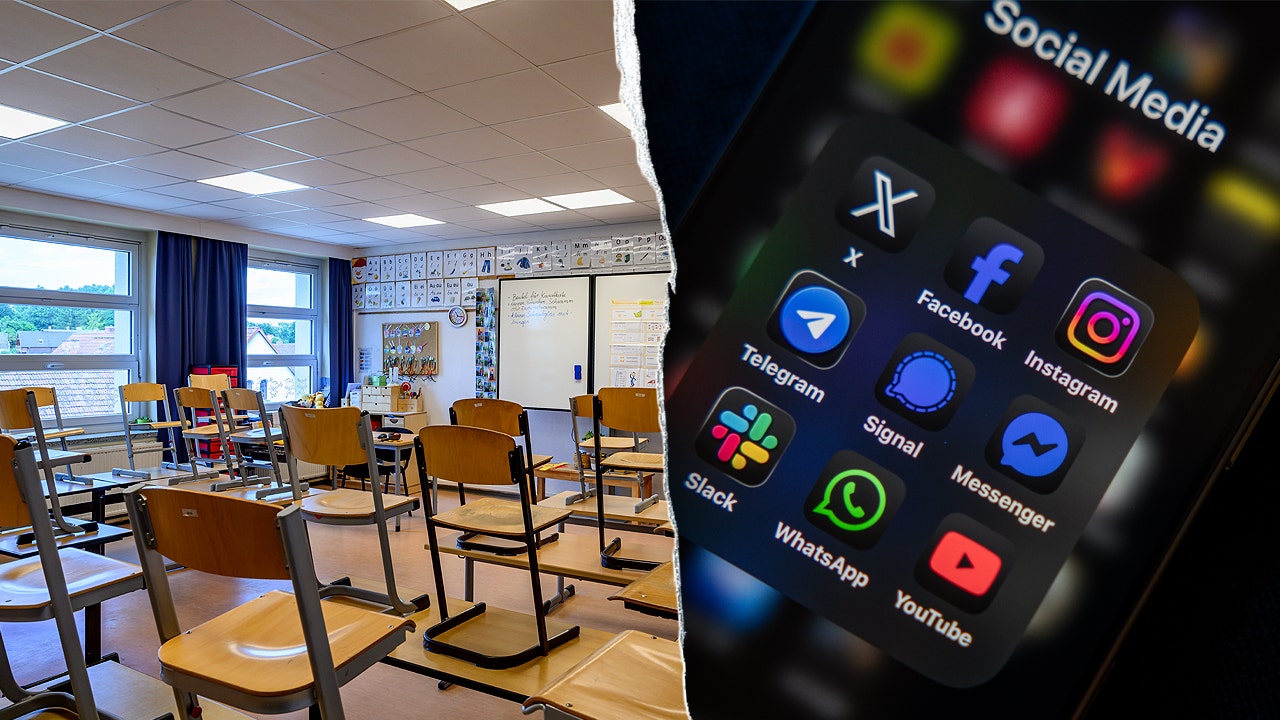
Nearly two-thirds of voters and parents support banning social media for children under 16 and removing cellphones from K-12 classrooms, according to a new Fox News poll, with Republicans showing the strongest backing for these measures.
The survey, based on interviews with 1,001 registered voters randomly selected from a national voter file, found that 64% of respondents favored banning social media for children under 16, while 35% opposed the measure. The level of support remained consistent among parents specifically, with 64% in favor and 36% opposed.
Support for the ban showed a notable partisan divide, with 73% of Republicans backing the restriction compared to 56% of Democrats.
When asked about banning cellphones in K-12 classrooms, overall support was even stronger at 69%, with 31% opposing such measures. Among parents specifically, 63% supported classroom phone bans. The partisan gap was more pronounced on this issue, with 81% of Republicans supporting classroom phone bans compared to 59% of Democrats.
The poll results come just one week after Australia implemented landmark social media regulations that prohibit anyone under 16 from holding social media accounts—now among the world’s strictest online safety measures. The Australian government’s Online Safety Amendment (Social Media Minimum Age) Act, which passed in November 2024, began enforcement on December 10, 2025.
“From Dec. 10, if you’re under 16, you’re no longer allowed to have a social media account,” Australian Prime Minister Anthony Albanese announced in a video statement played in classrooms. “You’ll know better than anyone what it’s like growing up with algorithms, endless feeds and the pressure that can come with that.”
Australia’s new restrictions apply to major platforms including Facebook, Instagram, Reddit, Snapchat, Threads, TikTok, Twitch, X (formerly Twitter), and YouTube. The country’s eSafety commissioner requires these platforms to take “reasonable steps” to prevent underage users from creating accounts, including implementing age verification tools, removing existing underage users, and blocking circumvention attempts through methods like VPN detection.
Companies failing to comply with Australia’s regulations face penalties of up to 49.5 million Australian dollars (approximately $32 million USD).
In the United States, concerns about youth social media usage have intensified, with lawmakers from both parties expressing alarm about its impact on children’s mental health. Last week, a Senate Judiciary Committee hearing focused on whether tech companies have done enough to protect children from online exploitation. Senators discussed potential solutions including stronger age restrictions, increased platform accountability, and modifications to Section 230 protections.
Research supports these growing concerns. An April 2025 Pew Research Center report found increasing worry among both parents and teenagers about social media’s effects on youth well-being, with nearly half of teens acknowledging its mostly negative impact on people their age.
A separate 2023 Gallup survey of over 1,500 adolescents revealed that 51% of U.S. teens spend at least four hours daily on social media, with average usage at 4.8 hours across seven major platforms. The survey noted significant variations by age and gender: “Average daily social media use runs from 4.1 hours for 13-year-olds to 5.8 hours for 17-year-olds. Girls spend nearly an hour more on social media than boys (5.3 vs. 4.4 hours).”
The Fox News poll was conducted from December 12-15, 2025, under the direction of Beacon Research (D) and Shaw & Company Research (R). Results have a margin of sampling error of ±3 percentage points for the full sample, with higher margins for subgroups.
The results highlight the growing consensus among Americans that stronger measures may be needed to address concerns about social media’s impact on youth, even as opinions differ on the best approach to implementation and enforcement. With Australia’s groundbreaking legislation now in effect, U.S. policymakers face increasing pressure to consider similar measures as public support for such restrictions continues to grow.
Fact Checker
Verify the accuracy of this article using The Disinformation Commission analysis and real-time sources.

10 Comments
This is a complex issue without easy answers. While I’m sympathetic to the concerns about social media’s impacts on youth, a blanket ban seems like a heavy-handed approach. I wonder if more targeted interventions, like stricter age verification and parental controls, could address the harms while preserving access. Lots to unpack here.
Interesting to see such strong support for these measures, especially the classroom phone ban. I can appreciate the concerns about social media’s effects on youth, but I worry that outright bans may not be the best solution. Perhaps a more targeted, layered approach with strong age verification and parental controls could address the harms while preserving access. Lots of complex issues to unpack here.
The strong support for these measures, especially among Republicans, suggests this could be a significant political issue going forward. I’m curious to see how the details get hashed out – for example, whether any exceptions or alternatives to outright bans are considered. Reasonable people can disagree on the right balance here.
As a parent, I can understand the motivations behind these proposed restrictions. Social media and ubiquitous screens do seem to have negative effects on children’s mental health and development. At the same time, I’m cautious about sweeping bans that could infringe on free expression and access to information. Curious to see how this debate evolves.
The strong partisan divide on this issue is noteworthy. I can understand the motivations behind these proposed restrictions, but I’m cautious about sweeping bans that could limit free expression and access to information. Perhaps a more nuanced, tiered approach with robust age verification and parental controls could strike a better balance. Lots of complex issues to unpack here.
The partisan divide on this issue is notable. I can understand the motivations behind these proposed restrictions, but I’m hesitant about sweeping bans that could limit free expression and access to information. Perhaps a more nuanced, tiered approach with robust age verification and parental controls could strike a better balance. Lots of tough tradeoffs to weigh here.
This is a complex issue without easy answers. While I’m sympathetic to the concerns about social media’s impacts on youth, a blanket ban seems like a heavy-handed approach. I wonder if more targeted interventions, like stricter age verification and parental controls, could address the harms while preserving access. Lots of tough tradeoffs to weigh here.
Interesting to see such strong support for social media and phone restrictions in schools. Protecting children’s wellbeing and development is crucial, though balancing that with free expression is tricky. Curious to hear more perspectives on the pros and cons of these proposed bans.
The partisan divide on this issue is noteworthy. While the concerns about social media’s impacts on youth are valid, I wonder if a blanket ban is the best solution or if more nuanced approaches could address the problems. Curious to learn more about the reasoning behind the different views.
Agreed, a one-size-fits-all ban may not be the optimal solution. There could be ways to allow social media access with robust age verification and parental controls to address the specific harms.