


Listen to the article
Lumbee Tribe Secures Federal Recognition After Decades-Long Struggle
After generations of advocacy and numerous failed attempts, the Lumbee Tribe of North Carolina is celebrating a landmark victory with the passage of federal recognition legislation. The bill, included in the National Defense Authorization Act approved by the U.S. Senate on Wednesday, acknowledges the tribe’s sovereignty and positions the Lumbee as one of the largest federally recognized tribal nations in the country, with approximately 60,000 members.
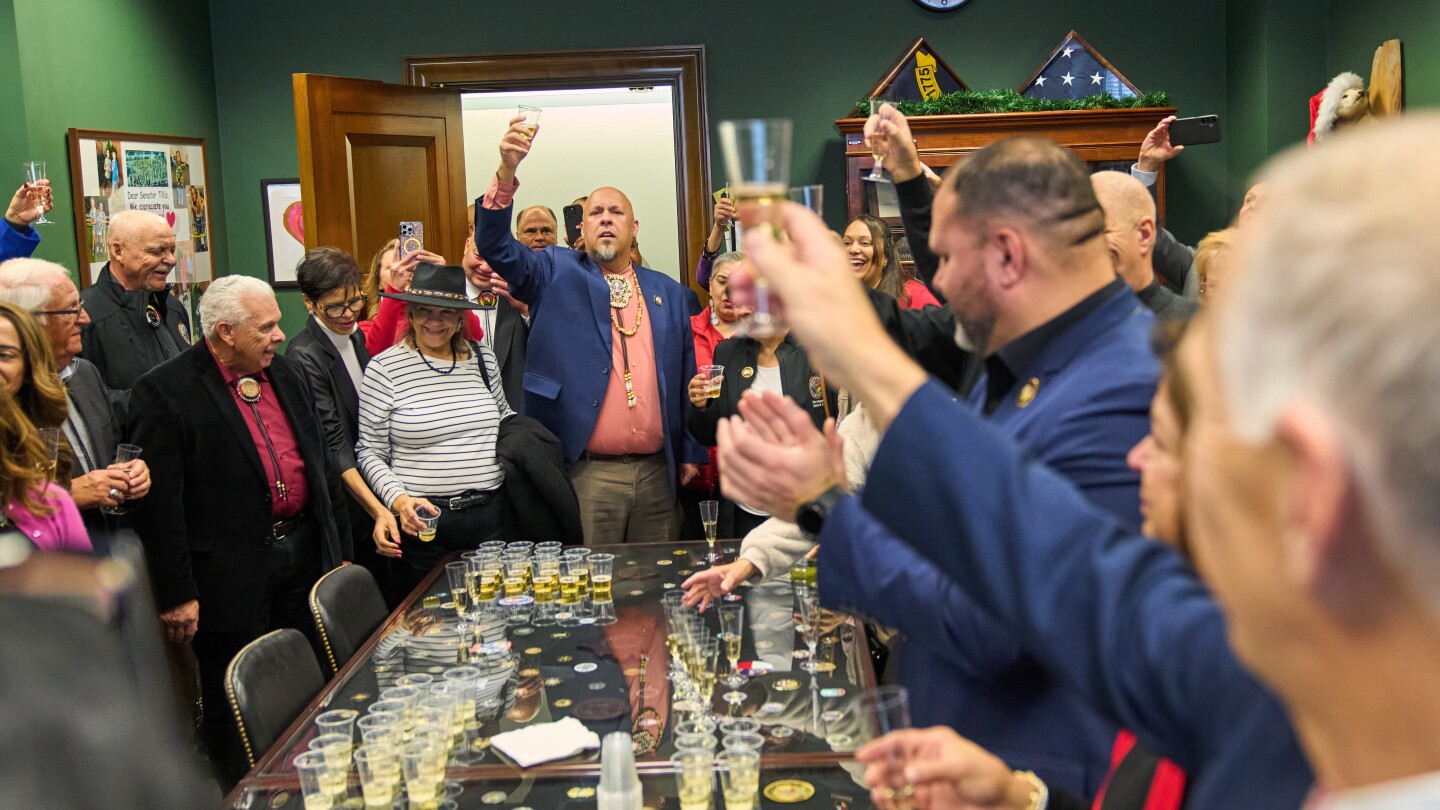
Scenes of jubilation unfolded simultaneously in Washington D.C. and Pembroke, North Carolina – the heart of Lumbee territory – as tribal members gathered to witness the historic vote. In Pembroke, hundreds packed a community watch party, erupting in cheers, tears, and traditional song when the news was confirmed.
“It means a lot because we have been figuring out how to get here for so long,” said John Lowery, North Carolina State Representative and Chairman of the Lumbee Tribe, who was visibly emotional during celebrations on Capitol Hill. “We have been second class natives, and we will never be that again. We will make sure this counts.”
The Lumbee recognition effort has spanned more than a century. The tribe first petitioned Congress for recognition in 1888 and has seen numerous bills introduced since then. In 1956, Congress passed the Lumbee Act, which recognized the tribe by name but denied them the benefits and services typically provided to federally recognized tribes – creating a painful limbo status that tribal members have fought to remedy.
Federal recognition fundamentally changes the tribe’s relationship with the U.S. government, establishing nation-to-nation status. Recognition enables access to federal programs and services through the Bureau of Indian Affairs and Indian Health Service, including healthcare, education, and housing assistance. It also provides stronger protections for religious freedoms, cultural practices, and sovereign rights.
The economic impact for both the tribe and southeastern North Carolina is expected to be substantial. Recognition opens pathways to economic development grants, infrastructure funding, and expanded opportunities for tribal enterprises that will benefit the broader regional economy. Robeson County, where many Lumbee live, has historically faced significant economic challenges, with poverty rates well above state and national averages.
North Carolina Senator Thom Tillis, who has championed Lumbee recognition legislation for years, joined the celebration on Capitol Hill, exchanging fist bumps with tribal members of all ages. “This recognition is long overdue,” Tillis told reporters. “The Lumbee have been vital to North Carolina’s history and culture, and this finally acknowledges what we’ve always known.”
The Lumbee people have maintained a distinct cultural identity centered in Robeson, Scotland, Hoke, and Cumberland counties in southeastern North Carolina. Their ancestral lands lie along the Lumber River (formerly known as the Lumbee River), which gave the tribe its name. Despite facing discrimination and periods of forced assimilation, the tribe preserved its traditions, governance structures, and community bonds.
During the celebrations in Pembroke, traditional drum circles formed as elders and youth joined together in songs that have been passed down through generations. Many wore regalia featuring the tribe’s colors and symbols, while others displayed signs and banners proclaiming “Lumbee Pride” and “Finally Recognized.”
Aaron Thomas attended the Washington celebration with his 11-year-old son, Austin Curt Thomas. “I wanted him to witness this moment,” Thomas said. “My grandparents died waiting for this day. Now my son will grow up in a world where his identity as Lumbee is fully respected by the federal government.”
The recognition comes after decades of political complications. Previous bills had faced opposition from other tribal nations concerned about potential gaming competition or questions about the Lumbee’s historical documentation. The current legislation included provisions addressing these concerns while affirming the tribe’s legitimate status.
Tribal officials indicated that their immediate priorities include establishing new healthcare facilities, expanding educational scholarships, and developing a comprehensive economic development plan. They also plan to strengthen cultural preservation efforts and language revitalization programs.
As the celebrations continued late into the evening, Chairman Lowery emphasized that while this victory marks the end of one struggle, it also begins a new chapter in Lumbee history. “Today, we celebrate,” he said. “Tomorrow, we start building the future our ancestors dreamed of for us.”
Fact Checker
Verify the accuracy of this article using The Disinformation Commission analysis and real-time sources.

20 Comments
Production mix shifting toward Politics might help margins if metals stay firm.
Good point. Watching costs and grades closely.
Good point. Watching costs and grades closely.
If AISC keeps dropping, this becomes investable for me.
Exploration results look promising, but permitting will be the key risk.
Good point. Watching costs and grades closely.
If AISC keeps dropping, this becomes investable for me.
Interesting update on Photos of the Lumbee Tribe celebrating federal recognition. Curious how the grades will trend next quarter.
Good point. Watching costs and grades closely.
Good point. Watching costs and grades closely.
Silver leverage is strong here; beta cuts both ways though.
If AISC keeps dropping, this becomes investable for me.
Silver leverage is strong here; beta cuts both ways though.
Exploration results look promising, but permitting will be the key risk.
Good point. Watching costs and grades closely.
Good point. Watching costs and grades closely.
Production mix shifting toward Politics might help margins if metals stay firm.
Good point. Watching costs and grades closely.
Good point. Watching costs and grades closely.
Exploration results look promising, but permitting will be the key risk.