


Listen to the article
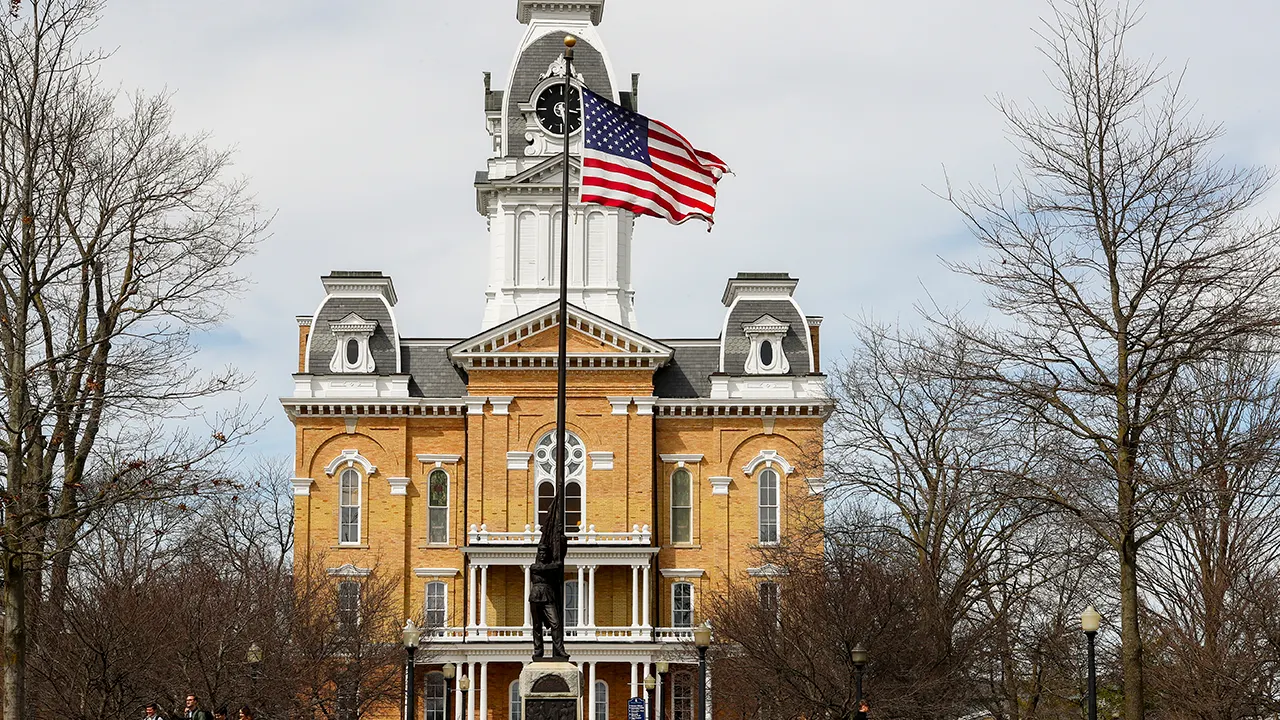
In a significant shift in military education policy, Hillsdale College has expressed its readiness to help educate senior U.S. military officers as part of the Department of War’s move away from Ivy League institutions. The Michigan-based conservative liberal arts college formally accepted an invitation to participate in the Senior Service College Fellowship Program, which prepares high-ranking officers for leadership positions.
Hillsdale College President Larry Arnn, in a March 30 letter to War Secretary Pete Hegseth, thanked the department for including the institution among those qualified to educate military leaders. Arnn stated the college would be “honored” to participate and expressed support for Hegseth’s objective of equipping the military with “the lethality necessary to protect our national interest.”
This development comes in the wake of the Department of War’s February decision to sever ties with several elite universities, including Harvard, Princeton, MIT, Georgetown, and Columbia. The move eliminated 93 fellowship positions across 22 institutions that had traditionally provided advanced education to military officers.
“We train warriors, not wokesters,” declared Hegseth when announcing the policy shift. The War Secretary, himself a Princeton and Harvard Kennedy School graduate, has positioned the change as a response to what he describes as “woke” ideology that has purportedly undermined military education at elite institutions.
In place of these traditional academic partners, the Pentagon is redirecting officers toward a more ideologically aligned group of institutions. Besides Hillsdale, the new roster includes Liberty University, George Mason University, Pepperdine University, and Baylor University. Several large public universities such as the University of Florida, Auburn University, and the University of North Carolina have also been added to the list.
The department has also incorporated senior military colleges like The Citadel and Virginia Tech, along with Pentagon-affiliated programs such as the Ted Stevens Center for Arctic Security Studies in Alaska. According to the February memorandum, these institutions were selected based on criteria including “intellectual freedom,” limited connections to foreign adversaries, and alignment with the department’s mission.
In his letter, Arnn highlighted Hillsdale’s curriculum and mission, noting that the college emphasizes the U.S. Constitution and the “political philosophy of the West.” He also echoed the administration’s critique of higher education, claiming that “anti-American ideologies” have “infected so many of our colleges and universities.”
Notably, Arnn mentioned that Hillsdale “refuses all government money to preserve its independence” and assured that any participation in the military education program would be funded through private sources rather than federal funds. This approach aligns with the college’s long-standing policy of rejecting government funding to maintain its autonomy.
The policy shift represents a significant departure from decades of military educational practice, potentially reshaping how the next generation of military leadership is trained and educated. Critics of the move have expressed concerns about politicizing military education, while supporters argue it represents a necessary course correction away from institutions they believe have strayed from core American values.
Beyond its potential role in military education, Hillsdale has already established ties with the current administration. The college has contributed to White House initiatives connected to America’s 250th anniversary, including providing historical material for the administration’s “Freedom Trucks” campaign and collaborating on a video series featuring President Donald Trump.
As the Department of War finalizes its new educational partnerships, questions remain about how many officers will ultimately attend Hillsdale and other newly approved institutions, and how this shift might influence military leadership philosophy in the years ahead.
Fact Checker
Verify the accuracy of this article using The Disinformation Commission analysis and real-time sources.

22 Comments
Nice to see insider buying—usually a good signal in this space.
Good point. Watching costs and grades closely.
Nice to see insider buying—usually a good signal in this space.
Interesting update on Pentagon Chief Hegseth Ends Ivy League Military Programs, Partners with Hillsdale College. Curious how the grades will trend next quarter.
Exploration results look promising, but permitting will be the key risk.
Good point. Watching costs and grades closely.
Uranium names keep pushing higher—supply still tight into 2026.
Good point. Watching costs and grades closely.
Nice to see insider buying—usually a good signal in this space.
Good point. Watching costs and grades closely.
Good point. Watching costs and grades closely.
Silver leverage is strong here; beta cuts both ways though.
Good point. Watching costs and grades closely.
Good point. Watching costs and grades closely.
Silver leverage is strong here; beta cuts both ways though.
Good point. Watching costs and grades closely.
Interesting update on Pentagon Chief Hegseth Ends Ivy League Military Programs, Partners with Hillsdale College. Curious how the grades will trend next quarter.
Good point. Watching costs and grades closely.
Good point. Watching costs and grades closely.
Silver leverage is strong here; beta cuts both ways though.
Good point. Watching costs and grades closely.
Good point. Watching costs and grades closely.