


Listen to the article
Defense Secretary Pete Hegseth announced the launch of Operation Southern Spear on Thursday, a comprehensive military initiative targeting narco-terror networks across Latin America. The operation will be led by U.S. Southern Command and Joint Task Force Southern Spear, with the stated goals of defending American borders and dismantling drug trafficking organizations throughout the Western Hemisphere.
“This mission defends our Homeland, removes narco-terrorists from our Hemisphere, and secures our Homeland from the drugs that are killing our people,” Hegseth declared in a statement posted on X, formerly Twitter.
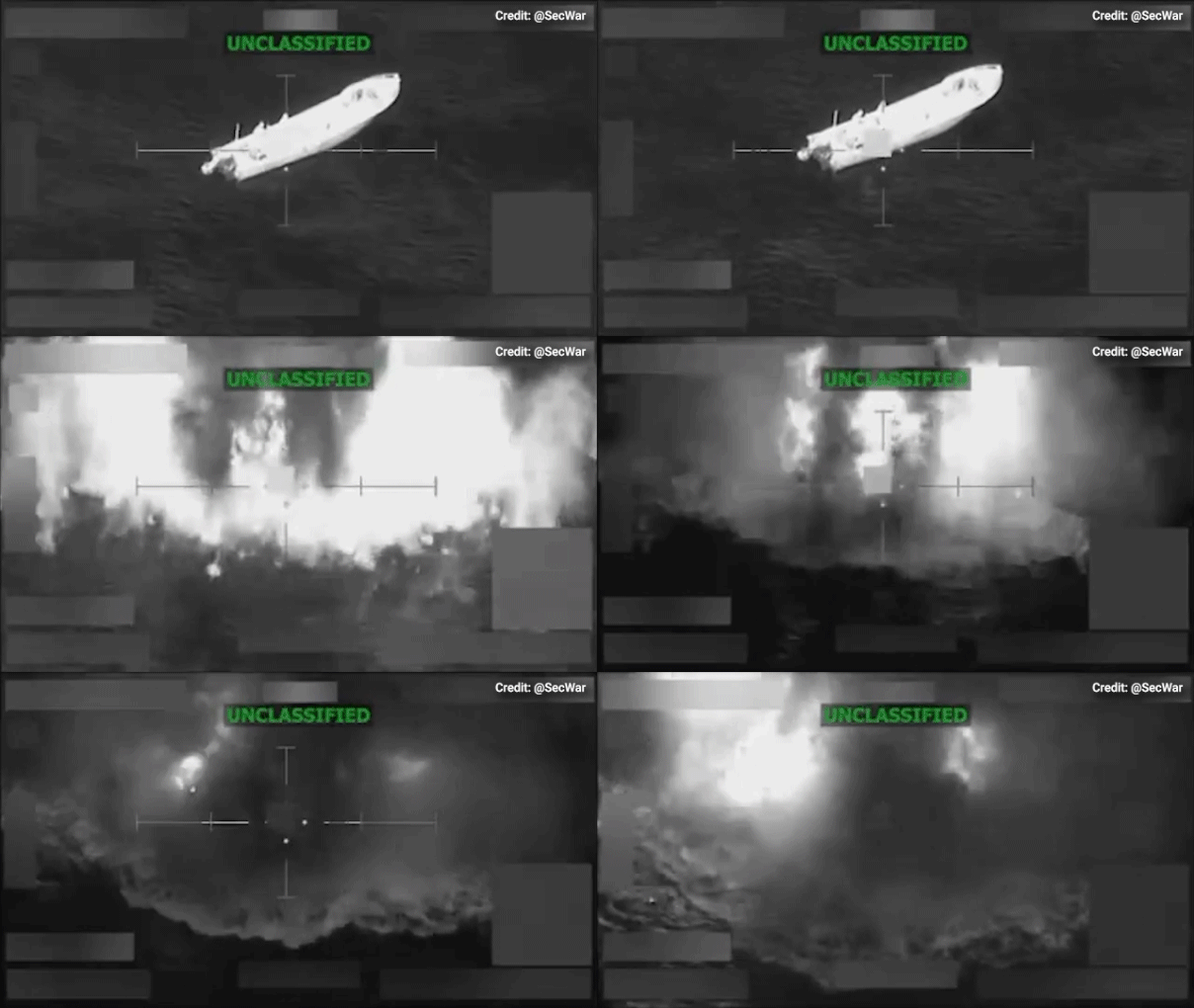
The announcement comes as U.S. forces have already conducted their 20th strike against suspected drug-trafficking vessels, according to Pentagon officials. The most recent operation in the Caribbean resulted in the deaths of four suspected narco-terrorists, highlighting the increasingly aggressive approach the administration is taking toward drug networks in the region.
The Navy had previously announced in January that it would lead Operation Southern Spear under U.S. 4th Fleet and Southern Command, employing advanced technological assets including “long-dwell robotic surface vessels, small robotic interceptor boats, and vertical take-off and landing robotic air vessels.” This emphasis on unmanned systems represents a significant shift in how the U.S. conducts counter-narcotics operations, potentially reducing risk to military personnel while maintaining operational effectiveness.
In a show of substantial military commitment, the operation will utilize major naval assets in the region, including the USS Gerald R. Ford, the world’s largest aircraft carrier. The deployment of such a significant naval presence underscores the administration’s prioritization of this mission and suggests operations may extend beyond interdiction to include intelligence gathering and potential shows of force near key trafficking routes.
The timing of Operation Southern Spear coincides with reports from CBS News that President Trump has been briefed on potential options for military operations in Venezuela, including possible land strikes. While no final decisions have reportedly been made regarding Venezuela specifically, the overall regional initiative appears to have broad bipartisan backing.
Senator Mark Warner (D-Va.), chair of the Senate Intelligence Committee, has expressed support for the strikes against narco-trafficking near Venezuela, suggesting the previous administration’s approach was insufficient. “I frankly think the Biden administration didn’t go far enough after the Venezuelan people voted overwhelmingly to get rid of Maduro,” Warner stated, referring to the contested 2023 election that many international observers considered fraudulent.
The escalation in anti-drug operations comes amid growing concern about the devastating impact of narcotics trafficking on American communities. Fentanyl and other synthetic opioids, often transported through Latin American smuggling networks, have fueled a nationwide overdose crisis that claimed over 107,000 American lives in 2022 alone, according to CDC data.
Hegseth framed the operation in terms of regional security and American influence, stating, “The Western Hemisphere is America’s neighborhood – and we will protect it.” This approach appears to signal a return to more assertive policies regarding U.S. interests in Latin America, where China and Russia have expanded their economic and political influence in recent years.
Security experts note that Operation Southern Spear represents the most comprehensive counter-narcotics initiative since the Plan Colombia era of the early 2000s. However, critics of military-focused approaches point to the mixed results of previous drug interdiction campaigns and question whether military operations alone can effectively disrupt the economic incentives that drive the international drug trade.
As the operation unfolds in the coming months, its effectiveness will likely be measured not only by the number of drug shipments intercepted but also by its impact on regional stability and domestic drug availability within the United States.
Fact Checker
Verify the accuracy of this article using The Disinformation Commission analysis and real-time sources.

8 Comments
I appreciate the administration’s efforts to secure the homeland and dismantle drug trafficking organizations. Narcotics have devastated many communities, so any effective measures to combat this threat are welcome.
Agreed, the human toll from the drug trade is immense. Let’s hope this operation can make a real impact without causing further harm to innocent civilians.
This seems like a major escalation in the war on drugs. Targeting narco-terror networks across Latin America is a bold move, but I’m curious to see how effective it will be in disrupting the flow of illegal drugs into the US.
You raise a good point. The aggressive approach may have unintended consequences, so we’ll have to watch closely to see how it plays out on the ground.
I’m somewhat skeptical about the long-term effectiveness of this type of military-focused approach to the drug trade. History has shown that these networks are highly adaptable and can shift their operations in response to pressure. A more holistic strategy may be needed.
As someone with expertise in mining and minerals, I’m curious how this crackdown on narco-terrorists might impact the legal commodity trade in the region. Could it disrupt critical supply chains for strategic minerals like lithium and copper?
That’s an excellent question. The potential fallout on legitimate mining operations is certainly something to monitor closely. Maintaining stable supply chains will be crucial.
While I applaud the administration’s intention to protect American lives from the scourge of narcotics, I worry that this aggressive military posture could further destabilize the region and exacerbate tensions. Diplomacy and development aid may be more effective in the long run.