


Listen to the article
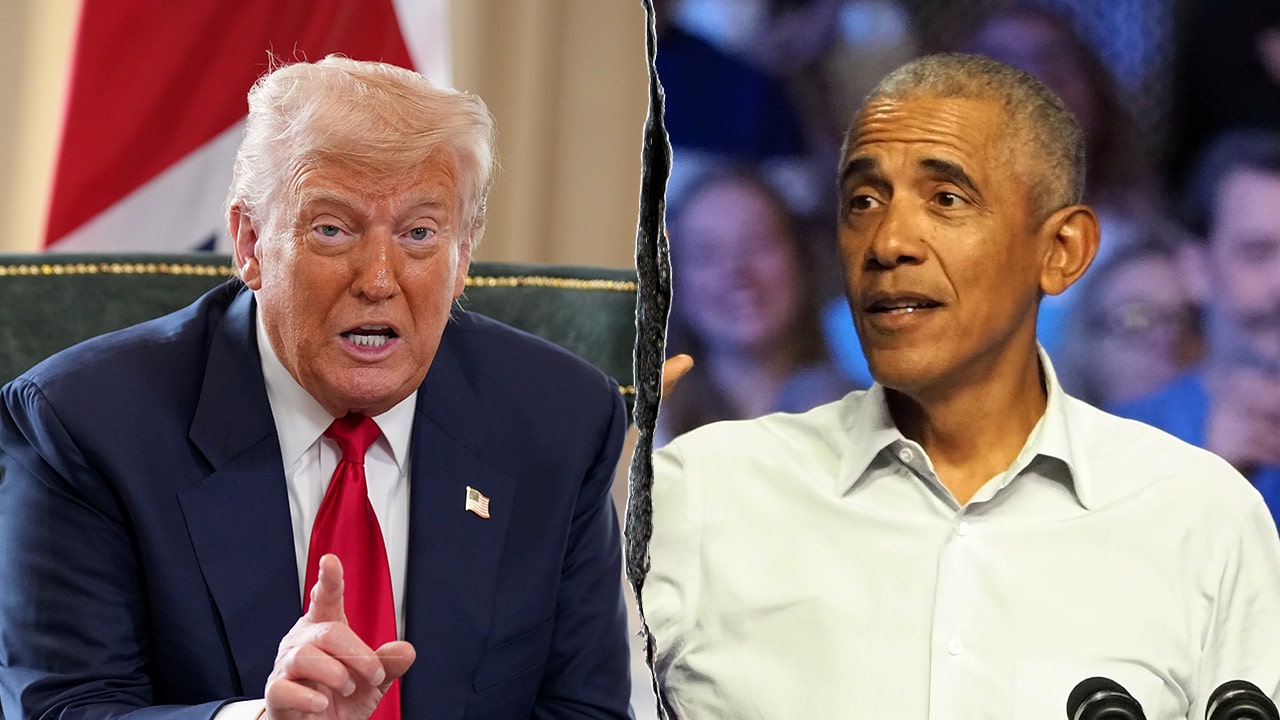
President Donald Trump and former President Barack Obama handled government shutdowns with markedly different approaches, despite both facing political standoffs centered on healthcare legislation.
While Obama faced one shutdown during his tenure and Trump weathered two, their most significant difference lay in their management styles. Obama positioned himself at the forefront of the 2013 shutdown, while Trump maintained more distance during the recent 43-day closure, the longest in U.S. history.
Romina Boccia, director of budget and entitlement policy at the CATO Institute, noted a fundamental contrast in their approaches. “During the Obama shutdown, it was more to make it extremely visible, shut down beloved functions—even if you didn’t have to—that affect average Americans,” she explained.
The Obama administration quickly erected barricades around Washington D.C.’s national parks and monuments, extending similar closures to hundreds of parks nationwide. These visible barriers served as stark reminders that the government had ceased operations, bringing the shutdown’s impact directly to the American public.
By contrast, the Trump administration focused the pain of the recent shutdown more narrowly on Washington itself. Office of Management and Budget Director Russ Vought implemented mass firings of furloughed workers and withheld billions in federal funding from Democratic-led cities and states, concentrating the shutdown’s effects on the government apparatus rather than on public-facing services.
“It’s not that this wasn’t a shutdown, it’s just that the choices the administration made were an attempt to focus the impacts of the shutdown this round on the government itself,” said Brittany Madni, executive vice president of the Economic Policy Center.
Madni characterized Obama’s approach as “showmanship” and argued that congressional Democrats employed “the exact same playbook” during the recent closure. While the 2013 shutdown discussions remained largely confined to Washington, the recent closure saw Trump continuing his presidential duties, including high-profile international trade discussions during his Asia trip—a point that frustrated Democrats.
“He was doing his job,” Madni asserted. “Meanwhile, congressional Democrats, quite simply, were not.”
Healthcare legislation proved to be the common thread in both shutdowns. In 2013, congressional Republicans sought to dismantle the Affordable Care Act, Obama’s signature legislative achievement. In the recent standoff, Senate Minority Leader Chuck Schumer (D-NY) led Democrats in pushing for extensions to enhanced Obamacare subsidies.
Boccia suggested that the personal connection to his landmark legislation explained why Obama took such a visible role in the 2013 shutdown. “He was front and center in the media talking about the shutdown, and because it was over his legacy achievement,” she said.
For Trump, the Obamacare subsidies weren’t a personal priority, making him “less necessary and perhaps interested in being the face of the shutdown,” according to Boccia. “It was really a congressional battle.”
Madni disagreed with this characterization, arguing that Democrats were targeting Trump’s legislative accomplishments. She pointed out that before the failed Senate vote in late September that triggered the shutdown, Democrats offered a counter-proposal that would have undermined provisions of Trump’s “big, beautiful bill,” which has been a cornerstone achievement of his second term.
“It’s really important that everyone remembers the subsidy request was one request in a laundry list of radical, incredibly expensive ideas that added up to $1.5 trillion,” Madni explained. “Another item in that list was dismantling key portions of the One Big, Beautiful Bill Act.”
She contended that if Democrats were genuinely concerned about the healthcare subsidies alone, they would have narrowed their demands during the 43-day impasse. “Not once did they,” she concluded.
The contrasting approaches highlight the different political calculations made by each administration, with Obama embracing the shutdown as a public showdown over his signature achievement and Trump delegating the battle largely to congressional Republicans while continuing his broader agenda.
Fact Checker
Verify the accuracy of this article using The Disinformation Commission analysis and real-time sources.

12 Comments
The article highlights an interesting dynamic in how presidents can manage crises and political standoffs. Obama seemed more focused on the public-facing aspects, while Trump emphasized the internal Washington dynamics.
It’s a notable difference in communication and leadership approach that likely had significant implications for how the shutdowns were perceived by the American people.
Useful to see a factual, objective comparison of how Obama and Trump handled government shutdowns. The contrasting styles and priorities are quite revealing.
Agreed. This provides valuable context for understanding the distinct leadership philosophies and political strategies of the two presidents.
The article provides helpful insight into the contrasting leadership styles of Obama and Trump during times of political gridlock. Transparency and public impact appear to have been higher priorities for Obama.
It’s a useful case study in how presidents can shape the narrative and public perception around major events like government shutdowns.
Curious to see if this speaks to broader differences in how the two presidents engaged with and prioritized the general public versus political insiders in Washington.
That’s a good point. The article suggests Obama was more intent on visibly demonstrating the shutdown’s real-world impacts.
Interesting to see how the different presidents handled government shutdowns. Seems like Obama took a more public-facing approach to highlight the impacts, while Trump kept it more focused on Washington politics.
Yeah, the contrasting styles likely reflect their different leadership philosophies and priorities. Obama seemed intent on making the shutdown feel tangible for average Americans.
This is a good example of how even routine political events can play out very differently under different administrations. The public visibility angle is an intriguing point of comparison.
Absolutely. The handling of a government shutdown speaks volumes about a president’s overall approach and communication strategy.