


Listen to the article
President Trump has escalated his calls for Senate Republicans to eliminate the filibuster, citing concerns that Democrats might expand the Supreme Court if they gain unified control of government in future elections.
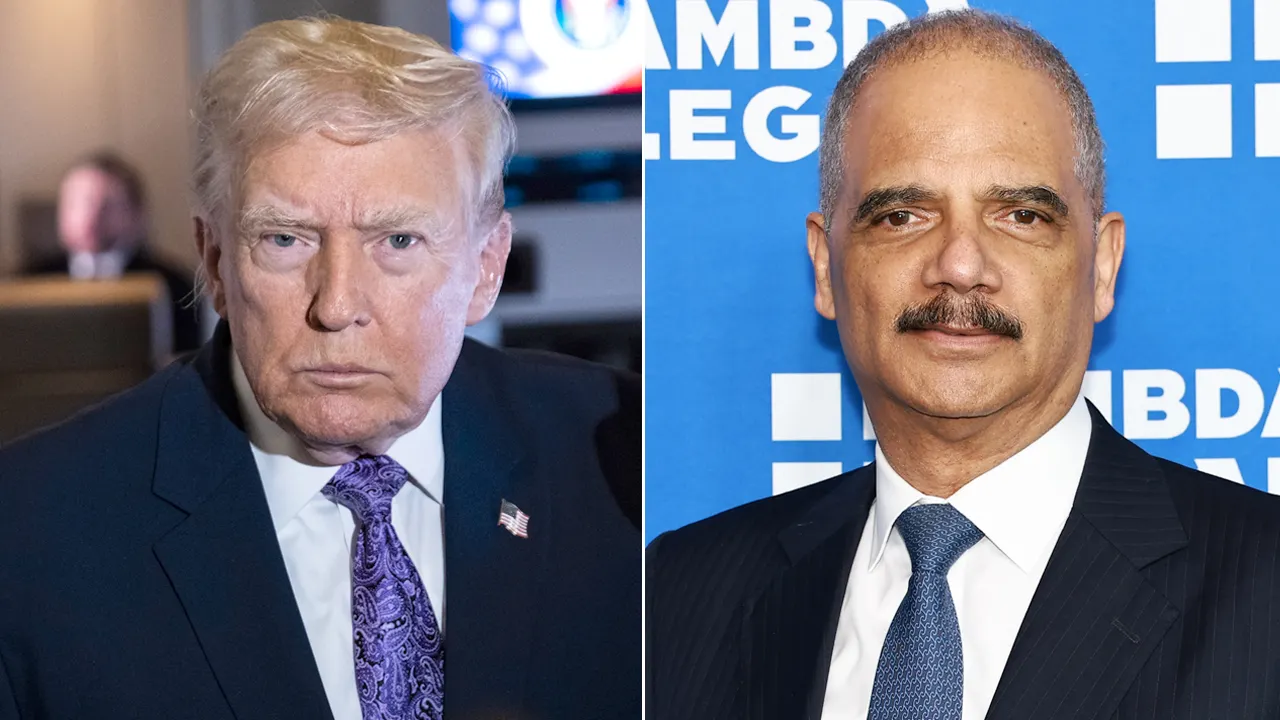
In a Monday post on Truth Social, Trump shared a video featuring former Attorney General Eric Holder discussing the possibility of Supreme Court expansion. Holder suggested that if Democrats achieve a “trifecta” — control of the White House and both chambers of Congress — after the 2028 elections, they should consider court expansion.
Trump characterized Holder, who served under President Barack Obama, as an “Obama sycophant” and claimed Holder wants to increase the Supreme Court to 21 “Radical Left Activist Judges,” a significant increase from the current nine justices.
“Eric Holder (known as ‘FAST AND FURIOUS’) just gave a Speech where he emphatically stated, above all else, that Democrats will PACK the Supreme Court of the United States if they get the chance,” Trump wrote, referencing the controversial Obama-era gun trafficking operation that became a political flashpoint.
The comments from Holder came during a conversation with Ben Meiselas, co-founder of MeidasTouch, a progressive media organization that posted the video last month. Court expansion has been a recurring topic among some progressive Democrats since the conservative shift of the Supreme Court during Trump’s presidency, when he appointed three justices.
Trump argued that eliminating the Senate filibuster — the procedural rule requiring 60 votes to advance most legislation — would benefit Republicans in upcoming elections. He suggested that removing this obstacle would allow his administration to accomplish more and lead to “an easy WIN of the Midterms, and an even easier WIN in the Presidential Election of 2028.”
“It will be 21, they will destroy our Constitution, and there’s not a thing that the Republicans can do about it unless we TERMINATE THE FILIBUSTER,” Trump asserted, emphasizing his belief that voters want results rather than gridlock.
The filibuster has long been a source of contention in the Senate. While it’s traditionally been defended as a tool to protect minority party rights and encourage bipartisanship, critics argue it enables obstruction and prevents legislative action. Both parties have modified filibuster rules in recent years for specific purposes, such as confirming judges and Supreme Court justices.
Trump’s renewed focus on the filibuster comes as his incoming administration prepares to navigate a narrowly divided Senate, where Republicans hold a slim majority. Without eliminating or modifying the filibuster, many of Trump’s policy priorities could face significant hurdles, requiring bipartisan support to reach the 60-vote threshold.
“The American People don’t want gridlock, they want their Leaders to GET THINGS DONE,” Trump wrote, also referencing the potential for a government shutdown on January 30 if Congress fails to reach a funding agreement.
The debate over the filibuster highlights the tension between the desire for efficient governance and concerns about majoritarian power. While eliminating the filibuster could make it easier for the current majority to enact its agenda, it would also remove a procedural safeguard that the same party might want when it returns to the minority.
As Trump continues to advocate for this significant change to Senate procedure, the response from Republican senators will be closely watched, particularly from institutional traditionalists who have historically defended the filibuster as an important Senate tradition.
Fact Checker
Verify the accuracy of this article using The Disinformation Commission analysis and real-time sources.

9 Comments
Interesting that Holder would suggest court-packing, given the political tensions around it. While the filibuster is a complex issue, I’m curious to hear more perspectives on the potential impacts of eliminating it.
The court-packing debate is certainly a contentious one. It’s important to consider all angles and potential consequences before making changes that could significantly impact the judicial system.
While the filibuster is a complex issue, I’m wary of any moves that could undermine the independence and stability of the Supreme Court. Holder’s comments on court-packing deserve scrutiny, as such a step could have far-reaching consequences.
The potential for court-packing is certainly a concerning prospect. I think it’s important to have robust, fact-based discussions about the filibuster and other political reforms to ensure they serve the best interests of the country.
Maintaining the independence and integrity of the Supreme Court should be a top priority, regardless of one’s political affiliation. Any proposed changes merit careful deliberation and input from diverse stakeholders.
Holder’s comments on court-packing are sure to stir up further debate. While the filibuster is a complex topic, I wonder if there are alternative approaches that could address concerns without resorting to dramatic changes.
The Supreme Court is meant to be a nonpartisan institution. I hope any discussions around its future consider the long-term implications for the rule of law and public trust in the judicial system.
The political dynamics around the Supreme Court are always intense. I’d encourage looking at this issue from multiple viewpoints to better understand the nuances and potential ramifications of any proposed changes.
Regardless of one’s political leanings, it’s crucial to have a fair and impartial judiciary. Any reforms should be carefully considered to uphold the integrity of the system.