


Listen to the article
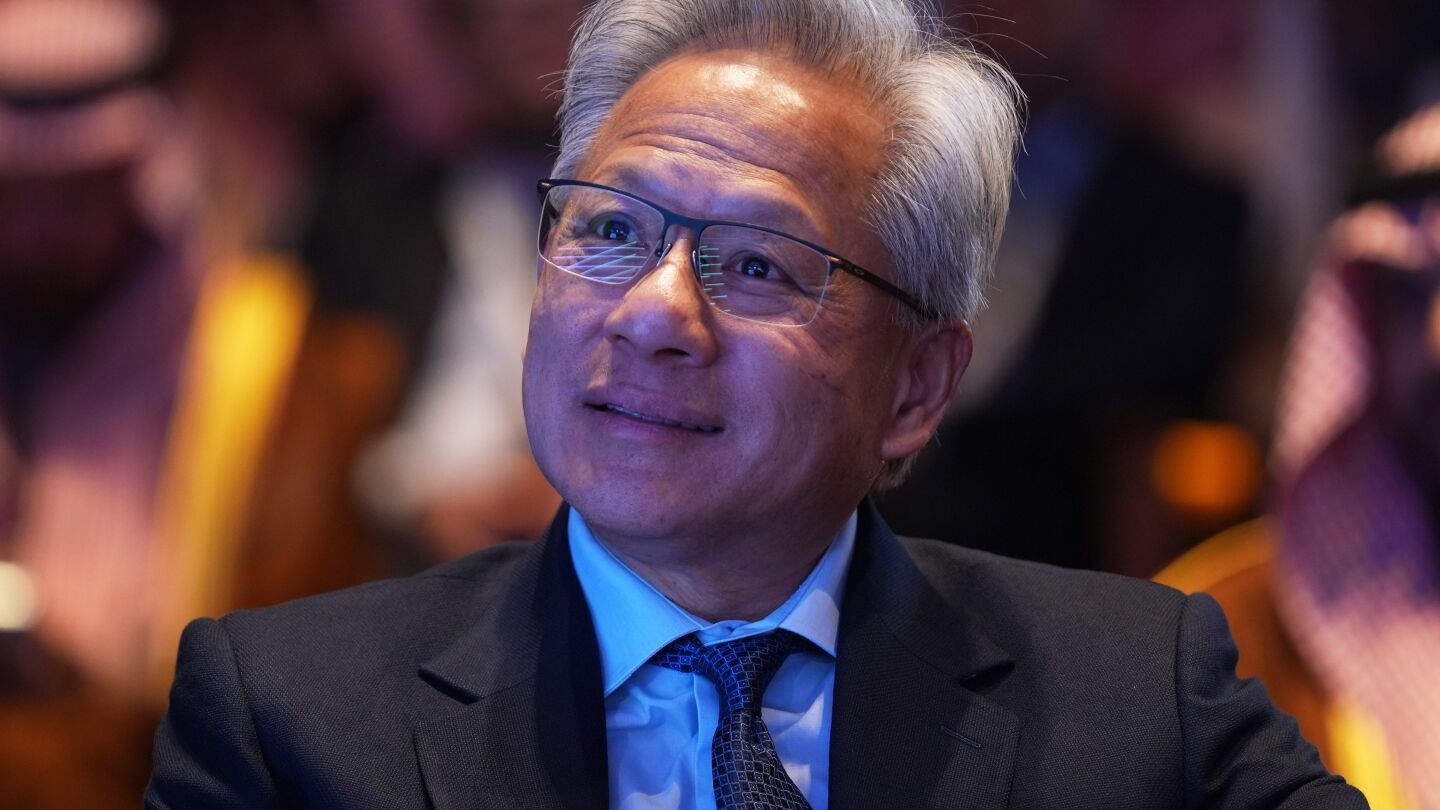
Nvidia CEO Jensen Huang made the rounds in Washington on Wednesday, meeting with President Donald Trump and Senate Republicans as part of an intensified lobbying effort by tech executives seeking favorable policies for the artificial intelligence industry.
The high-profile visits come at a critical juncture for Nvidia, whose advanced computer chips have become central to the global AI race and subject to complex export restrictions targeting China.
During a closed-door session with members of the Senate Banking Committee, Huang advocated for a nuanced approach to chip export controls. Before entering the meeting, he told reporters that while he supports export restrictions in principle, he believes current policies haven’t effectively slowed China’s AI advancement.
“We need to be able to compete around the world,” Huang said. “The one thing we can’t do is we can’t degrade the chips that we sell to China. They won’t accept that. There’s a reason why they wouldn’t accept that, and so we should offer the most competitive chips we can to the Chinese market.”
Huang confirmed he had met with Trump earlier in the day to discuss export controls for Nvidia’s chips, though he did not elaborate on the details of that conversation beyond wishing the president “happy holidays.”
The meetings reflect the complex regulatory landscape Nvidia is navigating. In May, the Trump administration reversed Biden-era restrictions that had limited chipmakers from exporting their products to numerous countries. The White House followed this in August with an unusual arrangement allowing Nvidia and Advanced Micro Devices to sell certain chips in the Chinese market, provided the U.S. government received a 15% share of the sales revenue.
This policy shift has divided lawmakers on Capitol Hill, where there is generally broad bipartisan support for controlling AI exports to China, widely considered America’s primary competitor in developing advanced artificial intelligence technologies.
Most Republican senators who attended the meeting with Huang were tight-lipped about their discussions. Senator Mike Rounds of South Dakota described the meeting as “very healthy” and characterized it as a “general discussion” about AI’s current state, adding that senators remained open to various policy approaches.
When asked if Nvidia’s business interests aligned with U.S. national security objectives, Rounds noted: “They currently do not sell chips in China. And they understand that they’re an American company. They want to be able to compete around the rest of the world. They’d love to some time be able to compete in China again, but they recognize that export controls are important as well for our own national security.”
Not all Republicans were receptive to Huang’s message. Senator John Kennedy of Louisiana skipped the meeting entirely, expressing skepticism about the Nvidia CEO’s objectivity.
“I don’t consider him to be an objective, credible source about whether we should be selling chips to China,” Kennedy told reporters. “He’s got more money than the Father, the Son and the Holy Ghost, and he wants even more. I don’t blame you for that, but if I’m looking for someone to give me objective advice about whether we should make our technology available to China, he’s not it.”
Democrats, who were not included in the meeting, voiced their frustration with Huang’s selective engagement. Senator Elizabeth Warren of Massachusetts, the Banking Committee’s top Democrat, said Huang chose to “lobby Republicans in secret rather than explain himself.” She called for the CEO to testify in a public hearing to answer “questions about why his company wants to favor Chinese manufacturers over American companies that need access to those high-quality chips.”
The lobbying efforts come amid a surge in AI investments and increasingly bold claims from tech companies about artificial intelligence’s transformative potential. While Silicon Valley executives like Huang warn that excessive restrictions could impede technological progress, many policymakers remain concerned about AI’s potential risks and how foreign competitors might leverage American technology.
Congress has introduced numerous bills this year aimed at regulating AI’s impact across industries, though none have become law. As the AI race accelerates globally, the tension between national security concerns and commercial interests continues to shape the evolving regulatory framework for this critical technology.
Fact Checker
Verify the accuracy of this article using The Disinformation Commission analysis and real-time sources.

18 Comments
The AI race between the US and China is only going to intensify. Nvidia’s engagement with Republicans shows how high the stakes are, as both sides vie for technological supremacy.
Nvidia is trying to walk a fine line, supporting export restrictions in principle while arguing against ‘degrading’ the chips they can sell to China. It’s a nuanced position in a high-stakes geopolitical game.
Nvidia’s lobbying efforts show how much influence tech companies can wield when it comes to shaping policies around emerging technologies like AI. Their perspective on export controls will be closely watched.
The CEO’s comments about not ‘degrading’ the chips sold to China suggest Nvidia is trying to find a middle ground. They want to compete globally while also addressing national security concerns.
It’s interesting to see Nvidia’s CEO engaging with Republicans on the AI race. As a key player in the global chip market, Nvidia’s perspective on export controls and competing with China will be important to consider.
Nvidia seems to be advocating for a balanced approach – supporting export restrictions in principle, but wanting to offer competitive chips to the Chinese market. Finding the right policy balance will be crucial.
This is a high-stakes game, with both geopolitical and economic implications. Nvidia’s engagement with Republicans suggests they see themselves as a crucial player in shaping the US response to the intensifying AI race.
Nvidia’s argument about needing to offer ‘the most competitive chips’ to China is an interesting one. It speaks to the difficult tradeoffs involved in regulating sensitive technology exports.
This is a complex issue with no easy answers. On one hand, you want to restrict sensitive technology from going to geopolitical rivals. On the other, you don’t want to hamstring your own companies’ ability to compete globally.
Nvidia’s CEO is making a pragmatic case, acknowledging the need for export controls but also wanting to offer the ‘most competitive chips’ to the Chinese market. Balancing those priorities will be a challenge.
The AI race between the US and China is only going to get more intense. Nvidia’s CEO is clearly trying to position the company as a key voice in how policymakers approach export controls and other related issues.
Nvidia seems to want a nuanced approach that maintains their competitiveness while also addressing security concerns. It’s a delicate balance they’ll need to strike as the geopolitical tensions escalate.
Nvidia’s lobbying efforts show how much is at stake in the AI race between the US and China. As a key supplier of advanced chips, their voice will carry a lot of weight in these policy debates.
The CEO’s comments about not ‘degrading’ the chips sold to China are thought-provoking. Nvidia seems to want to find a balance between security concerns and commercial competitiveness.
The AI race is heating up, and Nvidia is clearly positioning itself to be a major player. Their CEO’s meetings with Trump and Senate Republicans show how high the stakes are becoming.
Nvidia’s argument about not ‘degrading’ the chips they sell to China is an interesting one. They seem to want to maintain competitiveness while also addressing security concerns.
Nvidia’s CEO is clearly trying to influence the policy debate around export controls and the AI race. His meetings with Trump and Senate Republicans suggest he wants a seat at the table as these critical decisions are made.
It will be interesting to see how Nvidia’s perspective shapes the evolving US approach to regulating sensitive chip exports. Their desire to maintain competitiveness in China adds an extra layer of complexity.