


Listen to the article
U.S. Military Leaders to Visit Puerto Rico Amid Expanding Caribbean Operations
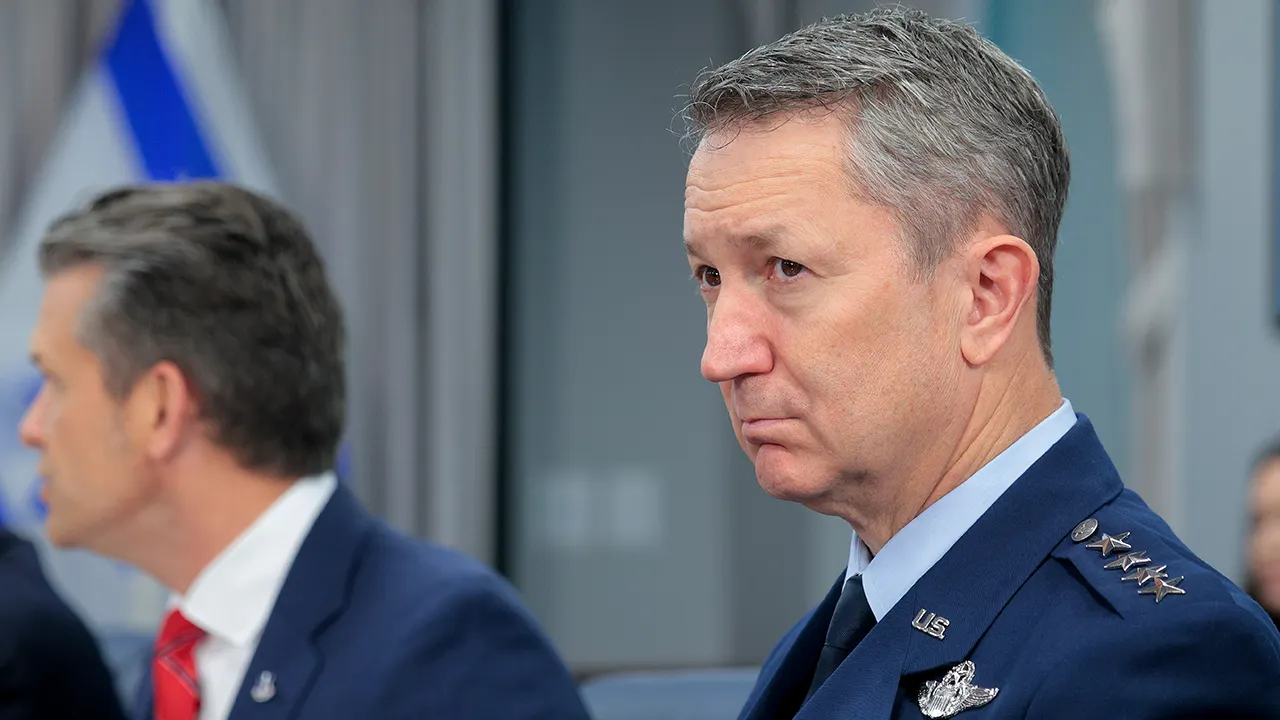
Two of the U.S. military’s highest-ranking officials will travel to Puerto Rico on Monday to meet with troops and express appreciation for their support of missions throughout the Caribbean and Latin America.
Pentagon officials announced Sunday that Chairman of the Joint Chiefs of Staff Gen. Dan Caine and Senior Enlisted Advisor to the Chairman David L. Isom will be making their second visit to the island to engage with service members stationed there and sailors operating in Caribbean waters.
“They will also visit and thank Sailors operating at sea for their dedicated, unwavering service in the SOUTHCOM area of responsibility,” the Pentagon’s media advisory stated.
This visit follows an earlier trip in September when Caine and Secretary of War Pete Hegseth visited Puerto Rico on behalf of the Trump administration. During that visit, Hegseth addressed nearly 300 soldiers at Muñiz Air Base in Carolina, just outside San Juan, describing them as “American warriors” and promising they would be the best equipped and prepared forces in the world.
The high-level visits come at a time of heightened U.S. military activity in the Caribbean region. In recent months, the Pentagon has significantly expanded its naval presence near Venezuela as part of President Donald Trump’s intensified campaign against drug trafficking from Latin America.
Earlier this month, Hegseth formally launched Operation Southern Spear, a comprehensive mission targeting narco-terror networks throughout the region. In announcing the operation on social media, Hegseth explained that U.S. Southern Command and Joint Task Force Southern Spear would lead efforts to “defend our Homeland, remove narco-terrorists from our Hemisphere, and secure our Homeland from the drugs that are killing our people.”
Since early September, U.S. forces have conducted numerous lethal strikes against suspected narcotics vessels in the Caribbean and eastern Pacific. These operations have targeted ships allegedly operated by designated terrorist organizations, including Venezuela’s Tren de Aragua gang and Colombia’s Ejército de Liberación Nacional (ELN).
The campaign began on September 2 with a strike that reportedly killed 11 alleged members of Tren de Aragua. Throughout October and November, U.S. forces have continued with a series of targeted operations against vessels along known drug trafficking routes. According to military reports, these strikes have resulted in approximately 82 suspected narco-terrorists killed, with only three survivors.
The operations have targeted various types of vessels, including submersibles, fishing boats, and high-speed craft. Several strikes occurred near Venezuela’s territorial waters, while more recent operations have been concentrated in the eastern Pacific. One strike against an ELN-affiliated vessel drew diplomatic criticism from Colombia’s president after three people were killed.
Puerto Rico has emerged as a strategically important location for these expanded military operations. The island hosts several military installations that provide logistical support for U.S. counternarcotics efforts in the region. The Puerto Rico National Guard, under Adjutant General Carlos José Rivera-Román, has played a supporting role in these operations.
Monday’s visit by Gen. Caine and SEAC Isom underscores the strategic importance the Pentagon places on Puerto Rico in its broader regional security strategy. It also reflects the Trump administration’s prioritization of counternarcotics operations as a central component of its security policy in Latin America and the Caribbean.
As the U.S. continues to intensify its military operations against drug trafficking networks in the region, Puerto Rico’s role as a forward operating base for these efforts appears likely to grow in significance, making high-level visits like Monday’s increasingly common.
Fact Checker
Verify the accuracy of this article using The Disinformation Commission analysis and real-time sources.

14 Comments
Visiting the troops and thanking them for their service is an important gesture, especially for those operating in the Caribbean. Their efforts help maintain stability and security in a strategically important region.
Absolutely, morale and appreciation for the troops should not be overlooked. Their dedication and hard work deserve recognition.
Interesting to see military leadership visiting Puerto Rico to thank troops supporting operations in the Caribbean. Maintaining a strong presence in the region is important for U.S. security and economic interests.
I agree, a visible show of support for the troops can go a long way. Their work in the Caribbean is crucial.
The Pentagon’s focus on the Caribbean aligns with the administration’s broader efforts to counter Chinese influence in the Western Hemisphere. Strengthening the U.S. military foothold in the region is likely part of that geopolitical strategy.
You make a good observation. The Caribbean has become an arena of strategic competition between the U.S. and China, so these military activities are probably tied to larger geopolitical objectives.
It’s good to see the military leadership taking the time to visit and show support for the troops on the ground. Their work in the Caribbean is crucial, even if the details of their missions are not publicly disclosed.
Agreed. Maintaining troop morale and demonstrating commitment to their efforts is an important part of sustaining effective military operations in the region.
With heightened U.S. military presence in the Caribbean, I wonder if there are any concerns from regional partners about potential overreach or militarization of the area. Balancing security priorities with diplomatic relations will be key.
That’s a fair point. The U.S. will need to carefully manage relationships with Caribbean nations to ensure their operations are not seen as overbearing or undermining regional sovereignty.
I’m curious to know more about the specific missions and objectives the troops are supporting in the region. Addressing transnational threats like narco-trafficking is certainly a priority, but the details would be interesting to understand.
Yes, the details of their work would provide valuable context. The Pentagon’s statement was a bit vague, so more specifics would be helpful to fully grasp the scope of their activities.
The expanded U.S. military operations in the Caribbean are likely driven by concerns over drug trafficking, illegal fishing, and other regional security issues. Puerto Rico’s strategic location makes it a valuable asset for these missions.
You raise a good point. Puerto Rico’s geographic position makes it an ideal hub for coordinating and executing these Caribbean operations.