


Listen to the article
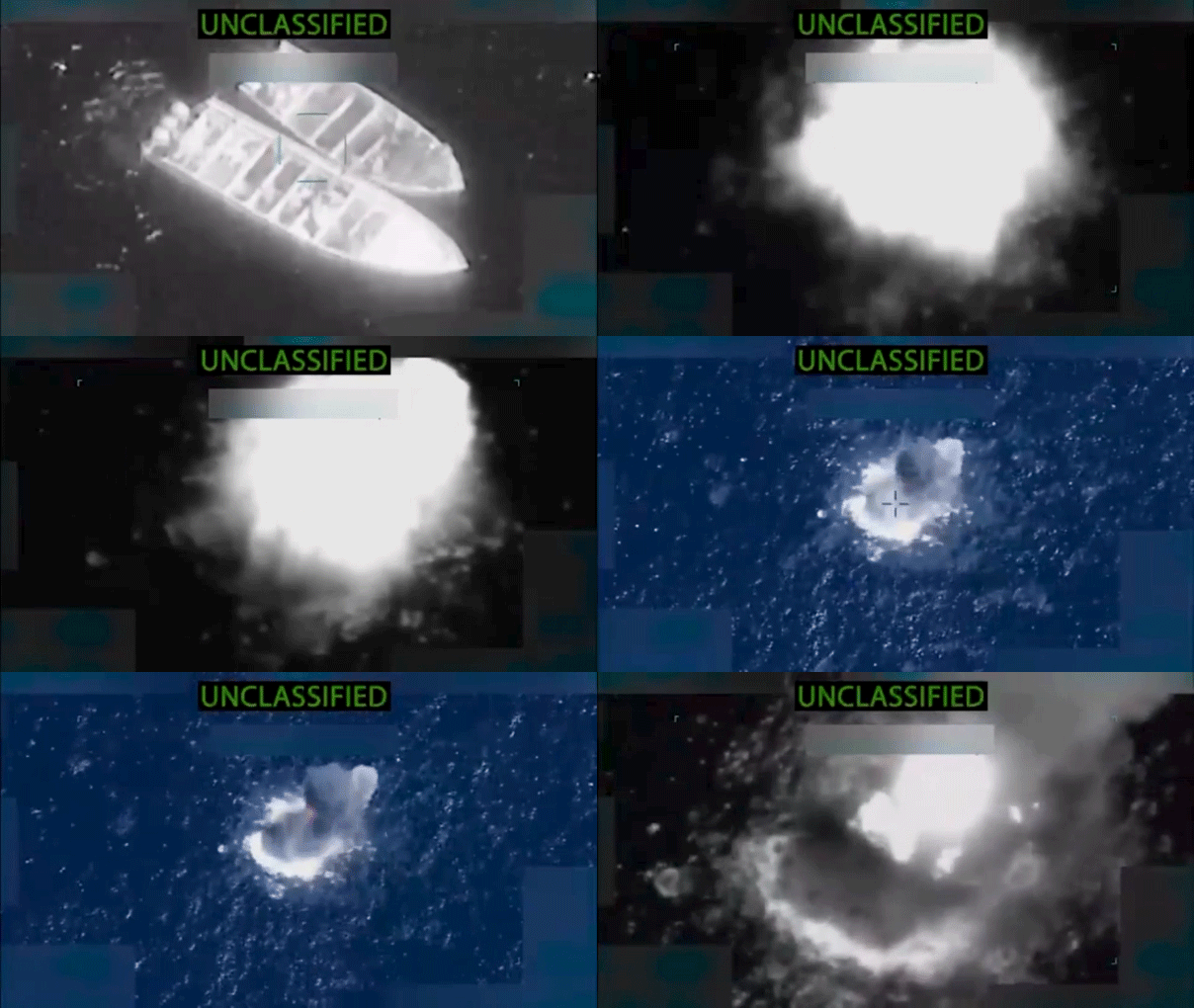
The Pentagon’s controversial “double tap” strike against a suspected Venezuelan drug boat on September 2 faces intensified scrutiny following new revelations about the presence of military legal counsel during the decision-making process. ABC News reported that a judge advocate general (JAG) was present when Admiral Frank “Mitch” Bradley authorized a follow-on strike that killed two survivors from the initial attack.
This detail raises critical questions about what legal advice was provided when Bradley approved the second round of lethal force against individuals who were reportedly in the water after their vessel was destroyed.
Pentagon officials have characterized the operation as a counterterrorism mission targeting members of Venezuela’s Tren de Aragua criminal network. This classification is significant because U.S. counterterrorism operations typically include a JAG in the operations center to evaluate the legality of targets—a level of oversight not standard in routine maritime counter-narcotics operations.
Todd Huntley, a former Navy JAG officer who served at U.S. Special Operations Command, explained the distinction: “In normal maritime counter-narcotics operations, a JAG isn’t advising in real time because those missions rarely involve lethal force. But these strikes are being handled as counterterrorism strikes. The targets just happen to be on the water.”
According to Huntley, JAGs participate directly in the real-time targeting process during counterterrorism operations. “The JAG works with intelligence and operations personnel to make sure the target is lawful, that the planned strike is lawful, and whether the commander has the authority to approve it or needs to send it higher.” He emphasized that JAGs serve in an advisory capacity and cannot override commanders’ decisions.
The legal controversy centers on the condition of the survivors at the time of the second strike. ABC News reported that U.S. personnel believed the two men in the water may have been calling for help, potentially attempting to summon reinforcements.
The U.S. Law of War Manual explicitly prohibits attacking persons rendered “helpless” due to “wounds, sickness or shipwreck,” describing such attacks as “dishonorable and inhumane.” Shipwrecked individuals retain protected status unless they resume hostile actions or regain the capacity to pose an immediate threat.
Rachel VanLandingham, a former Air Force JAG who advised operations at U.S. Central Command, was emphatic about the legal standards at play. “Whether a JAG was consulted is almost irrelevant here,” she said. “You don’t need a lawyer to know you can’t kill shipwrecked survivors. This is the classic example we use in professional military education of a clearly unlawful order.”
She rejected the Pentagon’s suggestion that the survivors could have summoned additional vessels. “The idea that survivors could have called for backup is absolutely irrelevant. Unless they were actively shooting, they remained protected and could not be lawfully targeted.”
The Pentagon has stated that Bradley authorized the second strike without involvement from War Secretary Pete Hegseth, who reportedly monitored the first strike but did not view footage of the follow-on attack. Despite the controversy, both officials have defended the operation.
Hegseth wrote on social media that Bradley “is an American hero, a true professional, and has my 100% support,” adding that he stands by Bradley’s decisions “on the September 2 mission and all others since.” President Trump has also repeatedly highlighted these operations, releasing video of the second engagement on Truth Social and praising the campaign against what he terms “narcoterrorists.”
The U.S. has conducted over 20 similar strikes on narcotraffickers, positioning these operations as part of a broader counternarcotics and counterterrorism strategy in the Caribbean.
The critical unresolved question is what specific intelligence the operations center relied upon when Bradley approved the second strike with a JAG present. Did the military attorney conclude that the survivors had somehow regained the capacity to pose an imminent threat? Did the JAG object to the strike? Did the operations team interpret the alleged calls for help as active steps toward hostile action?
Until the Pentagon provides a more comprehensive account of the decision-making process and the legal reasoning behind the follow-on strike, the legality of the operation—and the role of the military lawyer who reportedly witnessed it—remains in serious dispute among legal and military experts.
Fact Checker
Verify the accuracy of this article using The Disinformation Commission analysis and real-time sources.

10 Comments
This is a concerning development that deserves close scrutiny. The presence of a JAG officer suggests the Pentagon was aware of the potential legal issues, yet proceeded with the follow-up strike. More transparency is needed.
Agreed. The decision-making process here seems murky, and the Pentagon will need to clearly explain how this operation aligned with international laws and norms around the use of force.
I’m troubled by the reports that a military lawyer was present during the decision to authorize the second strike. Even in counterterrorism operations, the laws of war must be respected. Killing survivors is highly problematic.
Well said. The legal justification for this action is crucial, especially given the involvement of a JAG officer. The Pentagon will need to provide a very robust explanation to address the concerns raised by experts.
The presence of a military lawyer during this Venezuela boat strike raises some concerning questions. Was the legal advice provided appropriate given the circumstances? Counterterrorism operations typically have more stringent oversight, so this detail deserves closer scrutiny.
I agree, the legal justification for the follow-up strike seems murky. Targeting individuals in the water after the initial attack requires very careful consideration of the laws of armed conflict.
This is a complex and sensitive issue. The distinction between counterterrorism and counter-narcotics operations is an important one when it comes to the legal framework. I’m curious to hear more about how the Pentagon will justify its actions here.
Absolutely, the legal nuances around use of force in these types of cross-border operations are crucial. I hope we get more transparency from the Pentagon on the decision-making process.
The involvement of a military lawyer raises red flags. Even in counterterrorism missions, the rules of engagement must be followed rigorously. Killing survivors in the water seems questionable from an international law perspective.
You make a fair point. The Pentagon will need to provide a very compelling legal rationale to justify this second strike, given the circumstances described.