


Listen to the article
Michigan and Indiana Work to Clarify 110-Mile Border After Nearly 200 Years
The boundary between Michigan and Indiana remains largely undefined, creating potential complications for residents living near the state line. Nearly two centuries after the last official survey in 1827, efforts to establish a clear border are gaining momentum despite facing significant hurdles.
Federal surveyors originally marked the 110-mile border with wooden posts in 1827, but these markers have long since deteriorated and disappeared into the landscape. Some modern surveyors estimate that the commonly accepted border could be off by several feet in certain areas, raising concerns about potential jurisdictional disputes.
“I think this is the type of issue that isn’t a problem until it is,” said state Sen. Jonathan Lindsey, a Coldwater Republican whose district encompasses the entire Michigan-Indiana border. “And if it becomes a problem, it would be a very big problem.”
Unlike Michigan’s other boundaries, the Indiana border has never been formally contested. Michigan’s southern border with Ohio was famously settled after the Toledo War, while its dispute with Wisconsin over the Upper Peninsula reached the U.S. Supreme Court. The Michigan-Indiana line, however, has remained relatively uncontroversial despite its lack of clear demarcation.
In 2022, Michigan Gov. Gretchen Whitmer signed bipartisan legislation establishing a state commission to resurvey the border, with an initial appropriation of $500,000 to begin the project. Indiana officials have shown similar interest in clarifying the boundary and have even discussed reviewing their border with Illinois.
The push to resurvey the boundary line represents the culmination of decades of advocacy. Jack Owens, a Roscommon-based land surveyor who passed away in December 2023, began researching the issue in the early 2000s and organized volunteer surveyors to search for traces of the original mile markers. His work ultimately contributed to the creation of the border commission.
Despite these advances, the project has encountered significant challenges. The state issued two requests for proposals but received no qualifying bids from private surveying companies willing to undertake such a large-scale project.
“We didn’t receive any qualifying bids,” explained Andrew Brisbo, director of the Bureau of Construction Codes for Michigan’s Department of Licensing and Regulatory Affairs, during a Senate committee hearing in October. “We went back and discussed with the commission whether it might be a better approach to provide the funding to the county surveying programs on the border. They have the capacity to do the work, and they can just build it into those programs in order to get the work done.”
A 2024 survey conducted by DLZ and presented to the commission identified at least 100 mile posts along the border that need to be re-established, along with 10 potential areas of conflict requiring resolution between the two states.
Senator Lindsey has introduced legislation to address these obstacles by allowing local surveyors in each of the five Michigan counties bordering Indiana to handle sections of the state line, effectively dividing the project into more manageable segments. His bill, which unanimously passed the Michigan Senate last month and is currently pending in the House, would extend the project’s deadline from January 1, 2026, to January 1, 2030.
Brisbo estimates that county surveyors could complete the field work within a couple of years, allowing officials from both states sufficient time to reconcile any discrepancies before the proposed 2030 deadline.
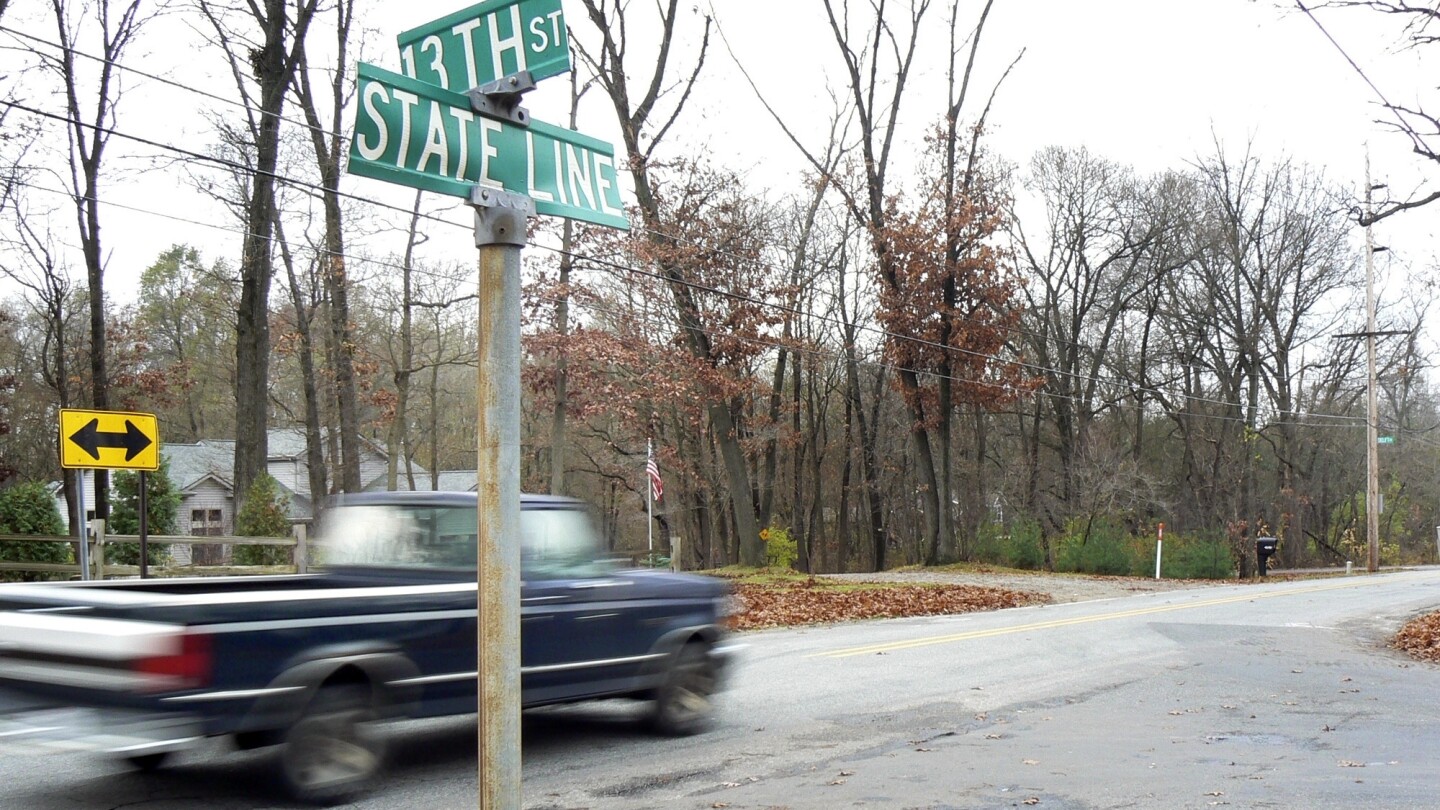
While much of the border runs through rural farmland, several communities directly straddle the state line, including the unincorporated community of Ray, where residents live in either Michigan or Indiana depending on which side of the main street they call home.
Proponents view an updated border survey as a preventive measure that would forestall confusion and potential legal disputes in areas that don’t clearly fall within one state or the other. Once completed, the border would be defined to within centimeters, with new markers installed to ensure the state line remains clearly identifiable for future generations.
“We have positive goodwill and desire on both sides of the border to just formalize this and get it done,” Lindsey said.
Fact Checker
Verify the accuracy of this article using The Disinformation Commission analysis and real-time sources.

12 Comments
This is an interesting issue that highlights the importance of clear and well-defined state borders. Even small discrepancies can lead to significant legal and jurisdictional challenges down the line. It’s good to see efforts underway to properly survey and document the Michigan-Indiana border.
It’s remarkable that the 110-mile border between Michigan and Indiana has remained largely undefined for nearly 200 years. This case highlights the importance of regular surveying and documentation to maintain clear geographic boundaries, even for long-established state lines.
You make a good point. Regular surveying and updating of state borders should be a standard practice to avoid these types of issues. Modern mapping and GIS technologies make this process much more efficient compared to the original 1827 survey.
This is an interesting case study on the importance of geographic precision when it comes to defining state boundaries. Even small discrepancies in the border can lead to significant legal and administrative headaches if not addressed in a timely manner.
Agreed. Maintaining clear and accurate state borders is crucial for effective governance and public safety. It’s good to see Michigan and Indiana taking steps to properly document and delineate their shared border.
The fact that the Michigan-Indiana border has remained largely undefined for nearly two centuries is quite remarkable. This case highlights the need for regular surveying and documentation to ensure state boundaries are properly maintained over time, even for long-established borders.
Jurisdictional disputes over state borders can quickly become complex and contentious if not properly managed. While this may not seem like an immediate concern, it’s wise for Michigan and Indiana to work together proactively to clarify their shared border and avoid potential problems down the road.
Maintaining accurate state borders is crucial for effective governance and administration. While this may not seem like a pressing issue now, it’s wise for Michigan and Indiana to proactively address any ambiguities before they cause real problems for residents and local authorities.
Absolutely. Being proactive now to clarify the border can help avoid messy disputes in the future. Small gaps or overlaps in jurisdiction can quickly escalate if not addressed properly.
While this border issue may not seem pressing now, it’s smart for Michigan and Indiana to proactively address any ambiguities. Unclear jurisdictional boundaries can quickly lead to significant legal and administrative headaches if not resolved in a timely manner.
Establishing and maintaining clear state borders is an important but often overlooked aspect of governance. It’s good to see Michigan and Indiana working to properly document and delineate their shared border, even if it’s taken nearly 200 years to do so.
This case highlights the importance of regular geographic surveying and documentation to ensure state boundaries remain clear over time. Even small discrepancies in the border can potentially lead to complex legal and administrative issues if not addressed proactively.