


Listen to the article
Media Watchdog Finds “War Crime” Label Predominantly Applied to U.S. and Israel in Iran Conflict
Mainstream media outlets have disproportionately applied the term “war crime” to actions by the United States and Israel while largely avoiding its use when reporting on Iranian military activities, according to a new analysis by a Middle East-focused media watchdog group.
The Committee for Accuracy in Middle East Reporting and Analysis (CAMERA) released findings Wednesday revealing that in the first three weeks of the Iran conflict, major news outlets used the phrase “war crime” 32 times, with 88% of those instances directed solely toward U.S. or Israeli actions.
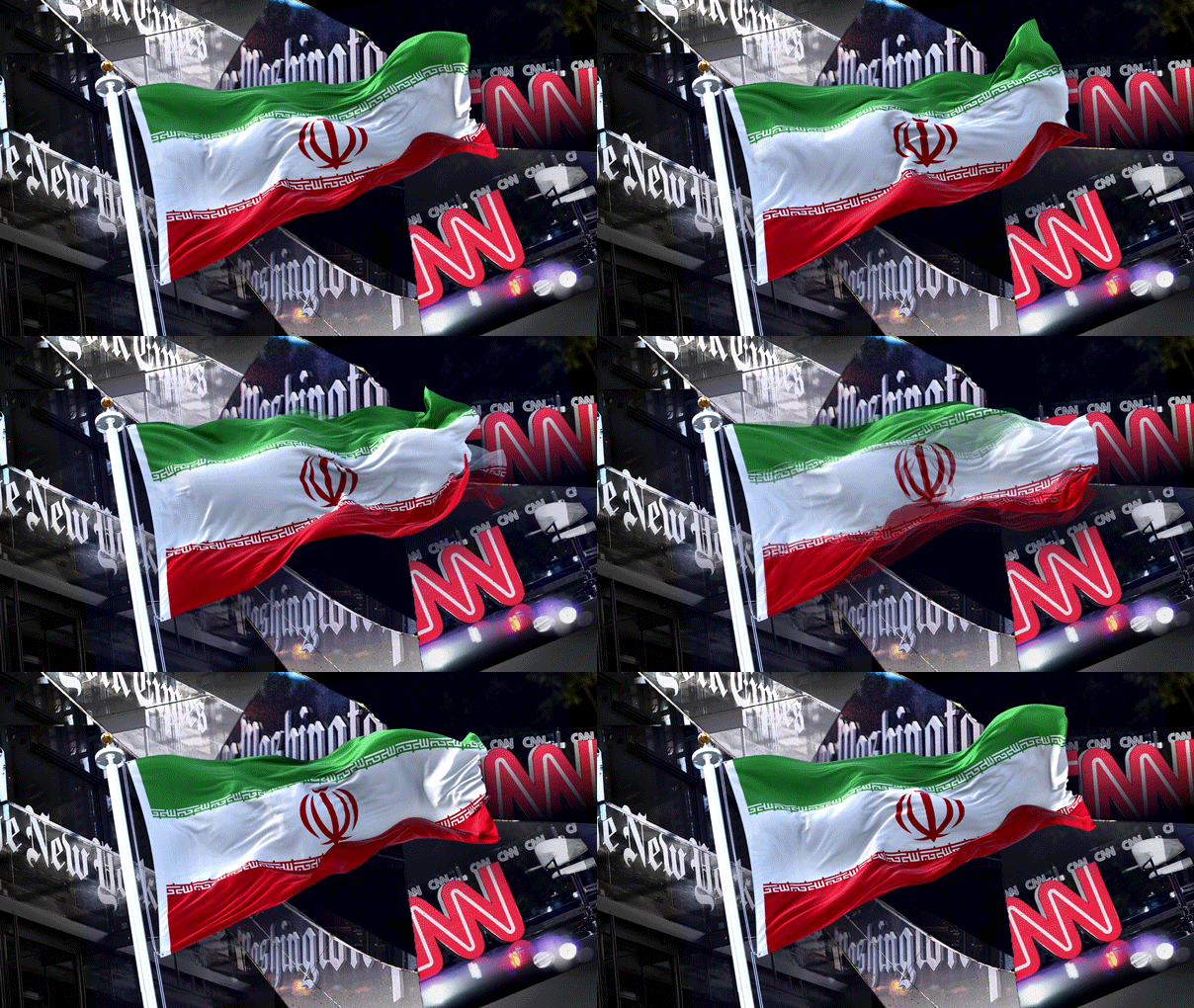
David Litman, CAMERA’s research manager who conducted the study, examined coverage from five prominent news organizations: the BBC, CNN, NBC News, The New York Times, and The Washington Post. His analysis found that none of the “war crime” references were directed exclusively at Iran’s actions, while four instances (12%) were either unattributed or applied to both sides.
“This journalistic malpractice inverts reality,” Litman wrote in his assessment of the findings.
The analysis noted that nearly all references to potential war crimes stemmed from reporting on a single incident—an airstrike early in the conflict that allegedly destroyed a school in Minab, Iran. The Pentagon continues to investigate this incident, according to CAMERA’s report.
The study highlights several Iranian military actions that received no “war crime” designation from the examined media outlets. These include Iran’s use of cluster munitions in populated areas of Israel, which CAMERA notes “almost certainly constitutes a war crime” even though cluster munitions themselves are not universally banned.
Other Iranian activities not labeled as war crimes in the coverage included strikes on energy installations and other key infrastructure in nations not officially involved in the conflict, such as Kuwait and Bahrain. The analysis found that even when Iran was mentioned in discussions of war crimes, it was only in conjunction with equal criticism of Western actions.
George Mason University law professor Adam Mossoff commented on the analysis, writing on X (formerly Twitter) that “data analytics confirm huge bias in favor of pro-Islamic regime of Iran by BBC, CNN, NBC and NY Times.” Mossoff described Iran’s actions, including “shooting missiles and suicide drones at civilian targets” and “firing missiles at holy sites in Old Jerusalem,” as receiving zero identification as standalone war crimes by major Western media organizations, calling the discrepancy “shameful.”
The study comes amid heightened tensions in the Middle East and growing scrutiny of media coverage of the conflict. CAMERA, founded in Washington in 1982 by social worker Winifred Meiselman, was originally created in response to perceived anti-Israel bias in The Washington Post’s coverage of Israel’s incursion into Lebanon.
The organization has counted prominent political figures among its early advisors, including Senator Charles Grassley (R-Iowa), former Senator Rudy Boschwitz (R-Minnesota), and former Representative Tom Lantos (D-California).
Fox News Digital reported reaching out to communications officials at all five media organizations cited in the study—CNN, the BBC, The Washington Post, The New York Times, and NBC News—but received no response by publication deadline.
The findings raise important questions about objectivity in international conflict coverage and how terminology that carries significant legal and moral weight is applied across different actors in complex geopolitical situations.
Fact Checker
Verify the accuracy of this article using The Disinformation Commission analysis and real-time sources.

7 Comments
This seems like an important issue regarding media bias and the use of charged terminology like ‘war crime’. I appreciate CAMERA digging into the data to try to identify any selective or disproportionate application of the label.
Agreed, transparency and accountability in journalism are vital. It will be interesting to see if this spurs any self-reflection or changes in reporting practices among the outlets covered in the analysis.
The media’s role in shaping public perception during conflicts is a complex issue. While I don’t have a strong opinion on this specific case, I think it’s valuable for watchdog groups to examine reporting patterns and highlight potential biases.
Interesting analysis from CAMERA. Unbiased and objective reporting is crucial, especially on sensitive geopolitical issues like this Iran conflict. I’d be curious to see how the coverage compares to past conflicts involving different parties.
Objective journalism is essential, especially on sensitive geopolitical topics. This analysis from CAMERA seems like a valuable contribution to that effort, even if the findings are somewhat concerning. I’d be interested to see how other media outlets respond.
The selective use of loaded terminology like ‘war crime’ is certainly concerning if true. While I don’t have a strong stance on the Iran conflict itself, I believe impartial and fact-based reporting should be the goal for all media outlets.
This is an insightful analysis that raises important questions about media objectivity. I’m curious to learn more about the context and nuances around the use of the ‘war crime’ label in this conflict. Balanced reporting is crucial.