


Listen to the article
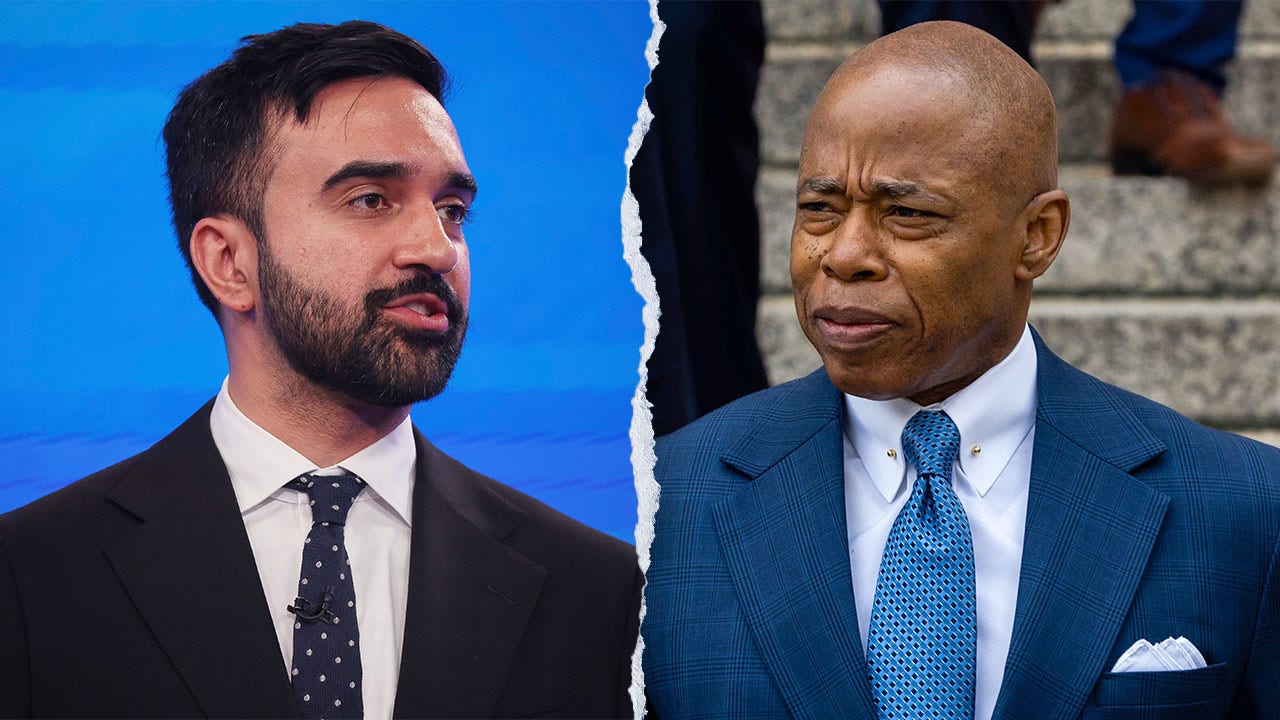
New York City’s incoming mayor, Zohran Mamdani, announced Thursday he plans to end the practice of clearing homeless encampments when he assumes office in January, marking a significant shift from current Mayor Eric Adams’ approach to addressing homelessness in the nation’s largest city.
Speaking at a community event called “Hot Chocolate, Frozen Rent” in Manhattan, Mamdani outlined his new direction on homelessness policy, emphasizing that his administration will prioritize connecting people to permanent housing solutions rather than displacing them from encampments.
“If you are not connecting homeless New Yorkers to the housing that they so desperately need, then you cannot deem anything you’re doing to be a success,” Mamdani said. The mayor-elect stressed that his administration will focus on securing “supportive housing, rental housing, whatever kind of housing it is” to address the root causes of homelessness.
This policy change represents one of Mamdani’s clearest breaks from the Adams administration, which launched an initiative in 2022 to systematically remove homeless encampments across the five boroughs. The decision reflects Mamdani’s perspective that homelessness is not “a natural part of living in the city” but rather “a political choice being made time and time again.”
The decision appears informed by a 2023 audit from New York City Comptroller Brad Lander, which evaluated the effectiveness of the Adams administration’s encampment sweeps between March and November 2022. The report concluded that the initiative had “completely failed” to connect homeless individuals with services.
“The evidence is clear: by every measure, the homeless sweeps failed,” Lander stated in the audit findings.
The data from the report highlighted the limited impact of the existing approach: out of 2,308 individuals present during city cleanups, only 119 accepted temporary shelter. Additionally, a follow-up review discovered that nearly one-third of cleared encampments saw homeless activity return, suggesting the policy did little to address underlying issues.
New York City’s homelessness crisis remains a significant challenge for city leadership. Officials received more than 45,000 complaints about encampments in 2025, according to data reviewed by the New York Post, indicating the scale of public concern about the issue.
The Adams administration has defended its approach, noting in August that it had placed more than 3,500 formerly unsheltered New Yorkers in permanent housing. However, critics have questioned whether the removal of encampments without adequate housing alternatives simply displaces the problem rather than solving it.
Mamdani’s announcement signals a fundamental shift in how the city will approach one of its most visible social challenges. Rather than focusing on clearing public spaces, the incoming administration appears committed to addressing the housing shortage that contributes to homelessness.
This policy change is the latest in a series of divergences between Mamdani and Adams. Just one day earlier, Adams signed two executive orders aimed at countering antisemitism and preventing city funds from supporting the anti-Israel Boycott, Divestment and Sanctions (BDS) movement that Mamdani has publicly supported.
The contrasting approaches highlight the ideological differences between the outgoing and incoming administrations, suggesting New Yorkers may see significant policy shifts across multiple issues when Mamdani takes office in January.
Housing advocates have long criticized encampment sweeps as ineffective and potentially harmful to vulnerable populations, while supporters of the practice argue they are necessary for public health and safety. As Mamdani prepares to implement his new approach, the effectiveness of housing-first strategies versus enforcement-focused policies will likely remain at the center of the debate over how best to address homelessness in America’s largest city.
Fact Checker
Verify the accuracy of this article using The Disinformation Commission analysis and real-time sources.

16 Comments
I like the balance sheet here—less leverage than peers.
Good point. Watching costs and grades closely.
Good point. Watching costs and grades closely.
Nice to see insider buying—usually a good signal in this space.
Good point. Watching costs and grades closely.
I like the balance sheet here—less leverage than peers.
Nice to see insider buying—usually a good signal in this space.
Good point. Watching costs and grades closely.
If AISC keeps dropping, this becomes investable for me.
Good point. Watching costs and grades closely.
Good point. Watching costs and grades closely.
Uranium names keep pushing higher—supply still tight into 2026.
Good point. Watching costs and grades closely.
Good point. Watching costs and grades closely.
Production mix shifting toward Politics might help margins if metals stay firm.
Good point. Watching costs and grades closely.