


Listen to the article
Maine Set to Become First State to Pause AI Data Center Construction
Maine is on the verge of becoming the first state in the nation to slam the brakes on energy-hungry AI data centers, as lawmakers push back against tech giants over fears of higher power bills, strained grids and environmental impact.
The measure, now headed to Democratic Gov. Janet Mills, would pause approvals for data centers requiring more than 20 megawatts of power until October 2027, while a state-appointed council studies their impact on the power grid, energy bills and the environment.
The legislation passed the state’s Democrat-controlled House 79-62 and Senate 21-13, marking one of the most aggressive moves yet against the rapid expansion of data centers tied to artificial intelligence and Big Tech.
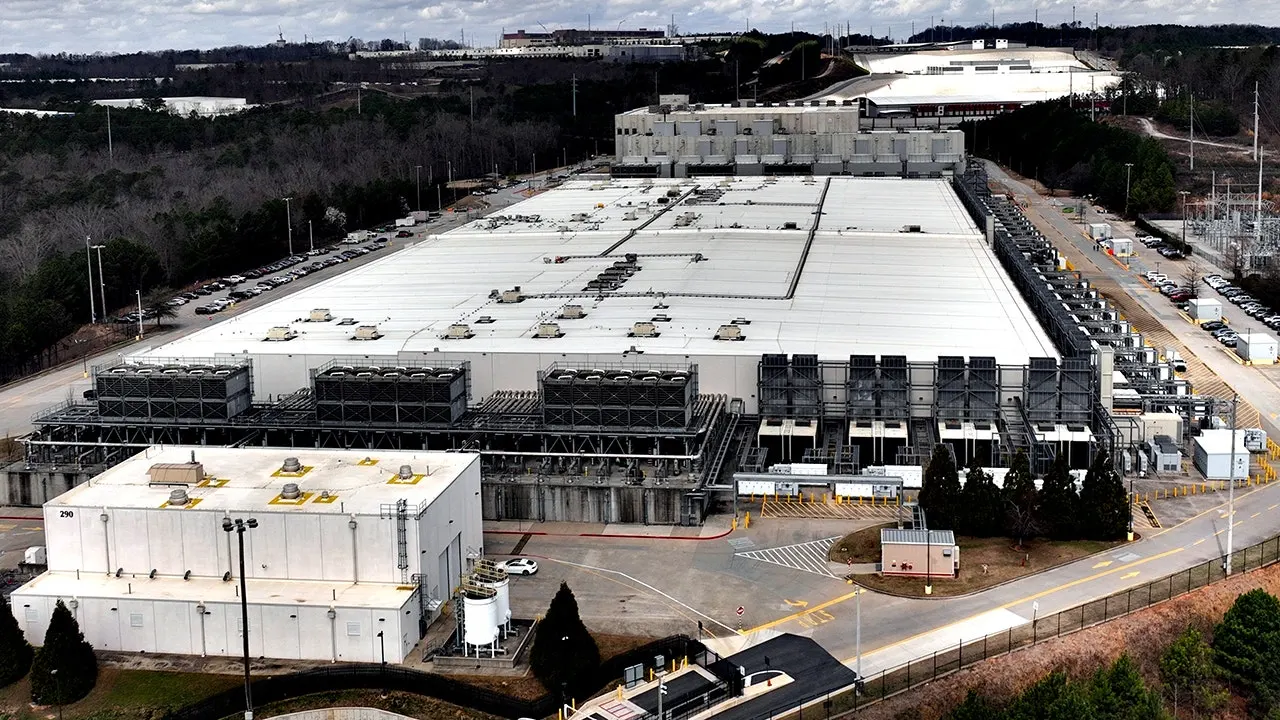
Supporters say the pause is needed to protect residents from the massive energy demands of so-called “hyperscale” facilities, which can consume as much electricity as small cities.
“It’s not that there’s no place for data centers in Maine,” Democratic Rep. Melanie Sachs, who sponsored the measure, told The Associated Press. “Frankly, the tradeoffs have not been shown to be of benefit to our ratepayers, water usage or community benefit in terms of economic activity.”
Growing National Concern Over Data Center Impact
Opposition to data centers has been building nationwide as communities raise alarms about strain on power grids, higher electricity bills and heavy water usage. Analysts have warned that parts of the U.S. grid could face reliability issues in the coming years if demand continues to surge, particularly as artificial intelligence applications become more widespread.
The timing of Maine’s action comes amid increasing scrutiny from lawmakers on both sides of the political aisle. In February, Senators Josh Hawley (R-Mo.) and Richard Blumenthal (D-Conn.) introduced bipartisan legislation aimed at ensuring that electricity costs associated with data centers aren’t passed on to American consumers.
At least 11 other states are considering similar restrictions, but Maine’s bill is the first to successfully pass both legislative chambers, potentially setting a precedent that could influence how other states approach the issue.
Economic Opportunity vs. Environmental Concerns
The debate highlights the tension between economic development and environmental protection. Critics of the moratorium argue it could drive away valuable investment and job opportunities in a state that has traditionally struggled to attract high-tech industries.
“We think that these data centers could bring good jobs, good opportunities to these regions,” Montana Towers, a policy analyst with the free market Maine Policy Institute, told the AP. “And a lot of these concerns about them are luddite in nature.”
These concerns reflect a broader national conversation about balancing technological advancement with sustainable development. In regions like Virginia’s “Data Center Alley” near Washington D.C., communities have witnessed both economic benefits and challenges from the rapid proliferation of these facilities.
Federal Response to Data Center Expansion
The issue has attracted attention at the federal level as well. The Trump administration has backed data center expansion as critical to competing with China in artificial intelligence, even as it recently pushed tech companies to commit to covering the cost of new power generation needed to run their facilities.
In a notable development, several major technology companies signed a pledge at the White House earlier this year committing to pay for the increased electricity capacity their data centers require, rather than passing those costs to regular consumers.
Meanwhile, progressive lawmakers like Senator Bernie Sanders and Representative Alexandria Ocasio-Cortez have introduced legislation calling for a nationwide moratorium on new data centers, citing environmental concerns, potential electricity price increases, and possible job displacement.
What Comes Next for Maine
Governor Mills has not yet indicated whether she will sign the bill, though she has sought an exemption for a smaller project already underway that would reuse existing infrastructure. Her decision will be closely watched by technology companies, environmental groups, and other state governments considering similar measures.
If enacted, Maine’s moratorium would serve as a test case for how states balance economic growth against the mounting energy demands of the AI boom. The state-appointed council’s findings could also provide valuable data for policymakers nationwide grappling with similar challenges.
As artificial intelligence continues its rapid development, the tension between technological advancement and environmental sustainability will likely intensify, making Maine’s approach a potential model for managing this complex relationship.
Fact Checker
Verify the accuracy of this article using The Disinformation Commission analysis and real-time sources.

11 Comments
This is a complex issue with valid concerns on both sides. I’m glad to see Maine taking a thoughtful, measured approach to addressing the energy and environmental impacts of AI data centers before approving more.
This is an interesting policy move by Maine to address the growing energy demands of AI data centers. The environmental and grid impacts are real concerns that need to be carefully considered.
A moratorium gives the state time to study the issue and find the right balance between supporting tech innovation and protecting ratepayers and the environment.
As the use of AI and cloud computing expands, states will likely face more of these tradeoffs. Glad to see Maine taking a proactive approach to understand the implications before approving more energy-intensive facilities.
Will be curious to see what the state-appointed council recommends in terms of policies and regulations to address the concerns.
The energy demands of AI and cloud computing are only going to grow, so it’s wise for states to get ahead of this trend. Glad to see Maine taking a proactive stance to protect its power grid and ratepayers.
This is an important issue that more states will likely have to grapple with as the tech industry continues to expand. Kudos to Maine for taking the initiative to study the impacts before approving more data centers.
It will be interesting to see what the state-appointed council uncovers in their study of the impacts of AI data centers. Hopefully, they can find a way to support tech innovation while also protecting the environment and ratepayers.
A moratorium is a prudent move to give Maine time to fully understand the tradeoffs before allowing more energy-intensive data centers to be built. I hope the state’s findings lead to a balanced approach that works for both the tech industry and residents.
This is a bold move, given the strong push by tech companies to build more data centers. Kudos to Maine for putting the interests of residents first and taking the time to study the impacts.
I hope other states follow suit and take a more measured approach to approving these types of energy-intensive projects.