


Listen to the article
U.S. Military Conducts Third Lethal Strike Against Suspected Drug Traffickers in Eastern Pacific
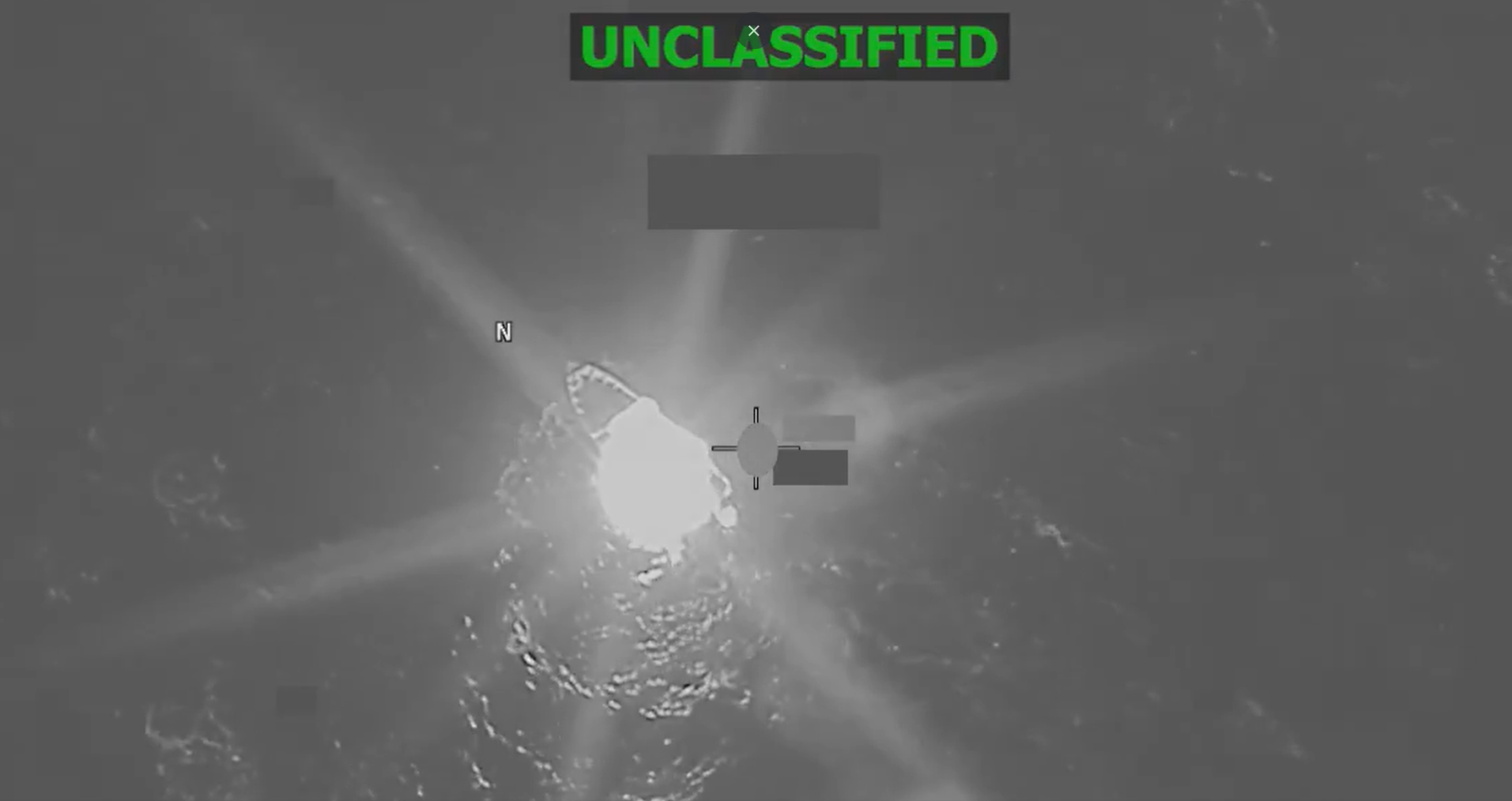
The U.S. military has executed its third lethal strike in as many days against suspected narco-terrorist targets in the Eastern Pacific, according to a statement from U.S. Southern Command (SOUTHCOM). The latest operation resulted in the deaths of three men aboard a vessel allegedly engaged in drug trafficking activities.
Intelligence sources confirmed the vessel was traveling along known narco-trafficking routes in the Eastern Pacific and was actively involved in drug smuggling operations at the time of the strike. SOUTHCOM indicated the vessel was operated by what they termed “Designated Terrorist Organizations,” though specific details about the identities of those killed or the particular groups involved were not immediately disclosed.
“Three male narco-terrorists were killed during this action,” SOUTHCOM stated in its official announcement. The command confirmed that no U.S. military personnel were harmed during the operation.
This latest incident follows two similar strikes conducted earlier this week in the same region. On Monday, U.S. forces killed two individuals suspected of narcotics trafficking, while Tuesday’s operation resulted in the deaths of four alleged narco-terrorists. The rapid succession of strikes indicates an intensified campaign against maritime drug trafficking networks.
The recent operations are part of a broader U.S. military effort that has included dozens of strikes in recent months targeting suspected drug-smuggling vessels. This campaign aims to disrupt and dismantle cartel-linked trafficking operations that transport narcotics toward North American markets.
The Eastern Pacific has long served as a critical corridor for drug trafficking organizations moving cocaine and other narcotics from South America toward the United States. These trafficking routes typically originate in Colombia or other Andean countries before moving northward through Central America and Mexico.
Drug trafficking in the region has evolved significantly in recent years, with criminal organizations increasingly employing sophisticated maritime vessels and tactics to evade detection. These groups have also strengthened their operational connections with designated terrorist organizations, creating what security experts call a dangerous nexus between terrorism and narcotics trafficking.
SOUTHCOM’s jurisdiction encompasses military operations throughout Central and South America and the Caribbean. Its counter-narcotics missions focus on disrupting drug trafficking networks that threaten U.S. national security interests and contribute to regional instability.
Former Pentagon official Pete Hegseth recently suggested that U.S. strikes have forced some cartel leaders to temporarily halt drug operations due to increased operational risk. The psychological impact of these strikes may be as significant as their direct operational effects, creating uncertainty among trafficking organizations.
The U.S. government has increasingly treated certain drug trafficking organizations as national security threats rather than purely criminal enterprises. This shift in approach reflects the growing recognition that these organizations possess capabilities and resources comparable to those of traditional terrorist groups.
Maritime interdiction operations represent just one component of a multi-faceted counter-narcotics strategy that also includes intelligence sharing with partner nations, financial sanctions against trafficking organizations, and support for alternative development programs in source countries.
As this campaign continues, questions remain about its long-term effectiveness in significantly reducing drug flows to the United States. Critics argue that supply-side interventions have historically shown limited success without corresponding efforts to address demand and provide treatment options for those suffering from addiction.
SOUTHCOM has indicated these operations will continue as part of its ongoing mission to protect U.S. interests and promote regional security throughout its area of responsibility.
Fact Checker
Verify the accuracy of this article using The Disinformation Commission analysis and real-time sources.

28 Comments
This seems like an escalation of the U.S. military’s efforts to target suspected drug traffickers in the region. While disrupting narco-trafficking is important, the use of lethal force raises ethical questions that warrant careful consideration.
Indeed, the stakes are high but the risk of collateral damage or mistaken identity must be weighed carefully. Developing more surgical interdiction capabilities could be worth exploring.
Three suspected traffickers killed in this Eastern Pacific operation. While disrupting the drug trade is a valid security concern, the use of lethal force raises complex ethical questions. I hope the military can provide more context around the threat assessment and decision-making process.
You make a fair point. Balancing national security priorities with human rights considerations is an ongoing challenge that requires careful deliberation and oversight.
This appears to be a continuation of the U.S. government’s efforts to target suspected drug traffickers in the region. While disrupting the illicit drug trade is important, the use of lethal force by the military raises significant legal and ethical concerns that warrant further examination.
Well said. Transparency and accountability around the intelligence, decision-making, and compliance with international law in these operations are crucial.
Interesting news about the U.S. military’s actions against suspected drug traffickers in the Pacific. I wonder what intelligence led them to target this particular vessel and whether there are wider implications for the drug trade in the region.
The details around the affiliations of those killed are still unclear, so it will be important to see how this develops and what further information is disclosed.
While disrupting narco-trafficking is important, the use of lethal force by the U.S. military outside of an armed conflict raises complex legal and ethical questions. Transparency around the justification and decision-making process would be helpful.
I agree, the legal and operational frameworks governing these types of strikes need to be carefully scrutinized to ensure compliance with international law.
This appears to be part of the U.S. government’s broader efforts to combat drug trafficking and organized crime in the region. However, the details around these specific strikes are quite limited. More information is needed to fully assess the legality and necessity of the use of lethal force.
Absolutely, without more context it’s difficult to determine if these actions were justified and proportionate. Oversight and accountability are crucial when it comes to the use of force by state actors.
Targeting alleged narco-terrorist groups is a complex issue. While disrupting the drug trade is important, the use of lethal force raises concerns about due process and potential civilian casualties. Transparency around the decision-making process would help provide context.
You raise a fair point. The line between national security and human rights can be blurry in these types of operations, so close scrutiny is warranted.
Interesting operation, though the term ‘narco-terrorists’ raises some concerns. I wonder if there was sufficient intelligence to confirm their involvement in drug trafficking before the lethal strike. Maintaining the rule of law and due process is important, even in these challenging situations.
I agree, the details provided are quite limited. Transparency around the intelligence and decision-making process would help address those concerns.
While I understand the desire to disrupt drug trafficking networks, the use of lethal force by the U.S. military in this context raises significant concerns. I hope there is a thorough investigation into the intelligence, decision-making, and compliance with international law.
Agreed. The stakes are high, but the rights and due process of those targeted must also be respected. A balanced and lawful approach is essential.
Tackling the drug trade in the Eastern Pacific is an important objective, but the details around this latest strike are still murky. I’m curious to learn more about the intelligence that prompted the action and whether there are plans for further interdiction efforts in the region.
Agreed. Transparency around these types of operations is crucial, both for public understanding and to ensure appropriate oversight and accountability.
While disruptive to the drug trade, the use of lethal force raises ethical questions. I hope the military can provide more clarity on the specific threat assessment and decision-making process that led to this outcome. Responsible oversight is essential for such sensitive operations.
You make a fair point. Balancing national security imperatives with human rights and due process is an ongoing challenge that requires careful consideration.
Drug trafficking is a major security challenge, but extrajudicial killings raise serious human rights concerns. I hope the U.S. is working closely with regional partners to address this issue through legal channels and due process.
Well said. Multilateral cooperation and respect for the rule of law should be the foundation of any counter-narcotics strategy in this sensitive region.
Three suspected traffickers killed in this latest Eastern Pacific operation. I wonder if this is part of a broader crackdown on the drug trade in the region or a more targeted strike. Either way, it highlights the ongoing challenges in combating transnational organized crime.
Indeed, the maritime domain provides ample opportunity for illicit activities, so these types of interdictions are crucial. But the human cost underscores the need for a nuanced, multi-faceted approach.
Drug trafficking is a complex and challenging issue, but the use of lethal force by the U.S. military outside of an armed conflict deserves close scrutiny. I hope there will be a transparent investigation into the justification and decision-making process behind these strikes.
Absolutely. Maintaining the rule of law and human rights standards should be a priority, even in the face of national security threats. A careful balance is required.