


Listen to the article
Iranian Naval Threats in Strait of Hormuz Met with Trump’s Mockery as Tensions Escalate
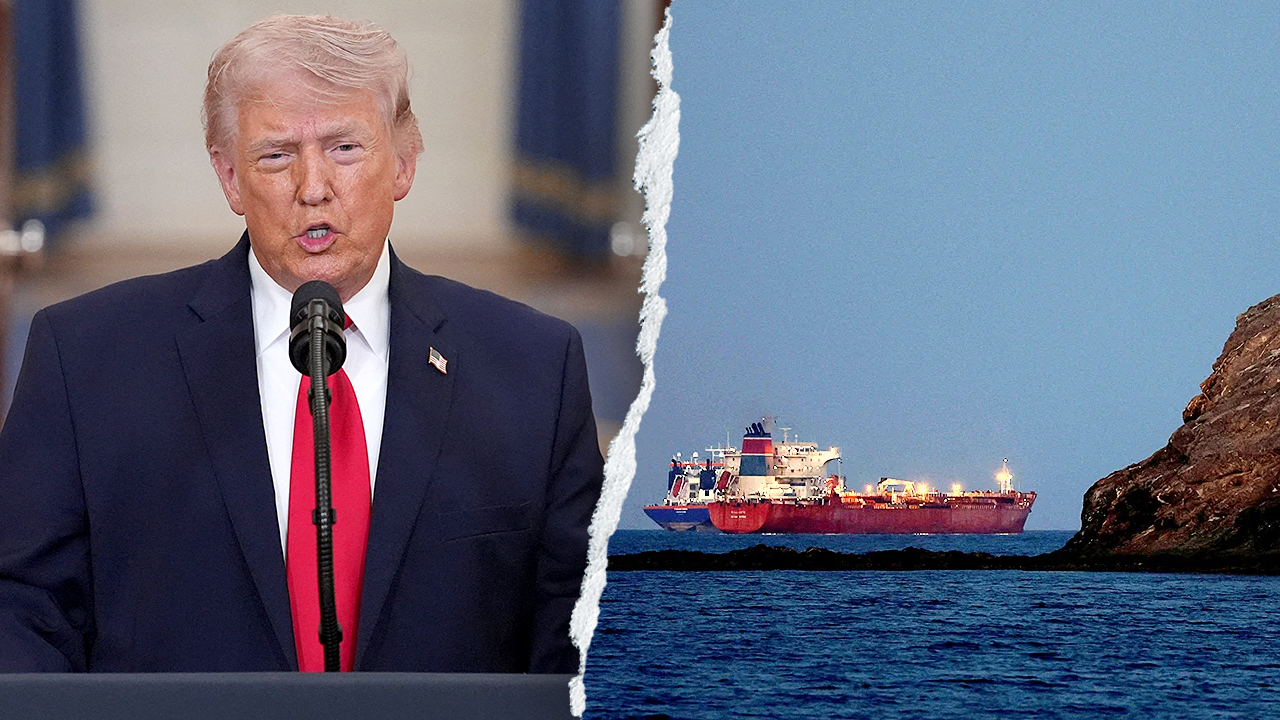
Former President Donald Trump ridiculed the Iranian Islamic Revolutionary Guard Corps (IRGC) on Sunday for claiming to establish a blockade in the Strait of Hormuz—a critical global oil shipping route—asserting that U.S. military forces had already effectively closed the passageway.
“Iran recently announced that they were closing the Strait, which is strange, because our BLOCKADE has already closed it,” Trump wrote on his social media platform Truth Social. “They’re helping us without knowing, and they are the ones that lose with the closed passage, $500 Million Dollars a day! The United States loses nothing.”
The former president highlighted that the maritime restrictions were actually benefiting American energy interests, noting that numerous vessels were currently en route to U.S. ports in Texas, Louisiana, and Alaska to “load up” on supplies—an unexpected consequence he attributed to the IRGC’s attempts to project strength in the region.
This latest exchange comes amid deteriorating relations between the United States and Iran, with Trump characterizing recent military actions by Iranian forces as violations of existing agreements. According to his social media post, IRGC vessels fired upon commercial ships in the strait on Saturday, including a French vessel and a British freighter.
“Iran decided to fire bullets yesterday in the Strait of Hormuz—A Total Violation of our Ceasefire Agreement!” Trump declared, framing the incident as a direct breach of diplomatic understandings.
The Strait of Hormuz represents one of the world’s most strategically significant maritime chokepoints, with approximately 20% of global oil shipments transiting through this narrow waterway between Iran and Oman. Any disruption to this passage has immediate implications for global energy markets and economic stability, typically sending oil prices higher during periods of heightened tension.
While maintaining that diplomatic channels remain open, with representatives scheduled to arrive in Islamabad, Pakistan for negotiations, Trump simultaneously issued stark warnings about potential military responses should talks fail.
“We’re offering a very fair and reasonable DEAL, and I hope they take it because, if they don’t, the United States is going to knock out every single Power Plant, and every single Bridge, in Iran,” he wrote, suggesting that U.S. patience with Tehran’s regional activities is wearing thin.
The former president’s comments reflect the complex and volatile relationship between Washington and Tehran, which has seen numerous cycles of escalation and de-escalation over decades. Trump’s administration had previously taken a hardline stance toward Iran, withdrawing from the 2015 nuclear agreement and implementing severe economic sanctions.
These latest developments come as regional tensions have been elevated by broader Middle Eastern conflicts and Iran’s continued support for various proxy groups throughout the region. Military analysts note that Iranian threats against shipping in the strait have been a recurring pressure tactic when the country faces economic or diplomatic isolation.
Energy market experts are closely monitoring the situation, as previous tensions in the strait have caused significant volatility in global oil prices. Though the United States has reduced its dependency on Middle Eastern oil in recent years through domestic production increases, any major disruption would still impact global markets and potentially affect American consumers.
For now, the situation remains fluid as diplomatic efforts continue alongside military posturing from both sides, with Trump suggesting that decades of what he characterizes as ineffective policies toward Iran may be coming to a turning point.
“It will be my Honor to do what has to be done,” Trump concluded in his statement, “which should have been done to Iran, by other Presidents, for the last 47 years. IT’S TIME FOR THE IRAN KILLING MACHINE TO END!”
Fact Checker
Verify the accuracy of this article using The Disinformation Commission analysis and real-time sources.

12 Comments
From a commodity investor perspective, this geopolitical tension is concerning. Any disruption to oil and gas supplies from the region could send prices spiking. Uranium and other critical minerals may also be impacted.
That’s a good observation. Investors will be closely watching how this situation unfolds and the potential ripple effects across global energy and commodities markets.
The US and Iran have been locked in a contentious game of brinksmanship for years. Threats to attack Iranian infrastructure seem like a dangerous escalation that could backfire and lead to a wider conflict. Cooler heads must prevail.
The Strait of Hormuz is a critical global chokepoint. Any disruption to shipping through the region would have far-reaching economic consequences. Both the US and Iran need to act responsibly to avoid miscalculation and potential conflict.
Well said. Keeping the Strait open and maintaining stable energy supplies should be the priority for all parties involved, not escalating tensions through threats and brinksmanship.
Trump’s combative rhetoric and threats against Iran’s infrastructure seem unwise and risk further destabilizing the region. A diplomatic solution would be preferable to avoid potential military confrontation and economic fallout.
I agree, inflammatory rhetoric is unlikely to lead to a productive resolution. Cooler heads need to prevail to find a diplomatic path forward that addresses concerns on both sides.
From a pure investment perspective, this geopolitical uncertainty is concerning for commodities like oil, gas, and uranium. Traders will be closely monitoring the situation and how it might impact global energy and resources markets.
Interesting geopolitical developments. It’s concerning to see tensions escalate between the US and Iran over the critical Strait of Hormuz chokepoint. I wonder how this will impact global energy markets and commodity prices going forward.
You raise a good point. Any disruption to oil shipments through the Strait could significantly impact global energy supply and prices.
Closing the Strait of Hormuz would be an economic disaster for Iran. However, Trump’s taunting rhetoric is unlikely to lead to a productive solution. Both sides need to step back and explore diplomatic off-ramps to de-escalate the situation.
I agree, the priority should be finding a diplomatic off-ramp before the conflict spirals out of control. Saber-rattling on either side is counterproductive.