


Listen to the article
Iran’s Propaganda Evolution: From Religious Imagery to Digital Sophistication
A dramatic transformation has quietly taken place in Iran’s propaganda apparatus, signaling a strategic shift that security experts warn has significant implications for global information warfare. Moving away from traditional religious messaging, the Islamic Republic has embraced cutting-edge digital strategies designed specifically to influence Gen Z audiences worldwide.
Those familiar with Iran’s communication strategy during the Iran-Iraq War of the 1980s will recall propaganda dominated by religious iconography – massive posters of Ayatollah Khomeini, martyrs surrounded by halos of light, and imagery of young soldiers with religious headbands running through minefields. This analog propaganda, heavy with religious symbolism, was primarily designed for domestic consumption to mobilize citizens and reinforce obedience to the regime.
Today’s Iranian propaganda machine operates in a starkly different landscape. Tehran’s leadership has recognized that contemporary global youth do not respond to portraits of elderly clerics or footage of Islamic Revolutionary Guard Corps (IRGC) military parades. Instead, they’ve pivoted toward content that speaks directly to younger audiences through brief, visually appealing messages in English – the lingua franca of global digital culture.
“The Iranian security establishment has become acutely aware of who currently drives narratives on social media platforms like TikTok and Instagram,” explains a researcher specializing in Iranian civil movements. “They understand that influencing global opinion doesn’t happen through Islamic lectures but by mastering the algorithm of Western culture itself.”
This evolution represents a fundamental shift in approach. Rather than attempting to export revolutionary religious ideology, Iran now focuses on embedding its messaging within familiar Western digital formats that bypass critical thinking filters.
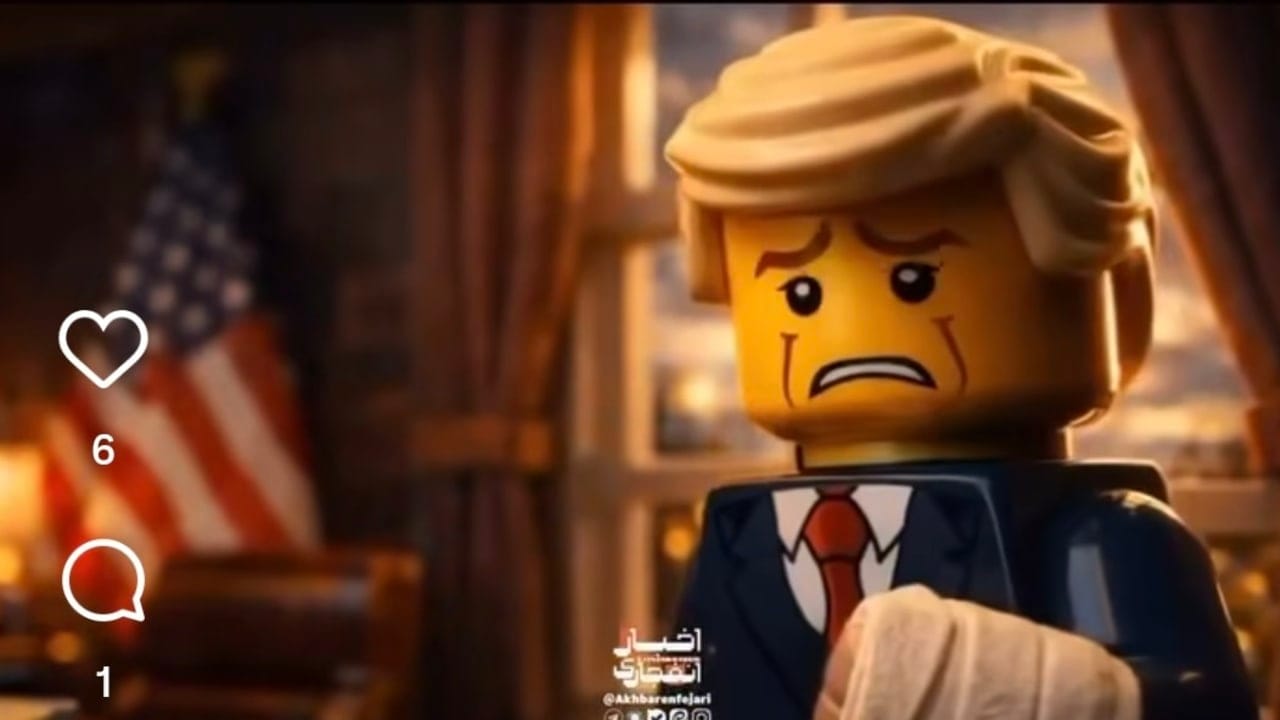
One striking example of this new approach is the use of LEGO-style animations created with artificial intelligence. These colorful, seemingly innocent videos convey complex political messages while appearing neutral and friendly. When young viewers in Los Angeles, London, or Tel Aviv encounter such content, they don’t see IRGC propaganda – they see something that feels familiar and accessible.
The Iranian propaganda apparatus has also become adept at deploying memes and emojis with double meanings. Their ability to package controversial issues in the visual language preferred by Gen Z and distribute them as if they were organic internet trends points to sophisticated understanding of digital culture. Analysts believe this indicates the presence of English-speaking young professionals within the IRGC who comprehend TikTok trends and global protest dynamics at a native level.
Unlike previous propaganda efforts that aimed to convince audiences of Iran’s religious righteousness, today’s strategy has more nuanced objectives. Iran no longer seeks admiration for its ideology but rather aims to create confusion and undermine the concept of objective reality itself.
“They don’t need Gen Z to love Iran,” notes one digital security expert. “They only need them to doubt other sources of information, adopt narratives offered through familiar formats like LEGO animations and memes, and unknowingly become distributors of Iranian messaging.”
By leveraging advanced Western technology tools to spread their viewpoints, Iranian propagandists effectively turn the openness of democratic societies against them. This transition from featuring Khamenei’s image to sophisticated AI-generated content represents a warning sign for intelligence agencies and media analysts worldwide.
The evolution signals that Iran’s information warfare capabilities now extend far beyond traditional propaganda. In air-conditioned offices in Tehran, teams are crafting AI prompts and conducting sophisticated information operations that rival the strategic importance of the country’s ballistic missile program.
The generation currently controlling Iran’s messaging strategy understands Western culture intimately. They recognize that in an era where truth is increasingly contested, whoever produces the most visually appealing, entertaining, and viral content effectively controls the global narrative. Iran has abandoned preaching in favor of engineering perception – a far more subtle and potentially more effective approach to influence operations in the digital age.
Fact Checker
Verify the accuracy of this article using The Disinformation Commission analysis and real-time sources.

10 Comments
This article highlights the growing challenge of combating state-sponsored disinformation campaigns that utilize advanced AI and data analytics. Countering such propaganda will require innovative solutions.
Absolutely. Governments and tech platforms will need to work together to develop robust frameworks for identifying and mitigating the spread of coordinated online influence operations.
This article highlights the growing challenge of state-sponsored disinformation campaigns that leverage emerging technologies. Addressing this issue will require a multi-faceted approach involving governments, tech companies, and civil society.
Well said. Collaboration and a shared understanding of the problem will be crucial in developing effective solutions to counter these sophisticated influence operations.
While the details of Iran’s propaganda machine are concerning, I’m curious to learn more about the specific tactics and technologies they’re employing. Understanding the methods used will be key to developing effective countermeasures.
Agreed. Deeper analysis of Iran’s digital propaganda strategies, including their use of AI, social media, and data analytics, could provide valuable insights for policymakers and tech companies working to combat such threats.
The shift in Iran’s propaganda tactics, from religious imagery to youth-oriented digital content, demonstrates the regime’s adaptability and willingness to leverage emerging technologies for geopolitical gain.
This underscores the importance of critical media literacy education, especially for younger generations who may be more susceptible to such sophisticated online influence campaigns.
Interesting to see how Iran’s propaganda tactics have evolved with the times. Leveraging digital tools and youth-focused messaging is a shrewd strategy, though still concerning from a global security perspective.
I agree, the shift towards more sophisticated digital propaganda is quite alarming. We’ll need to stay vigilant against these kinds of information warfare efforts.