


Listen to the article
Lawyers for Utah man accused of killing conservative activist seek to limit media access in high-profile case, citing fair trial concerns. A judge will hear arguments Thursday as the defense pushes to ban cameras in the courtroom.
A Utah judge is weighing crucial questions about media access in the case of Tyler Robinson, the 22-year-old charged with killing conservative activist Charlie Kirk, as defense attorneys argue that intense public scrutiny could jeopardize their client’s right to a fair trial.
Robinson’s legal team and the Utah County Sheriff’s Office have requested that Judge Tony Graf prohibit cameras in the courtroom during proceedings. The hearing scheduled for Thursday marks a significant moment in the case, with Robinson expected to appear in person after previously attending court via video or audio feed from jail.
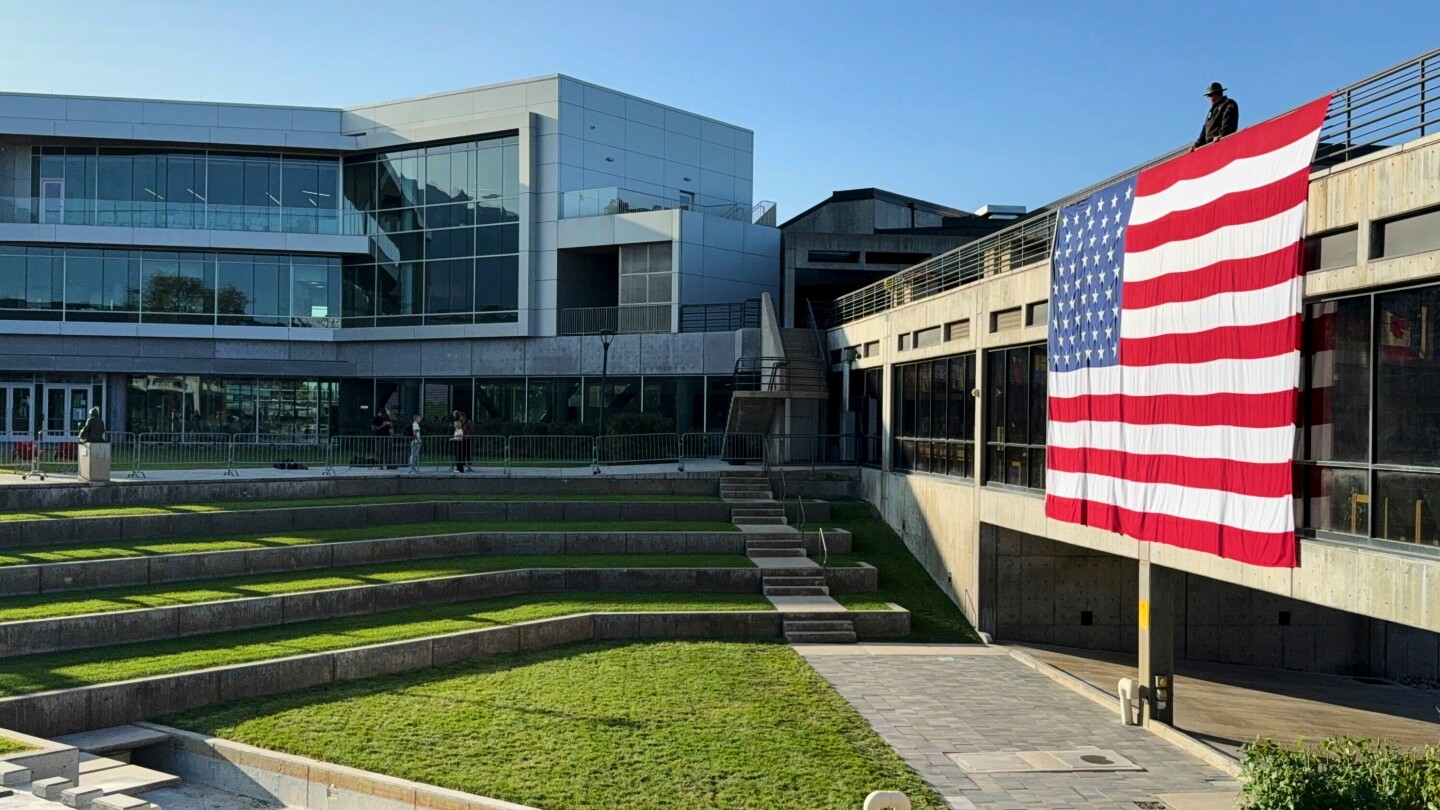
Prosecutors have charged Robinson with aggravated murder in the September 10 shooting of Kirk on the Utah Valley University campus in Orem. The case has drawn national attention due to Kirk’s prominence as a conservative political figure and close ally of former President Donald Trump. Prosecutors have indicated they will seek the death penalty.
A coalition of news organizations, including The Associated Press, is fighting to maintain media access, arguing that open court proceedings are fundamental to the American justice system.
Judge Graf has already acknowledged the “extraordinary” public attention the case has received and implemented several measures to protect Robinson’s presumption of innocence. Following a closed hearing on October 24, Graf ruled that Robinson may wear street clothes during pretrial hearings but must remain physically restrained for security reasons. The judge also prohibited media from capturing images of Robinson’s restraints, responding to defense concerns that widespread images of their client in shackles could prejudice potential jurors.
Michael Judd, representing the media coalition, has urged the court to allow news organizations to participate in discussions about any future requests for closed hearings or additional limitations. In court filings, Judd emphasized that open proceedings “safeguard the integrity of the fact-finding process” while fostering public confidence in the judicial system.
Current Utah court rules already place some restrictions on media coverage, typically designating one photographer and one videographer to document hearings and share content with other news outlets. Additional journalists and members of the public are generally permitted to attend to listen and take notes.
The case has attracted significant political attention. Shortly after Robinson’s arrest, former President Trump publicly declared, “With a high degree of certainty, we have him,” and added, “I hope he gets the death penalty.” These comments have been cited by the defense as evidence of the extraordinary pretrial publicity surrounding the case.
Charlie Kirk, the victim, was well-known for his work founding Turning Point USA, an organization focused on steering young voters toward conservatism. His widow, Erika Kirk, has advocated for transparency in the proceedings, stating, “We deserve to have cameras in there.”
Defense attorney Kathy Nester has raised additional concerns about misinformation spreading online. She pointed to digitally altered versions of Robinson’s initial court appearance photos circulating widely on social media, some falsely depicting him crying or having outbursts in court – events that never occurred.
The judge’s decision regarding media access will set an important precedent for how this high-profile case proceeds, balancing the constitutional rights of the accused against the public’s interest in transparent judicial proceedings. The outcome could influence how similar cases are handled in the future, particularly those that attract significant national attention in an era of rapid information sharing and heightened political polarization.
Fact Checker
Verify the accuracy of this article using The Disinformation Commission analysis and real-time sources.

22 Comments
Silver leverage is strong here; beta cuts both ways though.
Good point. Watching costs and grades closely.
Uranium names keep pushing higher—supply still tight into 2026.
The cost guidance is better than expected. If they deliver, the stock could rerate.
Good point. Watching costs and grades closely.
Good point. Watching costs and grades closely.
Interesting update on Judge to decide degree of media access in Charlie Kirk killing case. Curious how the grades will trend next quarter.
The cost guidance is better than expected. If they deliver, the stock could rerate.
Uranium names keep pushing higher—supply still tight into 2026.
Uranium names keep pushing higher—supply still tight into 2026.
Interesting update on Judge to decide degree of media access in Charlie Kirk killing case. Curious how the grades will trend next quarter.
Good point. Watching costs and grades closely.
Good point. Watching costs and grades closely.
Interesting update on Judge to decide degree of media access in Charlie Kirk killing case. Curious how the grades will trend next quarter.
I like the balance sheet here—less leverage than peers.
The cost guidance is better than expected. If they deliver, the stock could rerate.
Good point. Watching costs and grades closely.
Good point. Watching costs and grades closely.
The cost guidance is better than expected. If they deliver, the stock could rerate.
Good point. Watching costs and grades closely.
Good point. Watching costs and grades closely.
Silver leverage is strong here; beta cuts both ways though.