


Listen to the article
A federal judge on Friday blocked the Trump administration from enforcing a controversial Pentagon press policy, ruling that key elements of the regulations unlawfully restrict journalists’ access to the Defense Department.
U.S. District Judge Paul Friedman sided with The New York Times, which had sued the Pentagon and Defense Secretary Pete Hegseth in December after several of its journalists had their press credentials revoked for refusing to agree to new rules. The judge ordered the immediate reinstatement of credentials for seven Times reporters.
In his ruling, Friedman determined that the policy “fails to provide fair notice of what routine, lawful journalistic practices will result in the denial, suspension, or revocation” of Pentagon press credentials. He declared the restrictions violated First and Fifth Amendment rights to free speech and due process.
“Those who drafted the First Amendment believed that the nation’s security requires a free press and an informed people and that such security is endangered by governmental suppression of political speech,” Friedman wrote. “That principle has preserved the nation’s security for almost 250 years. It must not be abandoned now.”
The Pentagon swiftly responded, with spokesperson Sean Parnell announcing on social media platform X, “We disagree with the decision and are pursuing an immediate appeal.” The judge denied the Defense Department’s request to suspend the ruling for a week to allow for an appeal, instead giving Pentagon officials seven days to file a written report detailing their compliance.
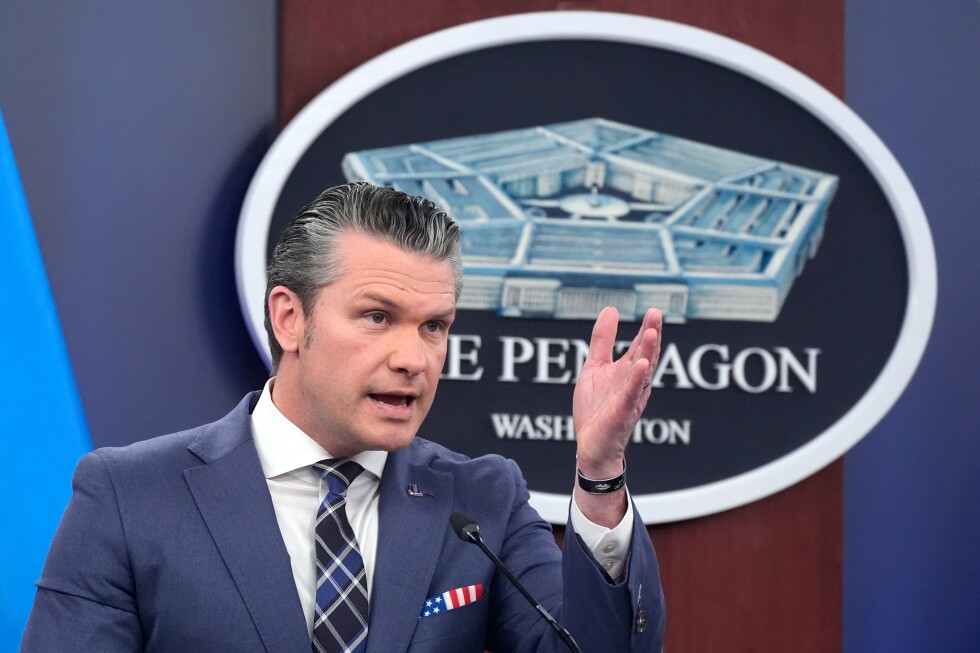
The case has highlighted growing tensions between the military and major news organizations during a period of heightened global conflict. The current Pentagon press corps primarily consists of conservative outlets that agreed to the new policy, while reporters from organizations that refused to consent—including The Associated Press—have continued covering military matters without official credentials.
Despite the restrictions, the Defense Department has occasionally permitted some journalists from legacy media to attend certain briefings, particularly regarding recent military operations against Iran. However, Pentagon critics note that Hegseth rarely calls on these reporters during question periods.
New York Times spokesperson Charlie Stadtlander praised the ruling as reinforcing “the constitutionally protected rights for the free press in this country.”
“Americans deserve visibility into how their government is being run, and the actions the military is taking in their name and with their tax dollars,” Stadtlander said in a statement.
The Pentagon had defended its credentialing policy as imposing “common sense” rules to protect national security information. Government attorneys argued the process aimed “to prevent those who pose a security risk from having broad access to American military headquarters.”
However, the judge found “undisputed evidence” that the policy was designed to weed out “disfavored journalists” and replace them with those who are “on board and willing to serve” the government—what he called a clear instance of illegal viewpoint discrimination.
The Times’ legal team had argued the policy was specifically designed to silence unfavorable press coverage of the Trump administration. Theodore Boutrous, an attorney representing the newspaper, called the ruling “a powerful rejection of the Pentagon’s effort to impede freedom of the press and the reporting of vital information to the American people during a time of war.”
In his decision, Judge Friedman acknowledged legitimate national security concerns but emphasized the heightened importance of press freedom during ongoing military operations: “Especially in light of the country’s recent incursion into Venezuela and its ongoing war with Iran, it is more important than ever that the public have access to information from a variety of perspectives about what its government is doing.”
The Pentagon Press Association, which includes AP reporters, called for the immediate reinstatement of credentials for all its members based on the judge’s ruling. The organization described the decision as “a great day for freedom of the press” and “hopefully a learning opportunity for Pentagon leadership, which took extreme steps to limit press access to information in wartime.”
The case also exposed what the judge viewed as inconsistent application of the Pentagon’s own rules. Friedman noted that the government had not objected to a “tip line” operated by Trump ally Laura Loomer, who had agreed to the Pentagon policy, while concluding that a similar Washington Post tip line violated regulations because it allegedly “targets” military personnel.
“I don’t see any meaningful difference between the two tip lines,” the judge wrote, highlighting the policy’s arbitrary enforcement.
Judge Friedman was nominated to the federal bench by Democratic President Bill Clinton. His ruling applies broadly to “all regulated parties,” potentially affecting numerous media organizations beyond The New York Times.
Fact Checker
Verify the accuracy of this article using The Disinformation Commission analysis and real-time sources.

16 Comments
It’s encouraging to see the courts stand up for the press’s constitutional rights. Limiting media access to the Pentagon sets a dangerous precedent that undermines democratic principles.
This ruling is a win for transparency and accountability. The public deserves a free press that can scrutinize the government without fear of retaliation or arbitrary credential denials.
Absolutely. An informed citizenry is crucial for a healthy democracy. I hope this decision encourages more government agencies to uphold press freedom.
Glad to see the court upholding press freedom and access to government information. A free and open press is vital for a healthy democracy, even when it covers sensitive national security matters.
Exactly. Journalists play a crucial watchdog role in holding the government accountable. Restricting their access is an attack on transparency and the public’s right to know.
The judge’s decision rightly recognizes that the Pentagon’s policy was an unconstitutional restriction on press freedom. Protecting journalists’ access to government information should be a bipartisan priority.
This is a significant win for press freedom and government accountability. The judge’s ruling rightly affirms that the Pentagon cannot arbitrarily restrict media access, even on national security matters.
This decision is a victory for the public’s right to know. Limiting media access to the Pentagon is a concerning attempt to control the narrative and restrict the free flow of information.
I’m glad the court recognized that the Pentagon’s policy violated journalists’ constitutional rights. A free press is the lifeblood of a healthy democracy, and this ruling reaffirms that principle.
Exactly. Unfettered media access to government institutions is crucial for holding those in power accountable. This is an important win for transparency and the public interest.
This is an important victory for the First Amendment and the public’s right to know. I hope this ruling sends a clear message that the government cannot arbitrarily limit media access to Pentagon information.
Agreed. Unfettered media access to government institutions is fundamental to a functioning democracy. Kudos to the NYT for fighting this and setting an important precedent.
The court’s decision is a victory for the public’s right to information and the press’s vital role in a democracy. I hope this sets a precedent that protects journalists’ ability to scrutinize the government.
Well said. Maintaining an open and independent media is essential for a functioning democracy. This ruling is an important safeguard against government overreach.
The judge’s ruling is a timely reminder that the government cannot simply restrict media access whenever it’s politically convenient. Upholding press freedom is essential, even on sensitive national security issues.
Well said. The First Amendment protections for journalists must be zealously guarded, regardless of the administration in power or the subject matter being covered.