


Listen to the article
Florida Judge Pushes for Resolution in “Alligator Alcatraz” Immigration Center Dispute
A federal judge in Florida is pressing for a settlement in a contentious lawsuit concerning attorney access for detainees at a controversial immigration facility in the Florida Everglades, colloquially known as “Alligator Alcatraz.”
U.S. District Judge Sheri Polster Chappell ordered a mandatory two-day settlement conference next month in her Fort Myers courtroom, requiring attorneys with settlement authority to attend. In her order issued last Friday, Judge Chappell emphasized the seriousness of the proceedings, stating, “The court will not entertain excuses regarding leaving early for flights or other meetings.” She has requested a status update at a hearing scheduled for next Monday.
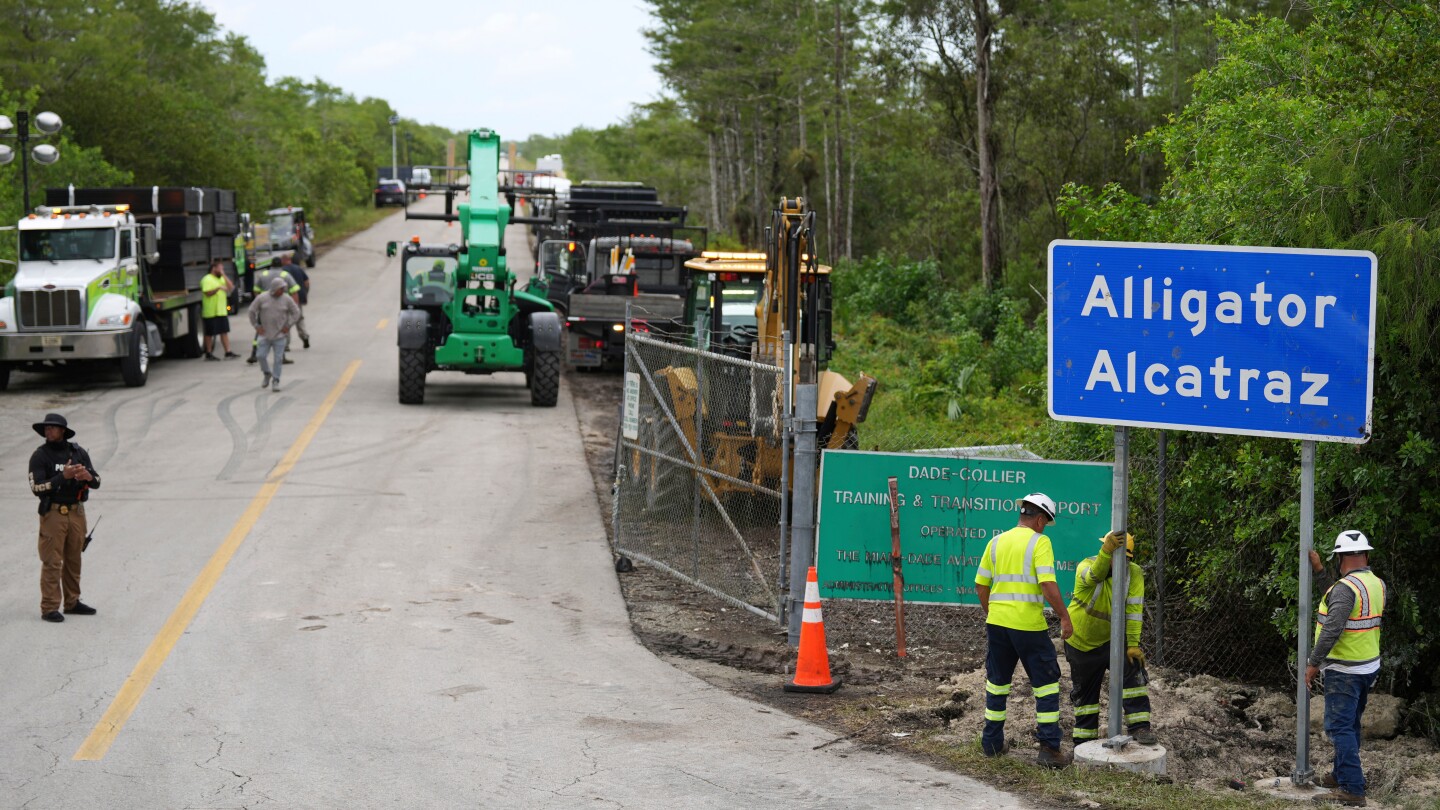
The legal access lawsuit represents one of three federal cases challenging practices at the detention center, which was constructed this summer at a remote airstrip in the Everglades by Florida Governor Ron DeSantis’s administration. The facility has become a flashpoint in the national immigration debate, drawing attention from both state and federal officials.
In the legal access case, attorneys representing detainees are seeking a preliminary injunction to improve communication channels with their clients. They allege several barriers to effective representation, including a requirement that attorneys schedule appointments three days in advance, unlike other detention facilities that permit walk-in visits during regular hours. They also claim that detainees are frequently transferred to other facilities after attorney appointments have been scheduled, and that significant scheduling delays prevent detainees from meeting with counsel before critical deadlines.
Florida officials have filed a motion to dismiss the case, arguing it is now moot as the initial concerns raised by detainees and their attorneys have been addressed. They attribute any previous delays to the logistical challenges of constructing a large-scale facility in a remote location with limited infrastructure. “In other words, there is no longer a live controversy,” Florida officials stated in their court filing.
The facility has also faced environmental challenges in court. In September, a federal appellate court panel allowed the center to continue operations by staying a lower court’s preliminary injunction that had ordered the facility to wind down by late October. This environmental appeal was temporarily paused during the recent government shutdown but resumed last week.
A third lawsuit challenges the fundamental authority of Florida agencies and private contractors to operate the immigration facility, arguing that immigration enforcement falls exclusively under federal jurisdiction.
The detention center has attracted significant political attention. Former President Donald Trump toured the facility in July, suggesting it could serve as a model for future immigration detention centers nationwide as part of his administration’s push to expand deportation infrastructure. Despite being built and operated by Florida and its contractors, the federal government has approved reimbursing Florida for $608 million in associated costs.
Immigration advocates have criticized the facility’s remote location, which they claim deliberately isolates detainees from legal resources and support networks. The nickname “Alligator Alcatraz” refers not only to its Everglades location but also implies a prison-like isolation that critics say impedes due process rights.
The judge’s firm stance on seeking resolution indicates the court’s recognition of the significant constitutional issues at stake regarding detainee rights to counsel. As immigration detention policies remain a contentious national issue, the outcome of this case could have implications for detention practices beyond Florida.
The confluence of state and federal interests in this facility highlights the complex jurisdictional questions surrounding immigration enforcement in the United States, particularly as states like Florida take increasingly assertive roles in what has traditionally been a federal domain.
Fact Checker
Verify the accuracy of this article using The Disinformation Commission analysis and real-time sources.

8 Comments
This case highlights the ongoing tensions and challenges around immigration policy and enforcement. Balancing security, legal rights, and humanitarian concerns is no easy task.
Constructing a new detention facility in the Florida Everglades raises some interesting environmental and logistical questions. I wonder what factors went into that location decision.
The ‘Alligator Alcatraz’ moniker certainly grabs one’s attention. Hopefully the facility itself provides humane conditions and fair treatment for the detainees.
The broader national immigration debate adds an extra layer of complexity to this specific legal access dispute. I hope the judge can find a pragmatic solution that respects the law and core human rights.
This is a complex and sensitive issue involving immigration and legal access. I hope the judge can help the parties find a fair resolution that respects the rights and needs of all involved.
The ‘Alligator Alcatraz’ nickname seems rather colorful. I’m curious to learn more about the history and conditions at this detention facility.
Ensuring proper legal access for detainees is critical, though the details can be tricky to balance. A thoughtful, collaborative approach from all sides will be important here.
It’s good to see the judge taking an active role in pushing for a timely resolution. This type of case can sometimes drag on without clear leadership.