


Listen to the article
Trump Issues Tuesday Deadline to Iran Over Strait of Hormuz Amid Rising Fuel Prices
Few places on the planet matter more to the global economy than the Strait of Hormuz, a critical waterway now at the center of escalating tensions between the United States and Iran.
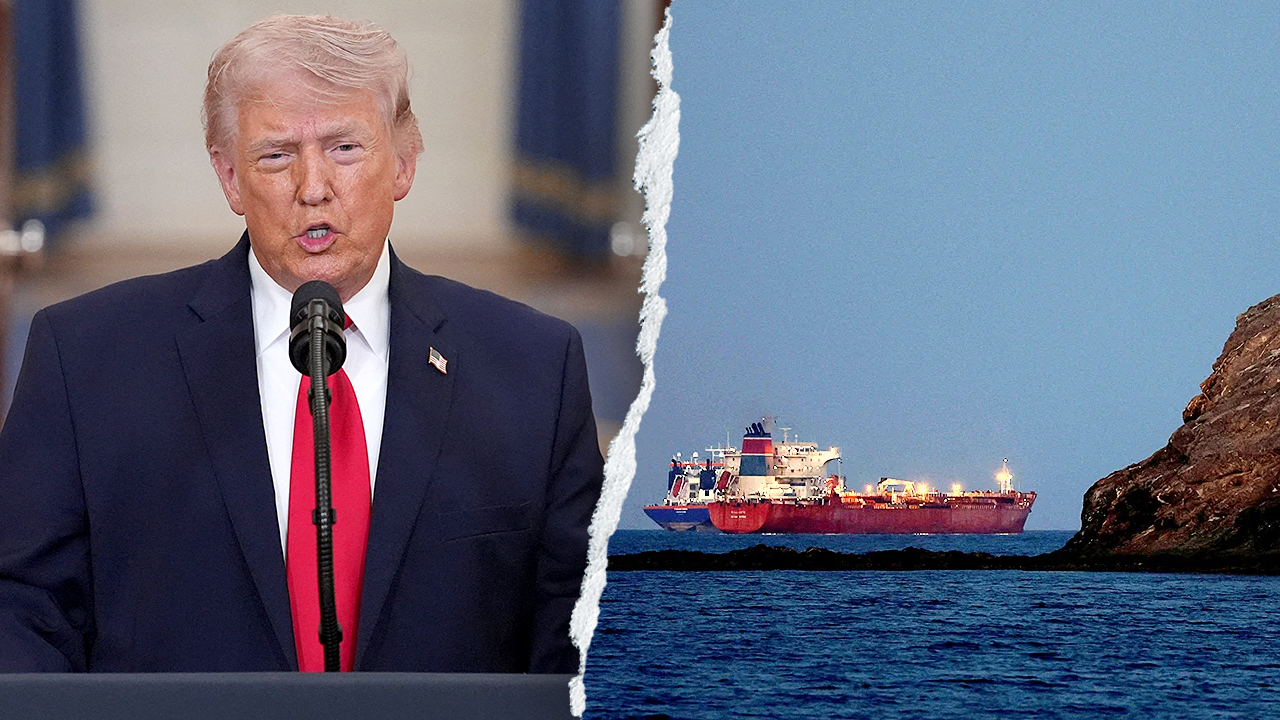
President Donald Trump has given Iran until Tuesday to allow all vessels through the key maritime passage or face military strikes on critical infrastructure, as fuel costs climb sharply across the United States and global markets.
In a strongly worded post on Truth Social on Sunday, Trump threatened action against Iran’s power plants and bridges if the strait isn’t reopened. “Tuesday will be Power Plant Day, and Bridge Day, all wrapped up in one, in Iran,” Trump wrote, setting a specific deadline of 8:00 p.m. Eastern Time on Tuesday. The president also announced plans to hold a press conference at the White House on Monday alongside military officials.
The Strait of Hormuz, measuring just 21 miles wide at its narrowest point, serves as a vital maritime corridor between Iran, Oman and the United Arab Emirates. Energy analysts consider it one of the world’s most important choke points for global commerce, with approximately 20 million barrels of oil passing through daily — alongside roughly one-fifth of global liquefied natural gas supplies.
Beyond crude oil, the strait is crucial for refined petroleum products. The Middle East exports about 1.1 million barrels per day of jet fuel through this passage, representing 15% to 17% of global consumption, according to Jaime Brito, executive director of refining and oil products at OPIS.
The economic impact of the standoff is already rippling through global energy markets and hitting American consumers directly at the pump. As of April 5, the national average for regular gasoline reached $4.11 per gallon according to AAA data, representing an 86-cent increase from just a month earlier.
Regional price disparities remain significant across the United States. West Coast drivers face the steepest costs, with California reaching $5.92 per gallon and Washington state at $5.37. On the East Coast, prices have climbed above $4 in several areas, including $4.27 in Washington, D.C., and $4.06 in New York. Midwestern states are seeing mid-$3 range prices, with Illinois standing out at $4.29 per gallon. Southern states generally remain cheaper overall, though prices are rising rapidly there as well.
Diesel fuel, critical to freight transportation and shipping, has seen even more dramatic increases. The national average has surged to $5.61 per gallon, up approximately $1.45 over the past month. The situation has become particularly severe in San Francisco, which recently became the first U.S. city to record diesel prices exceeding $8 per gallon — an unprecedented milestone according to GasBuddy tracking data.
The aviation sector is experiencing perhaps the most acute effects of the crisis. Jet fuel prices in the United States have more than doubled in a matter of weeks, jumping from approximately $2.11 per gallon in January to $4.88 by April 2, according to the Argus U.S. Jet Fuel Index, which tracks prices across major U.S. hubs.
Industry analysts note that jet fuel is especially vulnerable to supply disruptions due to thin inventories, specialized storage requirements, and limited spot trading. Airlines have warned that current inventories could be depleted within weeks without resolution, raising serious concerns about potential airfare increases and flight cancellations.
The Strait of Hormuz has long been a strategic flashpoint in Middle East tensions, but the current situation represents one of the most direct confrontations in years between the United States and Iran over this vital shipping lane. With Tuesday’s deadline approaching, global energy markets remain on edge as traders, shipping companies, and consumers brace for potential further disruption to this critical supply route.
Fact Checker
Verify the accuracy of this article using The Disinformation Commission analysis and real-time sources.

14 Comments
The Strait of Hormuz is such a vital global chokepoint for energy markets. Trump’s deadline for Iran to allow unimpeded passage raises the risks of military confrontation, which would be disastrous for commodity prices and the broader economy.
Agreed. Diplomacy should be the priority to keep this strategic waterway open and functioning. Unilateral threats and military posturing are unlikely to resolve the situation constructively.
The Strait of Hormuz is a strategic flashpoint, and I’m curious to see how this situation unfolds. Maintaining open access is vital for energy security, but military escalation could spiral out of control with severe economic impacts.
Good point. Diplomacy and de-escalation should be the focus, rather than threats of strikes on Iran’s infrastructure. Cooler heads must prevail to prevent a disastrous conflict in the region.
The Strait of Hormuz is a major chokepoint for global energy markets, so Trump’s threats against Iran over access to this waterway are concerning. Diplomatic efforts to de-escalate the situation and ensure the free flow of vessels should be the priority.
Absolutely. A military confrontation could send shockwaves through commodity markets and severely disrupt energy supplies worldwide. Cooler heads must prevail to find a peaceful resolution.
The Strait of Hormuz is a critical global energy chokepoint, so Trump’s threats against Iran over access to this waterway are concerning. I hope diplomatic efforts can prevail to de-escalate the situation and maintain the free flow of vessels through this vital maritime passage.
Agreed. Maintaining open access to the Strait of Hormuz is essential for energy security worldwide. Military confrontation should be avoided at all costs, as the economic fallout could be devastating.
Trump’s ultimatum over the Strait of Hormuz is an alarming development. This strategic chokepoint is vital for global energy security, and any disruptions to shipping could have severe consequences for commodity prices and the broader economy.
With Trump’s ultimatum over the Strait of Hormuz, we’re seeing geopolitical tensions flare up in a region that is critical for global energy flows. I hope this can be resolved through diplomacy before it escalates into an armed conflict that disrupts commodity markets.
Trump’s ultimatum over the Strait of Hormuz is a concerning development. Disruptions to oil and gas flows through this chokepoint could send fuel prices skyrocketing globally. I hope cooler heads can prevail and a peaceful resolution can be found.
Tensions over the Strait of Hormuz are a major concern for global commodity markets. Trump’s ultimatum to Iran raises the risks of a military confrontation that could severely disrupt oil and gas supplies. Diplomatic solutions should be the priority to ensure the free flow of vessels through this strategic chokepoint.
Tensions in the Strait of Hormuz are a major concern for global energy markets. Trump’s ultimatum to Iran raises the stakes, but military action could have serious unintended consequences that disrupt oil and gas supplies worldwide.
Agreed. A diplomatic solution should be the priority to ensure the free flow of vessels through this critical chokepoint for global trade and energy flows.