


Listen to the article
House Votes to Limit Trump’s Military Actions Against Cartels and Venezuela
The House of Representatives voted Wednesday on two resolutions aimed at restricting President Donald Trump’s authority to use military force against drug cartels and Venezuela, bringing congressional oversight to a controversial campaign that has escalated tensions in Latin America.
Democrats pushed for the votes using war powers resolutions as Trump has intensified threats against Venezuela and expanded military operations that have destroyed 25 vessels allegedly carrying drugs and resulted in at least 95 deaths. If enacted, the legislation would require the Trump administration to obtain congressional authorization before continuing attacks against cartels designated as terrorist organizations or launching military action against Venezuela.
“The president is coveting Venezuelan oil,” argued Rep. Gregory Meeks, the top Democrat on the House Foreign Affairs Committee, suggesting ulterior motives behind the administration’s aggressive posture.
While these mark the first House votes on Trump’s military campaign in Central and South America, the Senate previously rejected similar resolutions. Trump would almost certainly veto the measures if passed. Nevertheless, Democrats forced the votes to spark debate and make Republicans take a public stance on the controversial operations.
Republican leadership has increasingly backed Trump’s campaign, despite its potential to escalate into direct conflict with Venezuelan President Nicolás Maduro. Senate Majority Leader John Thune expressed support for regime change, stating, “Maduro is a cancer on that continent.”
The administration has conducted these operations without seeking congressional authorization, arguing it has authority to destroy drug-carrying vessels as it would handle terrorist threats. This justification has drawn intense scrutiny, particularly after a September 2 operation killed two people who had survived an initial attack.
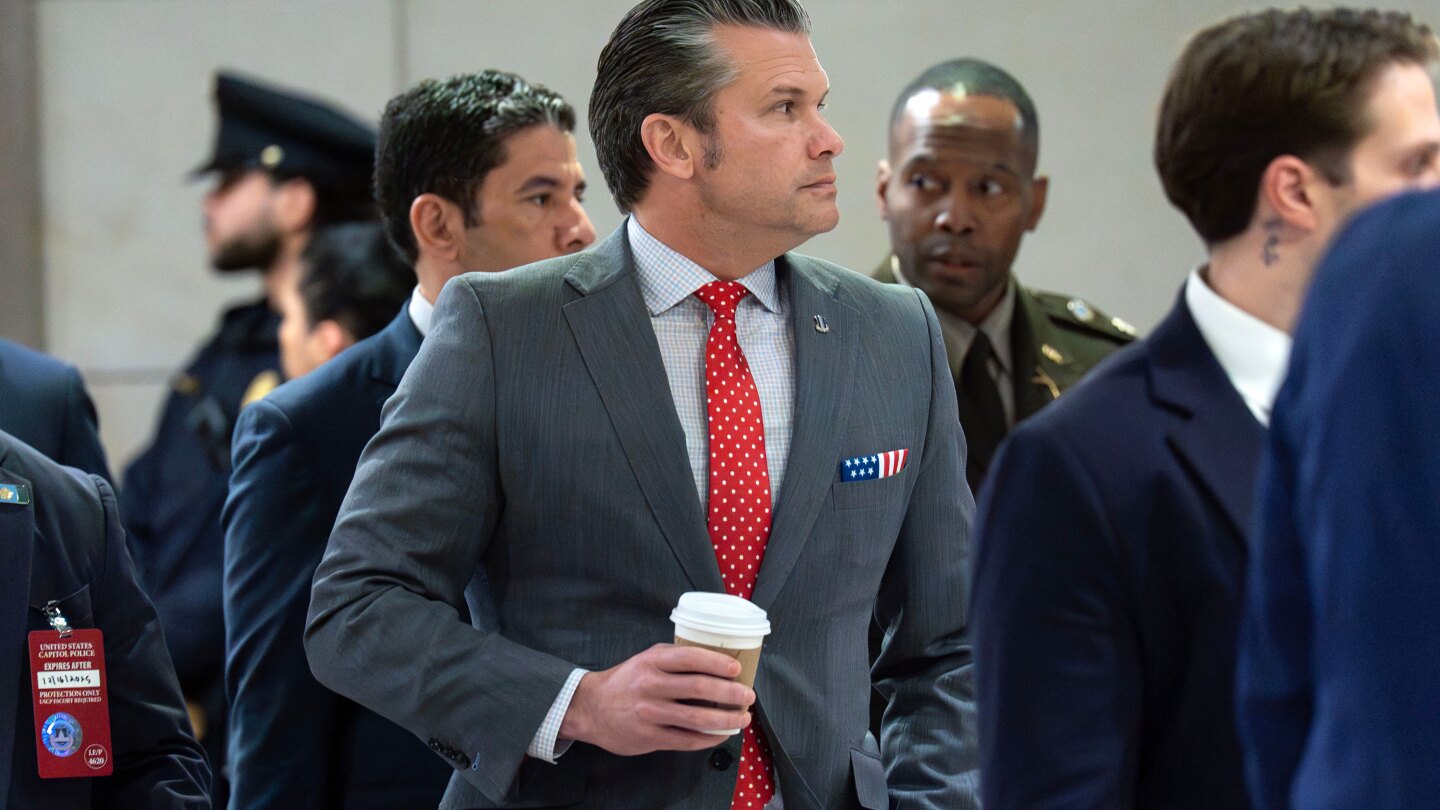
Secretary of State Marco Rubio, Defense Secretary Pete Hegseth, and other national security officials briefed Congress on Tuesday, defending the campaign as a successful counter-narcotic effort that has reduced drug flow into the United States. However, they provided limited information about the administration’s ultimate objectives regarding Venezuela.
The Navy admiral who ordered the controversial September 2 strike returned to Capitol Hill Wednesday for classified briefings with the House and Senate Armed Services Committees. Lawmakers emerged with sharply divided reactions after viewing footage of the incident.
Democrats expressed alarm at what they saw. “I think there are serious questions about criminal culpability here, and there is certainly a need for more intensive federal investigation,” said Senator Richard Blumenthal of Connecticut. Representative Seth Moulton of Massachusetts, a former Marine, determined the two survivors killed were “helpless” with “significant evidence that they were not continuing their mission.”
Republicans generally supported the military’s decision-making and appeared ready to conclude investigations initiated under Republican-controlled committees. House Armed Services Committee Chairman Mike Rogers declared his panel’s investigation into the boat strike complete and cautioned against public release of the video unless properly declassified.
The resolutions were introduced under the War Powers Act of 1973, legislation designed to reassert congressional authority over war declarations. The debate revealed some Republican hesitancy to fully endorse ongoing military operations without proper authorization.
Representative Don Bacon, a Nebraska Republican and retired Air Force brigadier general, said that while he believes the boat strike was lawful, “continued hostility does require congressional approval.”
Democrats repeatedly questioned whether the administration’s true motivation was drug interdiction. They criticized Trump for pardoning former Honduras President Juan Orlando Hernández, who had been sentenced to 45 years in prison for his role in a massive cocaine trafficking operation.
Some Republicans joined this skepticism. “If it were about drugs, we’d bomb Mexico or China or Colombia,” said Representative Thomas Massie of Kentucky, noting these countries are major sources of illegal drugs. “This is about oil and regime change.”
The votes highlight ongoing tension between executive war powers and congressional oversight, with significant implications for U.S. policy in Latin America and the Caribbean as military operations continue to escalate under limited public scrutiny.
Fact Checker
Verify the accuracy of this article using The Disinformation Commission analysis and real-time sources.

9 Comments
This vote is a positive step towards reining in the president’s expansive use of military force. It’s critical for Congress to provide a check on the executive branch.
While combating drug cartels is important, unilateral military action raises many risks. Congressional approval is crucial to ensure a thoughtful, measured approach.
I agree, the House is right to assert its authority and demand more oversight over these consequential foreign policy decisions.
The administration’s aggressive posture towards Venezuela is concerning. Protecting human rights and upholding democratic values should be priorities, not pursuing oil interests.
Absolutely, the administration’s motives appear self-serving rather than focused on the wellbeing of the Venezuelan people.
While combating drug cartels is a valid concern, the administration’s approach seems heavy-handed. More Congressional oversight is needed to ensure a balanced, thoughtful policy.
This resolution seems like an important check on presidential power over military operations. Congress should have a say in such high-stakes foreign policy decisions.
I agree, the president’s authority should face legislative oversight, especially for actions that escalate tensions in the region.
Limiting the president’s ability to act unilaterally on such weighty matters is prudent. The House is right to demand a say in the administration’s Latin America strategy.