


Listen to the article
House Republicans are moving forward with a health care bill that deliberately omits measures to address the imminent surge in health insurance premiums that millions of Americans will face when pandemic-era Affordable Care Act (ACA) subsidies expire at year’s end.
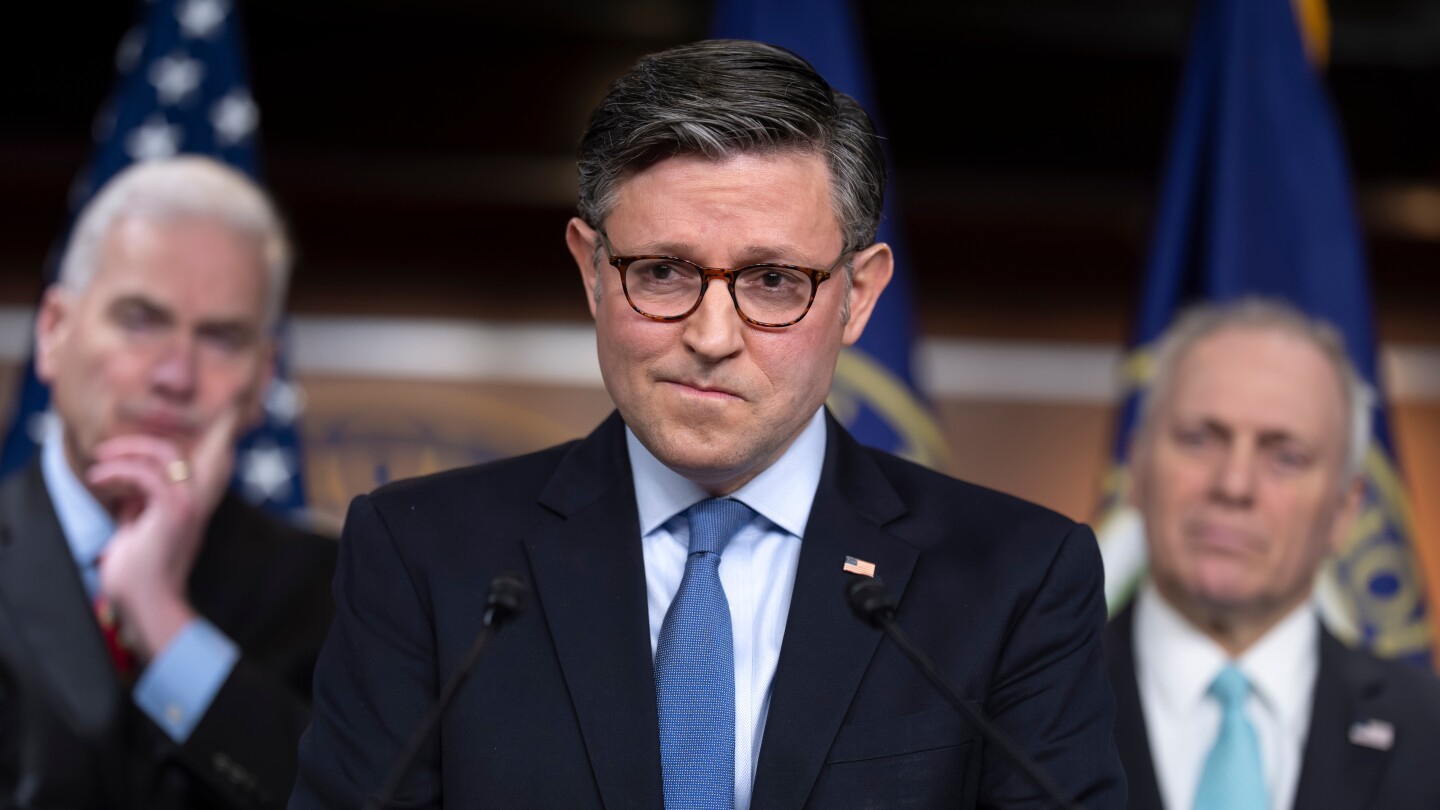
After days of internal negotiations, Speaker Mike Johnson announced Tuesday that Republican leadership has sided with the party’s conservative wing, rejecting proposals to allow votes on amendments that would temporarily extend the enhanced subsidies.
“We looked for a way to try to allow for that pressure release valve,” Johnson said at the Capitol. “In the end, an agreement wasn’t made.”
The decision virtually ensures that many Americans will face substantially higher insurance costs in 2026 when the current subsidies expire. In the Senate, a bipartisan group continues to work toward a compromise, but senators indicated that any potential legislation would likely be delayed until after the holiday break in January.
Instead, House Republicans will pursue their own comprehensive health care package focusing on GOP priorities like expanding insurance coverage options for small businesses and the self-employed. The bill, which faces a test vote Wednesday, spans over 100 pages and includes several long-sought Republican health care reforms.
The Republican plan would impose restrictions on pharmacy benefit managers, the intermediaries who negotiate drug prices and process claims for insurance plans. It would also expand access to association health plans, allowing more small businesses and self-employed individuals to band together to purchase health coverage.
According to analysis from the nonpartisan Congressional Budget Office and Joint Committee on Taxation, the package would reduce the federal deficit by $35.6 billion but would result in approximately 100,000 fewer people having health insurance annually between 2027 and 2035.
The decision to exclude measures addressing expiring subsidies has sparked criticism from moderate Republicans in competitive districts. Rep. Mike Lawler (R-N.Y.) called the leadership’s move “political malpractice,” noting that most people who receive health coverage through the ACA marketplace live in states that former President Donald Trump won in previous elections.
“You have two leaders who are not serious about solving this problem,” Lawler said, criticizing both Johnson and Democratic leader Hakeem Jeffries for failing to advance bipartisan extension efforts.
Despite their frustration, centrist Republicans indicated they would not block the leadership’s measure from coming to a vote.
Speaker Johnson defended the GOP approach, saying, “We have a long list of things that we know will reduce premiums, increase access and quality of care. The Democrats have zero ideas, zero concepts and zero legislative plans on anything they’ll propose other than just subsidizing the broken system.”
Democrats countered that the Republican bill has no chance of passing the Senate, where it would need 60 votes to advance. Rep. Suzan DelBene, chair of the House Democratic campaign arm, warned, “Millions will be priced out of their coverage, and those who can still afford it will get less while paying more.”
The GOP bill’s expansion of association health plans resembles a Trump administration effort that was struck down by a federal judge in 2018, who ruled the plans were “clearly an end-run” around consumer protections mandated by the ACA.
The legislation would also restore government funding for cost-sharing reductions (CSRs), which help low-income enrollees with expenses like deductibles and copays. The Trump administration stopped these payments in 2017, causing insurers to raise premiums on silver-level plans. While restoring CSR funding might lower silver plan premiums, health analysts warn it could inadvertently increase many consumers’ net costs for bronze and gold plans.
In the Senate, a bipartisan group of nearly two dozen lawmakers met Monday to discuss potential compromises, including a two-year extension of subsidies with reforms to narrow eligibility, along with new health savings accounts to help Americans purchase insurance. Republican Senator Susan Collins of Maine, who led the meeting, expressed hope for announcing a proposal this week, though significant issues remain unresolved, including language regarding abortion funding.
Senate Majority Leader John Thune acknowledged the challenge of passing legislation before year’s end, saying there’s a “potential pathway” to an agreement in January, but “we’re not going to pass anything by the end of this week.”
The standoff over health care subsidies contributed to this year’s government shutdown battle and continues to highlight the deep partisan divisions over health care policy and the future of the Affordable Care Act.
Fact Checker
Verify the accuracy of this article using The Disinformation Commission analysis and real-time sources.

14 Comments
While I understand the desire of House Republicans to push their own health care agenda, I’m concerned that this move could leave millions of Americans vulnerable to higher insurance premiums. I hope the Senate can find a more balanced approach.
Agreed. Partisan posturing shouldn’t come at the expense of protecting access to affordable health care. The Senate will play a critical role in finding a solution that works for all Americans.
This political standoff over health care subsidies is concerning, but not entirely surprising. The partisan divide on this issue has been deeply entrenched for years. I hope cooler heads can prevail in the Senate to find a balanced compromise.
I share your hope that the Senate can broker a bipartisan solution. The stakes are high for millions of Americans who rely on these subsidies to afford health coverage.
Interesting political move by House Republicans to push ahead with their health care plan without addressing the expiring ACA subsidies. This could have major implications for millions of Americans struggling with insurance costs. I’m curious to see how the Senate negotiations unfold in the coming weeks.
You’re right, the timing of this decision seems particularly concerning given the potential premium hikes on the horizon. It will be important to closely follow how this issue gets resolved in the Senate.
Disappointing to see House Republicans pushing ahead with their plan without addressing the looming expiration of ACA subsidies. This could put a significant financial burden on many Americans at a time of high inflation and economic uncertainty.
I agree, this seems like a shortsighted political move that could have serious consequences for millions of people. Hopefully the Senate can find a more balanced approach.
As an investor in the uranium sector, I’ll be watching how this health care debate unfolds. The nuclear power industry is a major consumer of uranium, and changes to insurance coverage could indirectly impact demand and pricing.
That’s a good point. The interconnectedness of the health care and energy/mining sectors means policy decisions in one area can have ripple effects in others. Definitely worth keeping an eye on.
As a lithium mining investor, I’m curious to see how this health care debate plays out. Changes to insurance coverage and costs could impact demand for electric vehicles and clean energy technologies that rely on lithium-ion batteries.
That’s an interesting perspective. The interdependence between the health care, energy, and mining sectors is something that’s often overlooked. This is definitely a situation worth monitoring closely.
As a mining and energy investor, I’m curious how this health care legislation could impact commodity markets and related equities. Any changes to insurance coverage options or costs could have ripple effects across the economy.
That’s a good point. The health care industry is a major consumer of mining and energy products, so policy shifts in this area are worth monitoring closely from an investment perspective.