


Listen to the article
Congressional Impasse Threatens Critical Surveillance Program as Deadline Looms
House Republican leadership is struggling to secure enough votes to extend Section 702 of the Foreign Intelligence Surveillance Act (FISA) as the April 30 deadline rapidly approaches. The contentious surveillance program has created a deep rift within the GOP, with privacy hawks demanding stronger protections for American citizens.
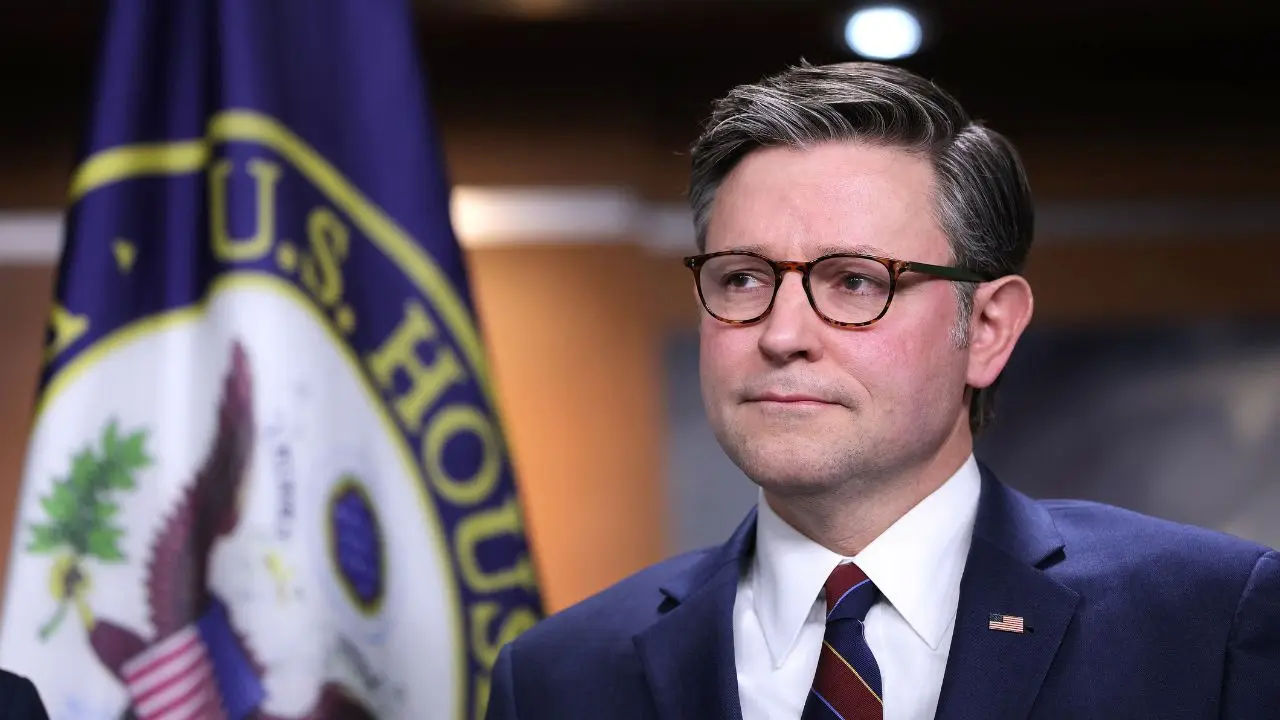
On Tuesday, the House Rules Committee indefinitely postponed consideration of a procedural measure that would have teed up a chamber-wide vote on a three-year FISA extension. The delay raises serious questions about whether House Speaker Mike Johnson can navigate the complex political landscape to reauthorize the program before it expires.
The current proposal would extend the spy law for three years while implementing new penalties for FISA search abuses. However, it stops short of including the warrant requirement that privacy-focused Republicans have consistently demanded as a prerequisite for their support.
“Really what we’re doing is taking existing law improvements based on two years ago, making some improvements on penalties and on some FISA transparency…but not going further with respect to warrant protections for American citizens on warrantless surveillance,” explained Rep. Chip Roy (R-Texas), a key member of the House Freedom Caucus, during debate in the Rules Committee.
Democratic members of the committee expressed frustration over the repeated delays. Rep. Jim McGovern (D-Mass.) criticized Republicans on social media: “After waiting around all night for Republicans to make a deal — with themselves — on a procedural rule for the week, Democrats showed up to the Rules Committee for an 8 a.m. meeting. Unsurprisingly, when we showed up, we were told there is still no deal. Their chaos is only matched by their incompetence.”
The postponement also affects other critical legislation, including a budget blueprint for immigration enforcement and the farm bill, which authorizes agriculture and nutrition priorities.
Section 702 enables the government to monitor communications of foreigners abroad who use U.S. platforms, even when those communications involve Americans. This capability has made the program a cornerstone of U.S. intelligence gathering, with proponents citing its effectiveness in thwarting terrorist attacks and drug trafficking operations.
The Trump administration has advocated for a clean reauthorization of the program, emphasizing its national security importance. However, a coalition of conservative lawmakers and civil liberties advocates have consistently pushed for reforms, particularly the requirement that intelligence officials obtain a warrant before reviewing Americans’ data.
House Freedom Caucus members have also sought to add language banning a central bank digital currency (CBDC) to the bill. Rep. Michael Cloud (R-Texas) explained the connection: “Even as we are working to right the wrongs and abuses of FISA, it is important we permanently ban what would be the ultimate surveillance tool against our fellow citizens, a central bank digital currency.”
Some privacy advocates within the GOP have shown willingness to compromise. Rep. Warren Davidson (R-Ohio) expressed support for the three-year extension, writing on social media: “Collectively, this set of reforms provides robust privacy protections for American citizens. Congress should bank this win and reauthorize Section 702. Then, we should swiftly begin gutting the unmitigated surveillance state left growing unchecked during these 702 fights.”
With the clock ticking, the Senate is poised to act first on FISA reauthorization, scheduling a procedural vote on a three-year extension bill. If the Senate passes its version, the House may be forced to accept whatever legislation emerges from the upper chamber.
House Democratic leadership has previewed their opposition to the Republican plan, with Minority Leader Hakeem Jeffries expressing concerns about potential abuse of surveillance powers. “This surveillance mechanism could be abused by the likes of individuals like Kash Patel and the acting attorney general,” Jeffries said during a Monday news conference. “These people have weaponized the criminal justice system, and they simply cannot be trusted to protect the privacy and the civil liberties of the American people.”
With Democrats largely opposed to the current proposal, Speaker Johnson can afford to lose only a handful of Republican votes on this critical national security matter, making the path forward increasingly uncertain as the April 30 deadline draws near.
Fact Checker
Verify the accuracy of this article using The Disinformation Commission analysis and real-time sources.

10 Comments
The proposed three-year extension with some new penalties seems like a reasonable middle ground, though the lack of a warrant requirement may still be a sticking point for many Republicans. This will be a test of the Speaker’s negotiation skills.
Indeed, finding the right balance between security and civil liberties is always challenging. Hopefully they can find a solution that has broad bipartisan support before the deadline.
This is a complex and contentious issue. I’m curious to see how the House leadership navigates the GOP divide on balancing national security and civil liberties when it comes to FISA reauthorization.
Agreed, the deadline is looming and it will be interesting to see if a compromise can be reached that satisfies both the privacy hawks and those focused on national security.
As a citizen, I’m concerned about the erosion of privacy protections, but I also recognize the national security importance of FISA. I hope the House can find a balanced approach.
As a supporter of strong privacy protections, I’m skeptical of this renewal without more robust safeguards. The GOP divide on this issue highlights the complexities involved.
I understand the privacy concerns, but national security is also critical. It will be a delicate negotiation to reconcile those competing priorities before the program expires.
This is an important issue that goes to the heart of the balance between security and civil liberties. I hope the House can find a way forward that respects both priorities.
The delay in the House Rules Committee vote suggests there are still significant hurdles to overcome. With the deadline looming, the pressure will only increase to find a compromise solution.
Agreed, the clock is ticking and they need to act quickly to avoid a lapse in this critical surveillance program. Tough negotiations ahead.