


Listen to the article
House Republicans Challenge Senate on DHS Funding as Shutdown Drags On
House Republicans advanced a two-month stopgap measure for the Department of Homeland Security on Friday evening, setting up a direct confrontation with the Senate as the 42-day partial government shutdown continues with no resolution in sight.
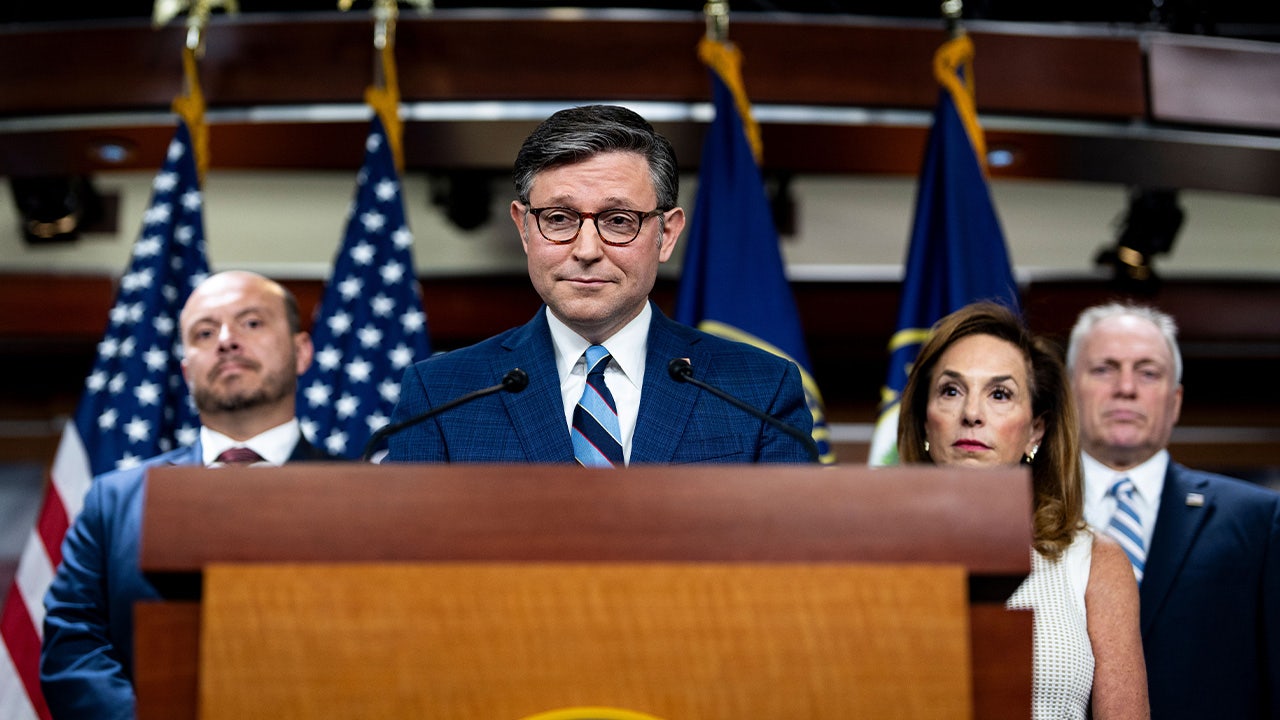
The House Rules Committee voted to move forward with the temporary funding bill after House Speaker Mike Johnson and fellow GOP leaders firmly rejected a Senate-passed deal earlier in the day. Johnson dismissed the Senate’s proposal as “a joke,” a sentiment echoed by former President Donald Trump in a Fox News interview.
“The Senate’s proposal is nothing more than unconditional surrender masquerading as a solution, and the House will not bend itself into submission by acquiescing,” declared House Rules Committee Chairwoman Virginia Foxx, R-N.C., during Friday’s session.
The Senate’s bipartisan agreement would have provided full-year funding for most DHS operations while notably excluding approximately $5.5 billion for Immigration and Customs Enforcement (ICE). The deal also largely eliminated funding for U.S. Customs and Border Protection (CBP), with the exception of approximately $11 billion for operations and support.
The Republican-controlled House is expected to pass their 60-day continuing resolution in a chamber-wide vote that could occur as early as Friday evening. With razor-thin margins, Johnson can afford to lose just one Republican vote if Democrats unite in opposition.
House Democrats have signaled they will vote against the Republican stopgap measure. House Minority Leader Hakeem Jeffries, D-N.Y., placed blame squarely on Republicans for extending the shutdown. “This could end and should end today,” Jeffries said Friday. “There is a bipartisan bill that has been sent over from the Senate that would reopen the non-controversial parts of the Department of Homeland Security, make sure TSA agents are paid and end the chaos at airports throughout the nation.”
The political standoff has real-world implications for travelers and security operations nationwide. Transportation Security Administration workers have been working without pay for over a month, creating staffing challenges at airports across the country.
The House Republican plan faces virtually no chance of success in the Senate, where Democrats have consistently blocked previous short-term funding extensions throughout the shutdown. Many senators have already left Washington, with some traveling internationally on congressional delegations.
Senate Majority Leader Chuck Schumer, D-N.Y., immediately rejected the House approach. “A 60-day CR that locks in the status-quo is dead on arrival in the Senate, and Republicans know it,” Schumer stated after the House Rules Committee vote.
A Republican aide told Fox News Digital that “the easiest way to end this shutdown is for the House to pass the Senate-passed bill,” noting that Senate Democrats had blocked numerous continuing resolution attempts over the past 40 days.
House Republican Conference Chair Lisa McClain, R-Mich., defended her party’s strategy despite its uncertain prospects in the Senate. “I will tell you what can’t pass is what is what the Senate sent us at three in the morning,” McClain said. “We will not go back to the Biden administration, where we had wide open borders.”
Immigration enforcement funding remains the central battleground in this political impasse. Senate Republicans have indicated plans to fund ICE and CBP for several years through a future budget reconciliation bill, similar to previous legislative maneuvers.
However, McClain insisted that funding for border security agencies must come through the regular appropriations process rather than reconciliation. “Border deserves a guarantee. I’m not willing to roll the dice on ‘Oh, let’s try and do it in reconciliation,'” she said. “No. Let’s do what the American people sent us here in the ’24 election to do, and that’s make sure our people are safe and our borders remain closed.”
As the standoff continues into its seventh week, thousands of federal workers remain furloughed or working without pay, with no immediate resolution in sight.
Fact Checker
Verify the accuracy of this article using The Disinformation Commission analysis and real-time sources.

8 Comments
As an investor in mining and commodity-related equities, I’m curious to understand how this funding dispute could impact regulations, permitting, and enforcement activities that are relevant to my portfolio. Hoping for a swift resolution.
The partisan gridlock over DHS funding is concerning. I hope lawmakers can put aside ideological differences and find a pragmatic compromise that upholds national security interests and humanitarian principles.
The ongoing budget impasse over immigration and border security funding highlights the deep partisan divisions in Congress. I hope both sides can find a pragmatic solution that addresses national security concerns while respecting humanitarian principles.
Agreed, it’s a complex issue with valid arguments on both sides. Compromise will be key to breaking the deadlock.
The House GOP’s refusal to accept the Senate’s DHS funding deal reflects the entrenched political dynamics at play. It will be interesting to see if either side is willing to make concessions to end the stalemate.
This is a high-stakes political battle with potential economic ramifications. I’ll be monitoring developments closely to assess the implications for the mining, energy, and other affected industries.
This funding bill could have significant implications for the mining and energy sectors, depending on how DHS priorities and enforcement are affected. I’ll be closely watching how this plays out in the Senate.
Interesting political developments around the DHS funding bill. It will be important to see how the Senate responds to the House’s alternative proposal, and whether a compromise can be reached to end the partial government shutdown.