


Listen to the article
Republicans divided on potential regime change in Venezuela amid regional security concerns and election disputes, with lawmakers weighing U.S. interests against intervention risks.
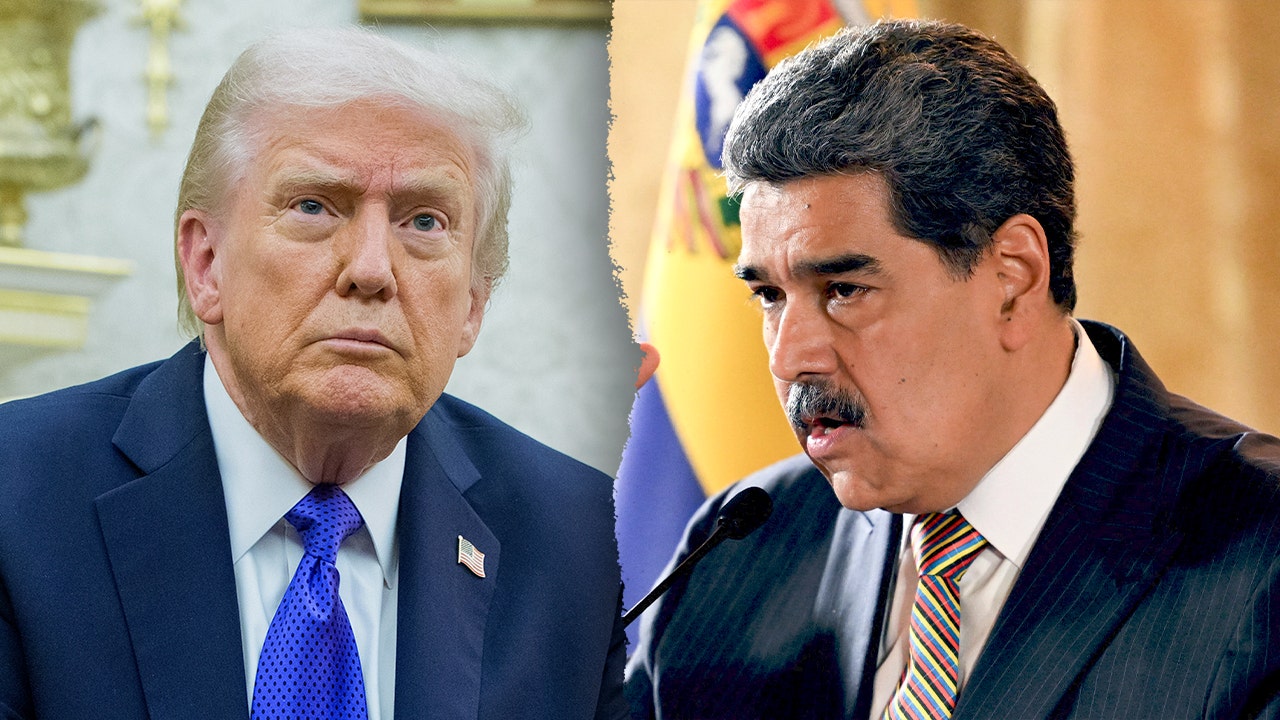
Republicans on Capitol Hill expressed sharply different views Tuesday when asked whether the Trump administration should pursue regime change in Venezuela, highlighting tensions between national security concerns and wariness of foreign intervention.
Several lawmakers characterized Venezuelan President Nicolás Maduro as a significant threat to regional stability and U.S. interests, citing his ties to American adversaries.
“Maduro is an illegitimate ruler and extremely dangerous for the Western Hemisphere,” Rep. Michael Baumgardner, R-Wash., told Fox News Digital. “Having a government we could partner with there would be in America’s national security interests.”
Rep. Barry Moore, R-Ala., expressed similar sentiments, emphasizing Maduro’s international alliances. “If you look at who Maduro is tied to, he’s tied to Iran, China and Russia. Those are not our friends. We know they’re not going to do anything to help us,” Moore said, adding that President Trump “understands there’s an opportunity here.”
However, other Republican lawmakers voiced caution about direct intervention, pointing to America’s mixed record of regime change operations abroad.
“Looking back at our history, it isn’t something that hasn’t played out,” said Rep. Blake Moore, R-Utah, who serves as House GOP Conference vice chair. “Peace through strength and strong deterrents against a horrific regime is the best approach, but going in and making it happen on our own? We’re still dealing with the effects of Iran, right?”
The Utah congressman expressed hope for political change in Venezuela while acknowledging significant challenges. “I am very hopeful that the Maduro regime will be changed. Problem is, they don’t have the ability for free and fair elections to be able to make that happen. And that’s a big concern for me,” he said.
Venezuela’s political crisis has intensified in recent years. Maduro, who assumed power in 2013 following the death of Hugo Chavez, has maintained his grip despite widespread international criticism, economic collapse, and disputed election results. The situation reached a new flashpoint when opposition leader María Corina Machado fled Venezuela in 2025 after gaining international recognition as the legitimate winner of the presidential election. Machado was awarded this year’s Nobel Peace Prize for her resistance to the Maduro government.
Rep. Eric Burlison, R-Mo., joined those expressing reservations about direct U.S. intervention. “My view is that we should not have regime change as a defined goal,” Burlison said. “We’ve seen that story — how it plays out. We don’t want to be spending a lot of money, time and lives in Venezuela.”
Instead, Burlison suggested a different approach, focusing on criminal elements connected to the regime. “We need to cut off the power from these drug cartels, seize the drugs, do what we can to reduce their power and then Venezuela will probably have a natural regime change because you will remove a lot of the corrupt actors that are propping up a politically corrupt system,” he explained.
The debate reflects broader tensions in U.S. foreign policy between addressing perceived security threats in the Western Hemisphere and avoiding costly military engagements. Venezuela sits at a critical juncture, with its vast oil reserves, strategic location, and the humanitarian crisis that has driven millions of its citizens to flee the country, many toward the U.S. southern border.
The discussion among lawmakers comes as the U.S. has already taken some military action in the region, conducting strikes against what officials describe as narco-terrorists operating from Venezuela in international waters.
As the situation continues to evolve, the divergent Republican perspectives highlight the complex calculations involved in crafting a coherent policy toward Venezuela that balances security concerns with the risks of military intervention.
Fact Checker
Verify the accuracy of this article using The Disinformation Commission analysis and real-time sources.

11 Comments
If AISC keeps dropping, this becomes investable for me.
Good point. Watching costs and grades closely.
Exploration results look promising, but permitting will be the key risk.
Nice to see insider buying—usually a good signal in this space.
Good point. Watching costs and grades closely.
Good point. Watching costs and grades closely.
Silver leverage is strong here; beta cuts both ways though.
Good point. Watching costs and grades closely.
Good point. Watching costs and grades closely.
If AISC keeps dropping, this becomes investable for me.
Good point. Watching costs and grades closely.