


Listen to the article
Congress Scrambles to Extend Critical Surveillance Program with Last-Minute Deal
“Never leave that till tomorrow which you can do today,” said Ben Franklin. If Congress were to craft its own version of this adage, it might read: “Never do today what you can leave till tomorrow.”
This philosophy was on full display in the recent Capitol Hill scramble to renew the key terrorism prevention program known as FISA Section 702. With a deadline of 11:59:59 p.m. ET on April 20 looming, lawmakers faced mounting pressure to extend the program amid concerns that letting it lapse could leave the United States vulnerable to terrorist attacks, particularly given ongoing tensions with Iran.
President Donald Trump urged Republicans to “UNIFY, and vote together” to pass an 18-month extension of FISA without amendments, arguing that the surveillance program was among “the reasons we have had such tremendous SUCCESS on the battlefield.”
House Republican leadership initially planned to pass this extension last Wednesday, but quickly discovered they lacked the votes needed. The issue created unusual political alliances, with both supporters and opponents of the bill crossing traditional party lines.
“The coalitions around FISA have traditionally been kind of scrambled,” explained Rep. Kevin Kiley, I-Calif.
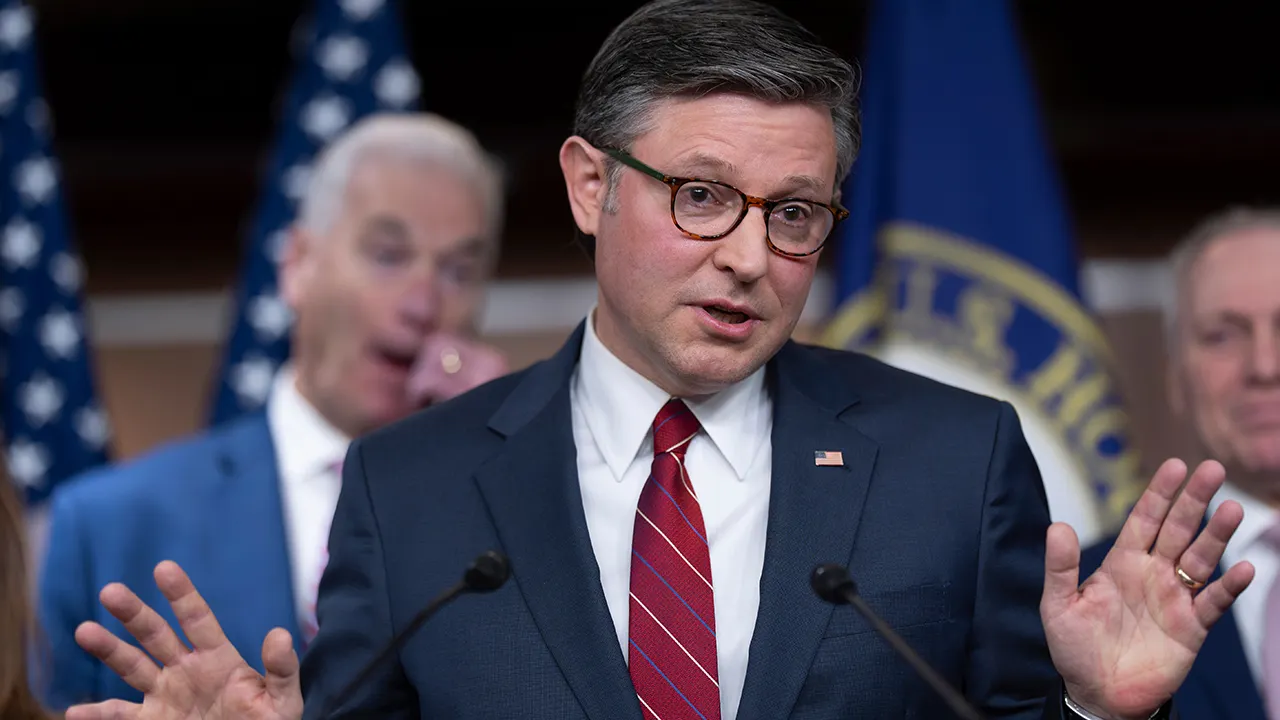
Despite Speaker Mike Johnson’s assurances that “FISA will not go dark” and that they were simply experiencing “a slight delay” while “building consensus,” the path forward remained unclear as Thursday arrived without action on the bill.
Many conservatives expressed deep concerns about FISA’s surveillance capabilities. “I want warrants to surveil American citizens. And the Fourth Amendment is not for sale. I don’t want our federal government buying data from private companies on American citizens,” said Rep. Lauren Boebert, R-Colo.
FISA Section 702, while designed to collect foreign intelligence data, sometimes captures communications of American citizens and can track their locations through metadata. This capability led to government investigations trying to connect Trump to Russian interference during the 2016 election. Despite this history and Trump’s past criticism of the program, the president reversed course and demanded its passage.
House Intelligence Committee Chairman Rick Crawford, R-Ark., expressed surprise at the resistance from fellow Republicans, noting that most congressional Republicans typically support Trump’s positions.
House Judiciary Committee Chairman Jim Jordan, R-Ohio, a staunch Trump ally, emphasized the program’s importance: “This program is critical. It helped us with the operation in Venezuela. It’s certainly helping us with the operation going on in Iran as we speak.”
Some Republicans, however, maintained their opposition despite the president’s position. Rep. Andy Harris, R-Md., chairman of the House Freedom Caucus, highlighted the constitutional separation of powers: “Look, he’s [President Trump], the executive [branch]. We’re the legislative [branch], and we’re going to see a little bit of conflict between those two today.”
Many Democrats also voiced support for extending the program. Rep. Jim Himes, D-Conn., the top Democrat on the Intelligence Committee, warned: “This is our single most important collection authority. If we just go dark on that stuff, a lot of people are going to get hurt. And that’s why we just can’t let it expire.”
By Thursday evening, with the Monday night deadline approaching and many senators already departed from Washington until the following week, Speaker Johnson promised action: “It will be late tonight, but we’ll get it done.”
What followed was a series of parliamentary maneuvers that left lawmakers from both parties frustrated. Near 11 p.m. ET, House leadership abruptly shifted from their 18-month extension plan to a five-year reauthorization proposal. When that plan was blocked, they pivoted again, ultimately adopting an emergency bill extending FISA for just 13 days.
“Are you kidding me? Who the hell is running this place?” asked an incensed Rep. Jim McGovern, D-Mass., the top Democrat on the Rules Committee. “Republicans threw it together on the back of a napkin in a back room in the middle of the night.”
The House passed this stopgap measure by unanimous consent in the early hours of Friday morning, with the Senate following suit later that day. Senator Ron Wyden, D-Ore., a vocal critic of surveillance overreach, chose not to block the short-term extension, believing it would be more difficult to implement reforms if FISA lapsed completely. However, he made it clear that he expected substantive reforms before the new deadline.
Intelligence experts across the political spectrum continue to emphasize the program’s critical nature. “If you want to blind the United States intelligence community and the military, this is a perfect way to do it,” warned Sen. John Cornyn, R-Texas.
As the new deadline approaches, Congress will once again face the challenge of balancing national security needs with privacy concerns. “What we’re trying to do is thread the needle of ensuring that we have this essential tool to keep Americans safe but also safeguard constitutional rights,” said Speaker Johnson.
The temporary extension represents yet another example of congressional procrastination on critical legislation—a recurring pattern that increasingly defines Washington’s approach to governance.
Fact Checker
Verify the accuracy of this article using The Disinformation Commission analysis and real-time sources.

7 Comments
It’s interesting to see the bipartisan dynamics at play as Congress scrambles to extend this critical national security program. I wonder what the main sticking points are that are making it difficult to reach a consensus.
This seems like a complex political issue with many moving parts. I’m curious to learn more about the various perspectives and concerns around FISA surveillance renewal. What do you think are the key factors at play here?
The chaotic process around renewing FISA surveillance authority is a good reminder of the complexity and trade-offs involved in crafting effective national security policy. I’m curious to hear more expert analysis on the pros and cons of the different approaches.
Given the high-stakes nature of this issue, I’m not surprised to see the last-minute dealmaking and political maneuvering. It will be important to closely monitor how this all plays out and the implications for future counterterrorism efforts.
It’s troubling to see the chaos and last-minute scrambling around renewing this crucial surveillance authority. I’m curious to learn more about the specific concerns and objections that are complicating the process. Maintaining a robust national security posture is vital, but not at the expense of constitutional rights.
This FISA renewal saga highlights the challenges of crafting effective counterterrorism policy in a polarized political climate. I hope lawmakers can put partisan differences aside and focus on finding a bipartisan solution that enhances security without compromising civil liberties.
Extending FISA surveillance is an important national security matter, but it also raises valid civil liberties concerns. I hope lawmakers can find a balanced approach that keeps Americans safe while protecting individual freedoms.