


Listen to the article
House Passes Bill to Criminalize Gender Transition Treatments for Minors
The House of Representatives passed legislation Wednesday that would make it a federal crime to provide gender transition treatments to minors, advancing the measure with slim bipartisan support in a 216-211 vote.
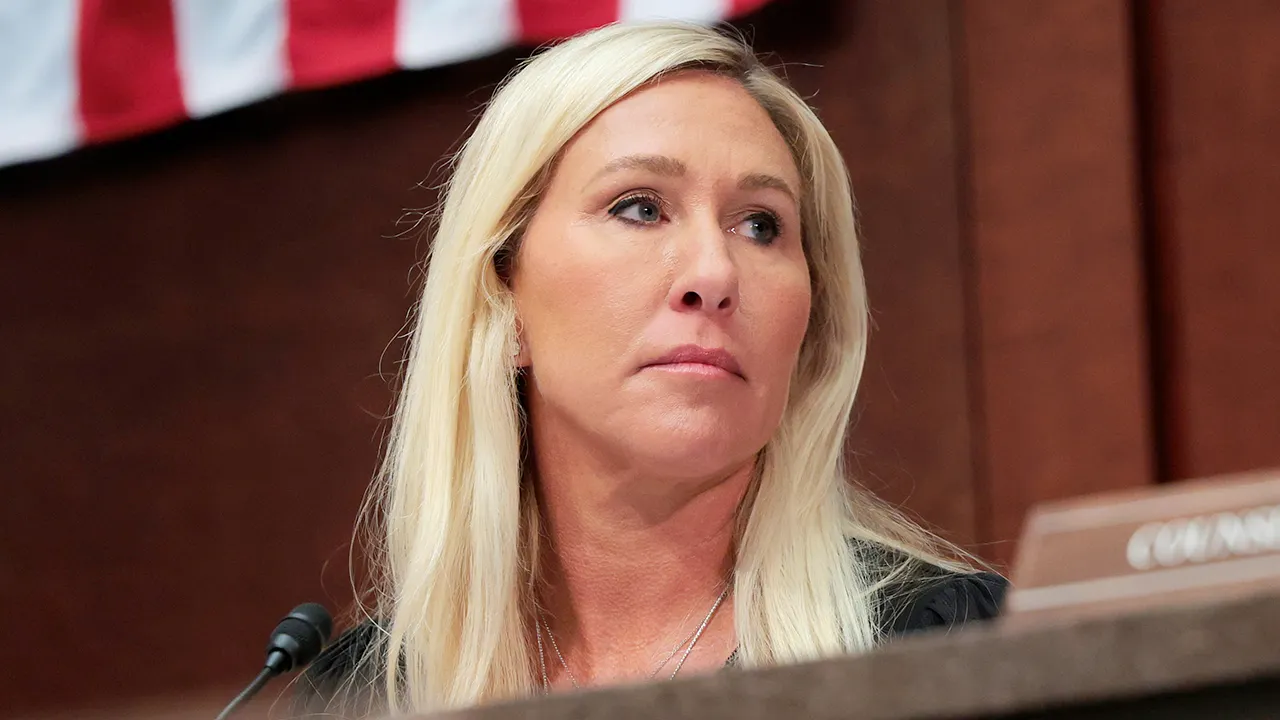
The bill, sponsored by Rep. Marjorie Taylor Greene (R-Ga.), would prohibit medical professionals from performing gender transition surgeries or administering puberty blockers and hormone treatments to individuals under 18 years of age. Three Democrats—Reps. Henry Cuellar and Vicente Gonzalez of Texas, and Don Davis of North Carolina—crossed party lines to support the measure, while four Republicans—Reps. Mike Lawler of New York, Brian Fitzpatrick of Pennsylvania, Gabe Evans of Colorado, and Mike Kennedy of Utah—voted against it.
“Children are NOT experiments. No more drugs. No more surgeries. No more permanent harm,” Greene wrote on social media platform X before the vote. “We need to let kids grow up without manipulation from adults to make life-altering decisions!”
The legislation emerged from a political deal Greene struck with House leadership, agreeing to support a procedural rule advancing the National Defense Authorization Act in exchange for a floor vote on her bill. Greene, who recently announced plans to resign from Congress next month, has positioned the bill as a child protection measure.
Despite clearing the House, the bill faces significant obstacles in the Democratic-controlled Senate, where it would require bipartisan support to overcome procedural hurdles and advance to President Biden’s desk. The White House has not yet issued an official veto threat, but the administration has previously opposed similar measures at state levels.
Civil liberties groups immediately condemned the House action. The American Civil Liberties Union (ACLU) released a statement calling the bill “devastating” for transgender youth and their families nationwide.
“Politicians should never prohibit parents from doing what is best for their transgender children,” said Mike Zamore, National Director of Policy & Government Affairs at the ACLU. “These families often spend years considering how best to support their children, only to have ill-equipped politicians interfere by attempting to criminalize the health care that they, their children, and their doctors believe is necessary.”
The legislation represents the latest front in an escalating national debate over transgender rights and medical care. Over the past three years, at least 24 states have enacted restrictions or outright bans on gender-affirming care for minors, according to the Human Rights Campaign. Medical organizations including the American Academy of Pediatrics and the American Medical Association have opposed such legislative restrictions, arguing they interfere with evidence-based care and doctor-patient relationships.
The bill also sparked internal Republican disagreements before passage. Rep. Chip Roy (R-Texas), a member of the House Rules Committee, initially proposed an amendment to narrow the bill’s scope by limiting federal criminal liability under certain circumstances, citing constitutional concerns about federal overreach through the Commerce Clause.
This prompted a public dispute with Greene, who accused Roy of attempting to “gut” her legislation. Roy ultimately withdrew his amendment “to avoid any confusion about how united Republicans are in protecting children from these grotesque procedures,” though he maintained his constitutional reservations.
The debate highlights the tensions between conservative concerns about transgender medical treatments for minors and questions about federal versus state authority in regulating healthcare practices—a recurring theme in Republican policy discussions about medical regulation.
As the measure moves to the Senate, it joins numerous other House-passed bills awaiting consideration in the upper chamber, where its prospects remain uncertain given the broader political landscape and upcoming election cycle.
Fact Checker
Verify the accuracy of this article using The Disinformation Commission analysis and real-time sources.

6 Comments
This legislation is sure to spark intense debate. I’d encourage looking at objective analysis from medical experts and scientific studies to understand the potential impacts, both positive and negative.
Agreed, these are complex issues that require nuanced discussion and evidence-based policymaking.
While I understand concerns about minors making life-altering decisions, I worry this legislation could do more harm than good. Careful regulation and parental involvement seem more appropriate than outright criminalization.
Interesting development, though I’m not sure criminalizing transition treatments is the right approach. Perhaps more focus on providing comprehensive mental health support for minors would be a better solution.
This bill seems to be a polarizing political move rather than a thoughtful response to a challenging issue. I hope lawmakers can find a balanced way to protect vulnerable youth while respecting individual rights.
This is a very controversial and sensitive issue. I don’t have a strong opinion, but I hope any policies are based on thorough medical research and input from the transgender community.