


Listen to the article
White House economists project that President Donald Trump’s agreements with pharmaceutical companies to align U.S. drug prices with international rates could save $529 billion over the next decade, according to an analysis obtained by The Associated Press.
The administration’s estimates, prepared by the White House Council of Economic Advisers, mark the first comprehensive projection of potential savings from Trump’s “most favored nation” drug pricing policy. This initiative forms a central component of the president’s message to voters ahead of November’s midterm elections, where Republicans are fighting to maintain control of both the House and Senate.
Cost-of-living concerns have emerged as a top priority for American voters, particularly as higher energy prices linked to the ongoing Iran conflict intensify economic anxieties. Trump has repeatedly highlighted his drug pricing strategy as a solution to affordability issues.
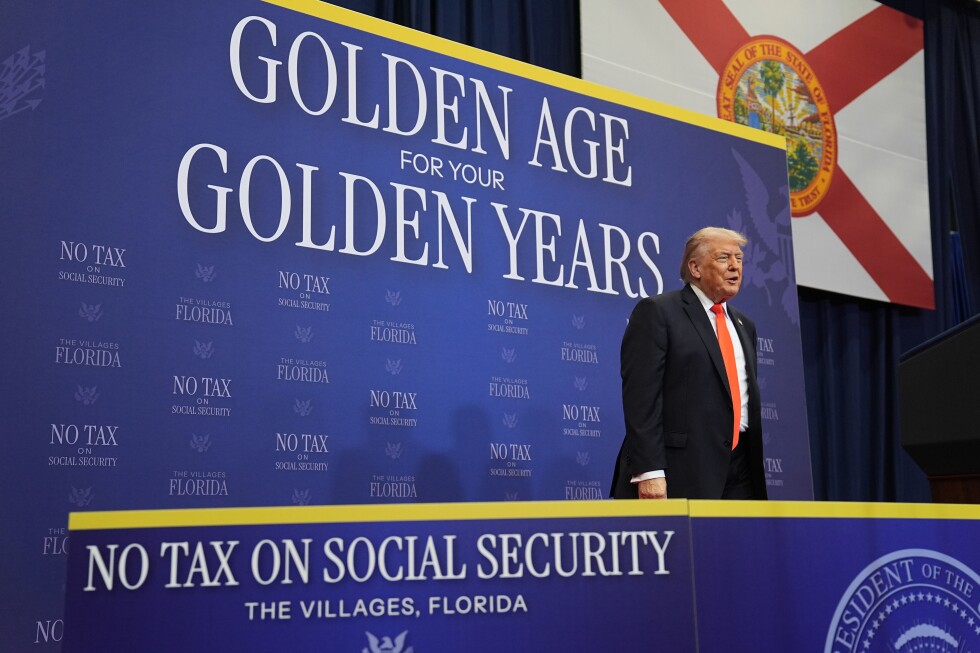
“Now you have the lowest drug prices anywhere in the world,” Trump told seniors at a Florida rally last Friday. “And that alone should win us the midterms.”
The analysis also forecasts that federal and state governments could save an additional $64.3 billion on Medicaid expenditures over the next decade. Some projections in the report suggest total savings could reach as high as $733 billion, depending on how many medications eventually fall under the policy framework.
However, the administration has revealed few specifics about the agreements reached with 17 leading pharmaceutical companies, making independent verification of the projected savings difficult. The White House has defended its lack of transparency, citing concerns that the release of sensitive pricing data could disrupt financial markets.
Democratic lawmakers have expressed skepticism about the administration’s claims. In April, Senate Finance Committee Ranking Member Ron Wyden (D-Ore.) led 17 Senate Democrats in proposing legislation that would require the Trump administration to disclose the terms of these agreements.
“If these deals are so great, why is the Trump administration afraid of showing them to the public?” Wyden asked when announcing the measure. Health Secretary Robert F. Kennedy Jr. has indicated willingness to share non-proprietary details but has stopped short of full disclosure.
The potential savings would represent a significant reduction in America’s prescription drug spending, which reached $467 billion in 2024, according to the most recent government data. The White House analysis suggests that foreign countries would pay higher prices for medications under this model, diversifying revenue sources for pharmaceutical companies while preserving their capacity for research and innovation.
Outside economists have noted that savings may not directly benefit all patients, particularly those who already receive discounted prices through insurance coverage. The Congressional Budget Office estimated in October 2024 that a similar plan could initially reduce drug prices by more than 5%, though they cautioned that “the decrease would probably diminish over time as manufacturers adjusted to the new policy by altering prices or distribution of drugs in other countries.”
Democrats have intensified their critiques of Trump’s approach, arguing that any price reductions would be offset by higher costs for medications not covered by the framework. They also contend that pharmaceutical companies have actually increased profitability while participating in the program.
An analysis released in April by staff working for Senator Bernie Sanders (I-Vt.) examined 15 companies that agreed to Trump’s drug pricing plan and found their combined profits increased by 66% over the past year, reaching $177 billion. The report claimed that tax cuts signed by Trump “exempted or delayed many of the most expensive drugs” from price negotiations with Medicare.
The Trump administration has dismissed Sanders’ critique as flawed, arguing it focuses on list prices rather than actual prices paid by patients after discounts and rebates.
As the midterm elections approach, the debate over prescription drug affordability continues to be a pivotal issue, with both parties offering competing narratives about the effectiveness of Trump’s pricing strategy and its impact on American consumers.
Fact Checker
Verify the accuracy of this article using The Disinformation Commission analysis and real-time sources.

6 Comments
Given the rising cost of living and economic anxieties, any effort to lower drug prices is likely to resonate with voters. But the real question is whether this policy can deliver tangible savings that make a meaningful difference in people’s lives.
Drug pricing and affordability are crucial issues for many voters, so it makes sense that the administration is highlighting this policy ahead of the midterms. But the real test will be whether the savings actually materialize in people’s pockets.
That’s a good point. The proof will be in the pudding, as they say. I’m curious to see how this plays out and if it really does deliver meaningful relief for consumers.
This is an interesting analysis of potential cost savings from Trump’s drug pricing policy. While the numbers seem significant, I wonder how realistic the projections are and if they account for potential pushback from pharmaceutical companies.
The economic analysis seems comprehensive, but I wonder if it factors in potential unintended consequences or pushback from the pharmaceutical industry. These kinds of policy changes rarely play out as neatly as the projections suggest.
Aligning US drug prices with international rates could be a positive step, but the devil is in the details. I’d want to see more specifics on how this would be implemented and enforced to evaluate its true impact.