


Listen to the article
Democratic Lawmaker Under Fire for Cuba Oil Discussions Amid U.S. Sanctions
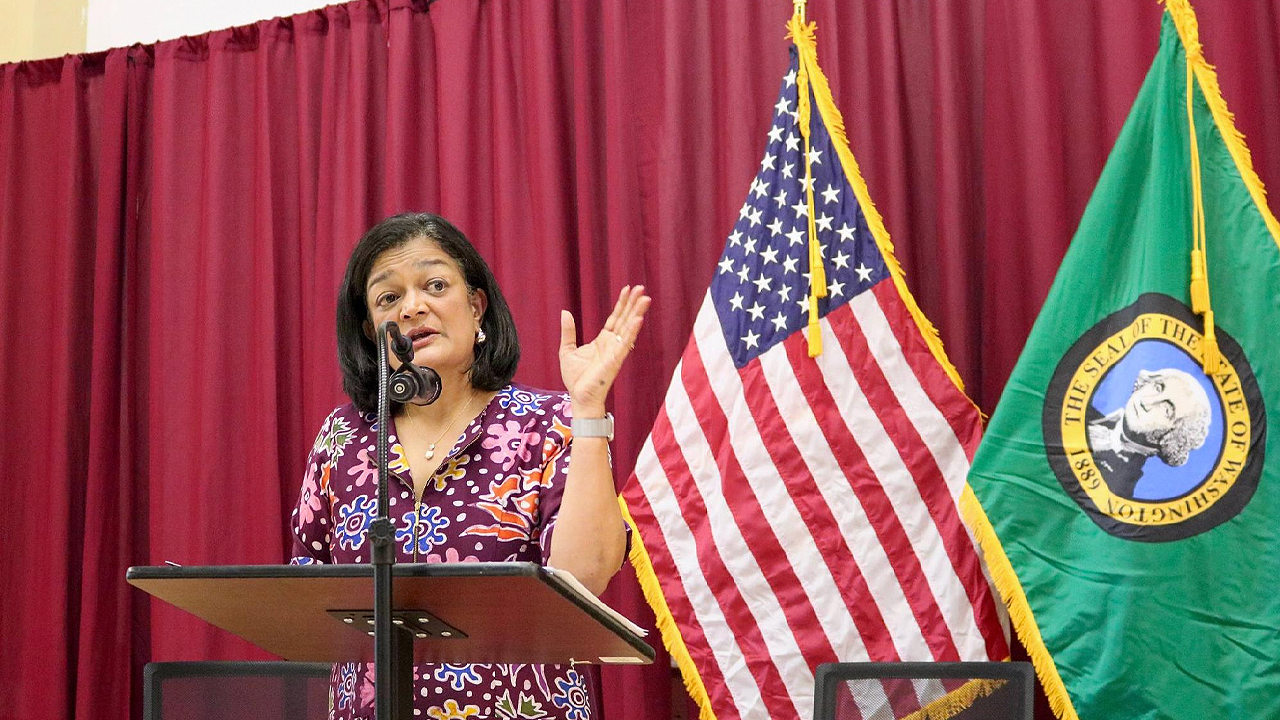
Representative Pramila Jayapal (D-Wash.) has sparked controversy after publicly discussing her efforts to facilitate oil supplies to Cuba despite existing U.S. sanctions. The progressive lawmaker made these remarks during a recent Seattle briefing following her congressional delegation trip to the island nation.
“I was in conversations with the ambassadors from Mexico and some other places… trying to figure out how to get oil there,” Jayapal said, describing Cuba’s situation as “a crisis beyond imagination.” She defended her actions on social media, stating: “Breaking news: Members of Congress meet with ambassadors of other countries every day. That’s literally our right and responsibility.”
The comments quickly drew backlash from conservatives, with some social media accounts suggesting her actions could constitute treason or violate federal law. However, legal experts have noted that such claims may be overstated. Former federal prosecutor Andrew McCarthy told Fox News Digital that potential legal exposure would depend on whether the lawmaker took concrete actions that violated U.S. sanctions.
“There would be no criminal case… unless it can be shown that she took some action that violated, or aided and abetted a violation of, the sanctions,” McCarthy explained. He added that the Logan Act—a rarely used federal law barring unauthorized individuals from negotiating with foreign governments in disputes involving the United States—has never resulted in a conviction and has been used only sparingly in U.S. history.
Jayapal’s trip to Cuba in April, undertaken with Representative Jonathan Jackson (D-Ill.), was part of what she described as her role to see “how U.S. foreign policy is actually affecting the people in the countries where that policy is being implemented.” During her visit, she met with Cuban President Miguel Díaz-Canel, senior government officials, political dissidents, civil society groups, and foreign diplomats.
The Washington lawmaker has been sharply critical of U.S. policy toward Cuba, describing sanctions as “economic bombing of the infrastructure” and arguing they worsen conditions for civilians on the island. “It is illegal. It is against the law,” she said. “This is essentially doing the same thing. It is bombing the infrastructure of Cuba with economic sanctions that essentially ensure that the infrastructure collapses.”
Cuba’s relationship with the United States has been fraught for decades. The Trump administration previously designated the Cuban government as a national security concern due to its ties with countries like Iran and alleged links to groups such as Hezbollah. The island’s economic conditions have contributed to a surge in migration, with hundreds of thousands of Cubans arriving in the United States in recent years.
While advocating for policy changes, Jayapal has maintained that she also raises concerns about the Cuban government’s human rights record. “I do also have criticisms of the Cuban government… In our meetings, I have always raised those,” she said, referencing issues including political prisoners and limits on dissent.
Following her trip, Jayapal issued a statement suggesting that “the Cuban government has sent many signals that this is a new moment for the country,” while arguing that U.S. restrictions on fuel amount to “cruel collective punishment.” She has called for lifting the U.S. embargo, removing Cuba from the State Sponsor of Terrorism list, and supporting legislation to block potential U.S. military action against the country.
The controversy highlights ongoing tensions in U.S.-Cuba relations and disagreements within American political circles about the appropriate approach to the communist-governed island. While some lawmakers advocate for engagement and lifting sanctions, others maintain that Cuba’s political system and international alignments justify continued pressure.
As of now, no investigation or charges related to Jayapal’s comments have been publicly announced by U.S. authorities.
Fact Checker
Verify the accuracy of this article using The Disinformation Commission analysis and real-time sources.

10 Comments
While the intention to help Cuba is understandable, US sanctions are in place for specific reasons. I hope any actions taken are thoroughly reviewed to ensure they do not inadvertently violate the law.
It will be important for all parties involved to maintain transparency and work within the bounds of the law to address this complex situation.
Cuba’s economic situation is undoubtedly difficult, but circumventing US sanctions is a complex issue with geopolitical ramifications. I hope all involved parties act with prudence and transparency.
It will be interesting to see how this situation develops and whether any concrete actions are found to violate sanctions laws.
Lawmakers have a responsibility to engage with foreign counterparts, but sanctions are in place for important reasons. I hope any discussions are strictly within legal and ethical bounds.
Treason is an extremely serious allegation that should not be thrown around lightly. Fact-based analysis from legal experts is crucial here.
This is a sensitive situation that requires careful consideration of legal and diplomatic implications. While I understand the desire to help, any actions that violate US sanctions could have serious consequences.
It’s good that legal experts are weighing in to provide clarity on the potential legal risks here.
This highlights the delicate balance lawmakers must strike between diplomacy and upholding the law. I hope any discussions are carefully vetted to ensure full compliance with sanctions.
Accusations of treason should be handled with great care, as the legal implications could be severe if not supported by clear evidence.