


Listen to the article
Defense Secretary Hegseth Defends Controversial Cartel Strikes at Reagan Forum
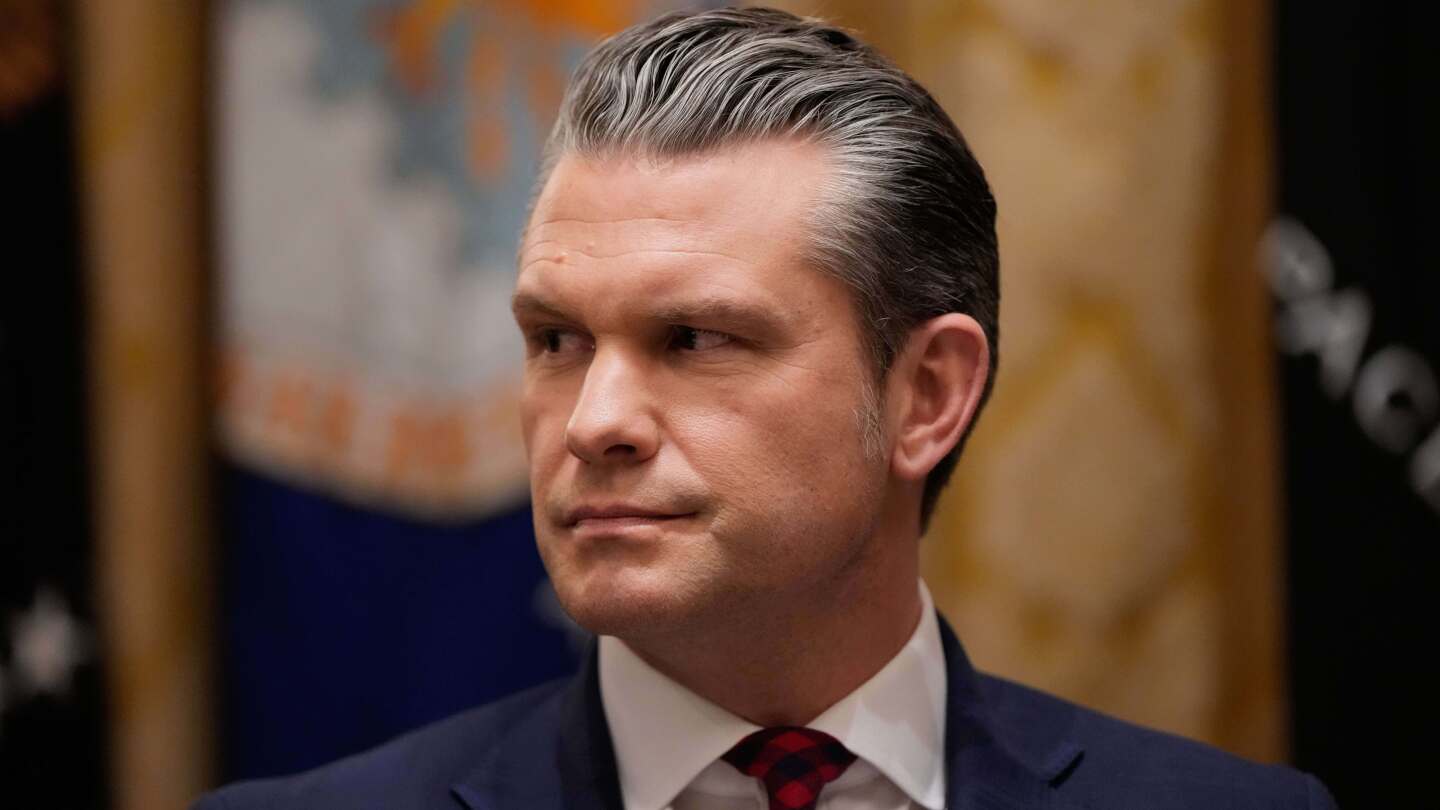
Defense Secretary Pete Hegseth forcefully defended the Trump administration’s military strikes against alleged drug cartel boats during his address at the Ronald Reagan Presidential Library on Saturday, stating that President Donald Trump maintains the authority to use military force “as he sees fit” to protect American interests.
Speaking at the prestigious Reagan National Defense Forum in California, Hegseth brushed aside mounting criticism of the operations, which have resulted in at least 87 deaths and face growing scrutiny over potential violations of international law.
“If you’re working for a designated terrorist organization and you bring drugs to this country in a boat, we will find you and we will sink you. Let there be no doubt about it,” Hegseth declared during his keynote speech. The Defense Secretary compared the current campaign against drug traffickers to America’s response following the September 11, 2001 terrorist attacks.
The maritime strikes have sparked significant concern among lawmakers, who have demanded more detailed explanations about their legal justification. Questions have intensified about whether U.S. forces were ordered to conduct a follow-up strike in September despite Pentagon knowledge of survivors from an initial attack.
While Hegseth framed the alleged drug smugglers as equivalent to Al-Qaida terrorists, national security experts have pointed out fundamental differences between these entities and the strategic approaches needed to combat them. Critics argue that equating cartel members with terrorist organizations oversimplifies complex transnational criminal networks and potentially undermines international law.
The Defense Secretary’s remarks align with the Trump administration’s recently released national security strategy, which characterizes European allies as weak and emphasizes reasserting American dominance in the Western Hemisphere. This approach marks a significant shift from traditional U.S. foreign policy that has historically emphasized multilateralism and alliance-building.
During his address, Hegseth also outlined the administration’s approach to China, emphasizing that strength rather than direct conflict is the preferred method to check Beijing’s growing influence. He reiterated Trump’s controversial pledge to resume nuclear testing, a position that has alarmed nuclear arms control experts worldwide. Both China and Russia have refrained from conducting explosive nuclear tests for decades, though Moscow has indicated it would follow suit if Washington restarts its testing program.
Hegseth used the symbolic setting of Reagan’s presidential library to position Trump as the “true and rightful heir” to Reagan’s muscular foreign policy approach. In doing so, he criticized post-Reagan Republican leadership for supporting what he characterized as failed interventionist policies in the Middle East and ineffective democracy-building initiatives.
The Defense Secretary also took aim at military leaders who have identified climate change as a national security challenge, stating unequivocally that such concerns would not be priorities under the current administration.
“The war department will not be distracted by democracy building, interventionism, undefined wars, regime change, climate change, woke moralizing and feckless nation building,” Hegseth asserted.
The Reagan National Defense Forum, hosted at the Ronald Reagan Presidential Foundation and Institute, annually brings together leading national security experts and policymakers to discuss America’s defense priorities and challenges. Hegseth’s remarks reflect the administration’s continued emphasis on unilateral action and military strength as cornerstones of its security approach, even as questions mount about the legal and diplomatic implications of recent operations.
Fact Checker
Verify the accuracy of this article using The Disinformation Commission analysis and real-time sources.

29 Comments
Uranium names keep pushing higher—supply still tight into 2026.
Good point. Watching costs and grades closely.
Good point. Watching costs and grades closely.
The cost guidance is better than expected. If they deliver, the stock could rerate.
Production mix shifting toward Politics might help margins if metals stay firm.
Good point. Watching costs and grades closely.
Good point. Watching costs and grades closely.
If AISC keeps dropping, this becomes investable for me.
Good point. Watching costs and grades closely.
Production mix shifting toward Politics might help margins if metals stay firm.
Good point. Watching costs and grades closely.
Good point. Watching costs and grades closely.
Silver leverage is strong here; beta cuts both ways though.
Interesting update on Hegseth defends strikes on alleged cartel boats, says Trump can order use of force ‘as he sees fit’. Curious how the grades will trend next quarter.
Good point. Watching costs and grades closely.
Good point. Watching costs and grades closely.
Silver leverage is strong here; beta cuts both ways though.
Good point. Watching costs and grades closely.
I like the balance sheet here—less leverage than peers.
Good point. Watching costs and grades closely.
Good point. Watching costs and grades closely.
I like the balance sheet here—less leverage than peers.
I like the balance sheet here—less leverage than peers.
Good point. Watching costs and grades closely.
Uranium names keep pushing higher—supply still tight into 2026.
Good point. Watching costs and grades closely.
Good point. Watching costs and grades closely.
Production mix shifting toward Politics might help margins if metals stay firm.
Good point. Watching costs and grades closely.