


Listen to the article
Hawaii’s Green Questions Newsom’s Appeal as Democrats Eye Post-Trump Landscape
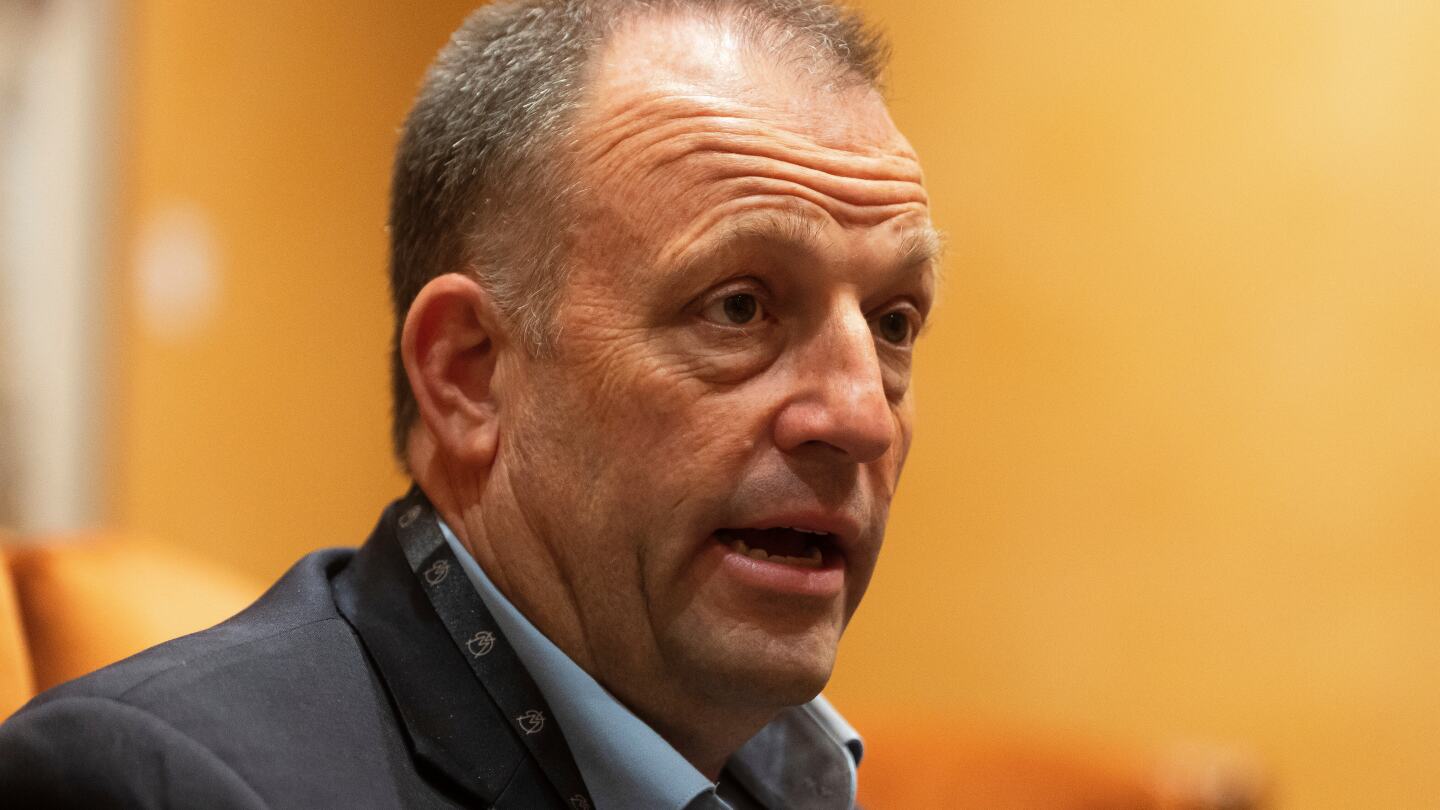
Gov. Josh Green of Hawaii suggested that Americans will seek a unifying figure after Donald Trump’s second presidential term ends, casting doubt on whether California Gov. Gavin Newsom’s confrontational approach would resonate with voters.
Speaking to The Associated Press during the Western Governors Association meeting in Scottsdale, Arizona, Green, a Democrat who has himself hinted at presidential ambitions, expressed concern that politicians known for “hand-to-hand combat” might struggle with an electorate exhausted by political division.
“We’re going to need leaders that are willing to take from both ideologies,” Green said Thursday. “I think that that’s who the next president should be, whoever that is, whether it’s Republican or Democrat.”
His comments highlight the early positioning within Democratic ranks as potential candidates begin looking toward 2028. With no clear successor to President Joe Biden and Democrats searching for strategies to regain power in Washington, ambitious party figures are already staking out different approaches to leadership.
Green, known for his moderate stance that has occasionally frustrated progressive groups, voiced respect for Newsom’s accomplishments, particularly his successful campaign to redraw California’s congressional districts in Democrats’ favor. However, he cautioned that Newsom risks being labeled “a radical from California.”
“If Gavin is ultimately going to win over America, he will have to also adopt some of the conciliatory, collegial rhetoric — or even policy ideas — that others are going for,” Green added.
The Hawaii governor warned that the United States is “dangerously close to a political civil war” and emphasized the need for healing the partisan divide. He identified several governors he believes embody this conciliatory approach, including Democrats Wes Moore of Maryland and Josh Shapiro of Pennsylvania, as well as Republican Spencer Cox of Utah.
Newsom has emerged as one of Trump’s most visible Democratic opponents. While he briefly adopted a more conciliatory tone after Trump’s inauguration—meeting with the president and hosting MAGA-aligned figures for podcast interviews—he has since returned to forceful criticism. The California governor has fought against the deployment of National Guard and active military troops to his state and led the recently approved redistricting effort.
Newsom’s office has also employed a strategy of mocking Trump on social media, adopting the president’s distinctive communication style to provoke reactions while energizing Democrats who favor direct confrontation. Representatives for Newsom did not respond to requests for comment on Green’s remarks.
As for his own presidential aspirations, Green acknowledged openness to a future run but suggested he would prefer to support another candidate. Currently in the final year of his first term as Hawaii’s governor, he is seeking reelection in 2025.
“I will definitely try to heal America, even perhaps as president someday, if we’re really in deep trouble,” Green said, while noting that his current role would likely be his last in elected office.
Green’s commentary reflects the broader debate within Democratic circles about the party’s direction after four years of Republican control. Some advocate for a return to bipartisanship and healing rhetoric, while others believe a more aggressive approach against Trumpism remains necessary.
The strategic positioning comes at a critical juncture, with Democrats attempting to rebuild their message and electoral coalition after their 2024 losses. Whether voters will ultimately prefer bridge-builders or fighters may depend on the political climate that emerges from Trump’s second term—a calculation that potential candidates like Green are already beginning to make.
Fact Checker
Verify the accuracy of this article using The Disinformation Commission analysis and real-time sources.

10 Comments
The desire for unity and healing after a polarizing time is understandable. While Newsom has a strong national profile, his confrontational approach may not be what some voters are looking for. It will be intriguing to see how the 2028 field takes shape and what qualities emerge as priorities for the electorate.
This is an insightful analysis of the evolving political climate and the potential desire for a more centrist, consensus-building leader. It will be fascinating to see how the Democratic field takes shape and whether a candidate emerges who can appeal to a broad range of voters in the post-Trump era.
This is an insightful analysis of the evolving political climate and the potential desire for a more centrist, consensus-building leader. It will be fascinating to see how the Democratic field shapes up and whether a candidate emerges who can appeal to a broad range of voters in the post-Trump era.
The desire for unity and healing after a polarizing period is understandable. While Newsom has a strong national profile, his combative style may not resonate as much as a more conciliatory approach. It will be intriguing to see how the 2028 race unfolds and what qualities voters prioritize in a presidential candidate.
Governor Green raises an interesting point about the potential for voters to prioritize a unifying, bipartisan leader after a divisive period. Newsom’s combative style may not resonate as much as a more conciliatory approach. The 2028 race will certainly be worth following closely.
It’s an interesting perspective that voters may want a unifying, bipartisan leader in 2028 after a divisive period. Newsom’s confrontational approach could potentially turn off some Americans looking for compromise and reconciliation. The 2028 field will certainly be worth watching closely.
It’s an interesting perspective that voters may desire a unifying, bipartisan leader after a divisive era. Newsom’s combative approach could potentially turn off some Americans looking for reconciliation and compromise. It will be fascinating to see how the 2028 field shapes up.
This is a thoughtful perspective on the evolving political landscape and the potential desire for a more centrist, consensus-building leader. It will be worth monitoring how the Democratic field shapes up and whether a candidate emerges who can appeal to a broad range of voters in the post-Trump era.
Governor Green raises an interesting point about the potential voter preference for a unifying, bipartisan leader after a divisive period. Newsom’s combative style may not resonate as much as a more conciliatory approach. The 2028 race will certainly be worth watching closely.
This is a thoughtful analysis of the evolving political landscape and the potential desire for a more centrist, consensus-building leader. It will be worth watching how the Democratic field takes shape and whether a candidate emerges who can appeal to a broad range of voters after the Trump era.