


Listen to the article
Minnesota Governor Condemns Trump’s Comments on Somali Community
Minnesota Governor Tim Walz sharply criticized former President Donald Trump on Thursday for referring to the state’s Somali community as “garbage” and describing Minnesota as a “hellhole.”
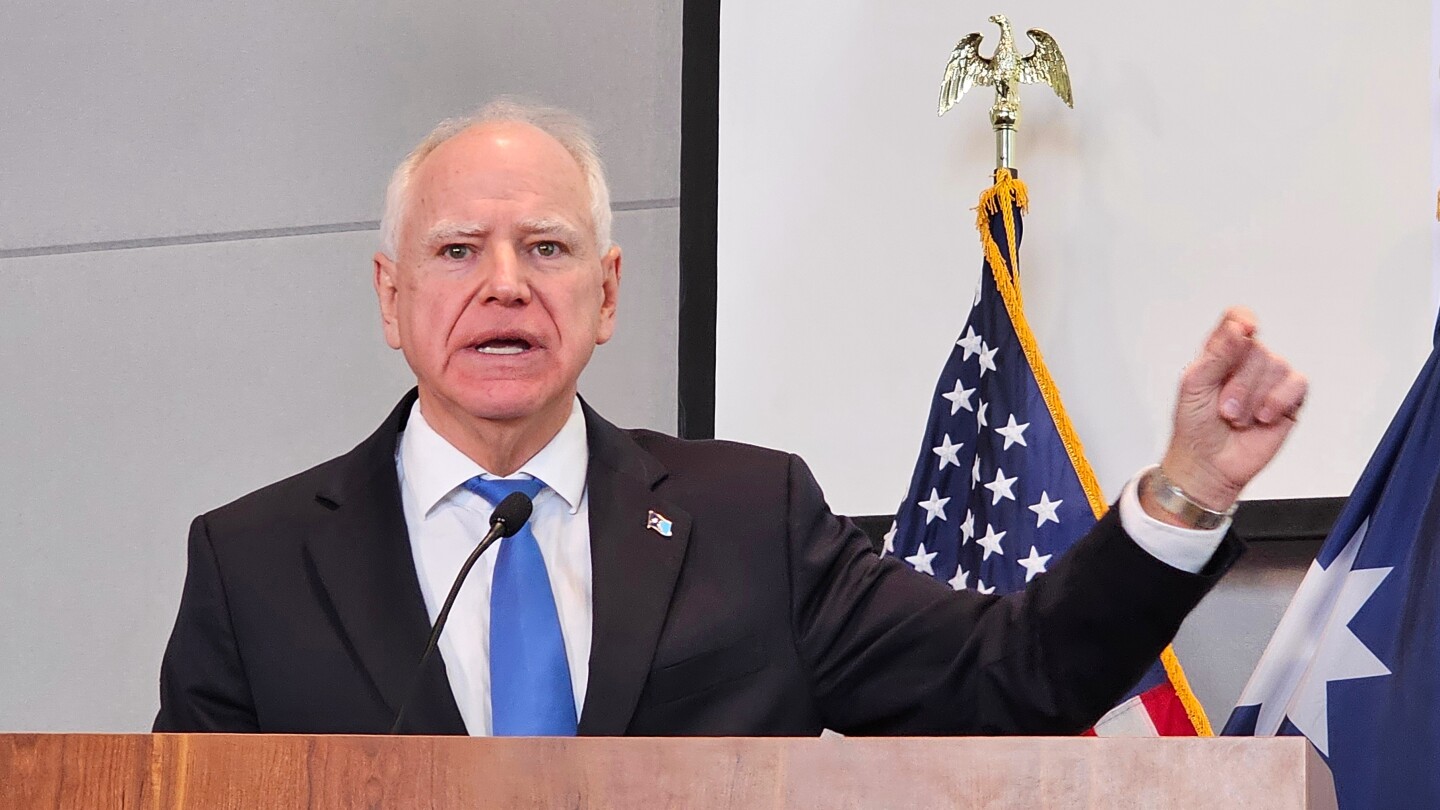
During a budget briefing, Walz condemned Trump’s rhetoric, stating that the former president had “slandered all Minnesotans” with his comments. The Democratic governor expressed particular concern about the impact on Somali children, noting that “we’ve got little children going to school today who their president called them garbage.”
“Demonizing an entire group of people by their race and their ethnicity, a very group of people who contribute to the vitality — economic, cultural — of this state is something I was hoping we’d never have to see,” Walz said, characterizing Trump’s statements as “unprecedented for a United States president.”
Trump’s comments about Minnesota’s Somali population, the largest in the United States, have intensified following claims by the conservative publication City Journal that taxpayer dollars from fraudulent government programs had been channeled to the Somali militant group al-Shabab, an al-Qaida affiliate.
On Thanksgiving, Trump called Minnesota “a hub of fraudulent money laundering activity” and announced his intention to terminate Temporary Protected Status for Somalis in Minnesota, a legal protection against deportation. He escalated his rhetoric during a Cabinet meeting Tuesday, saying he didn’t want immigrants from Somalia to remain in the U.S., adding, “We can go one way or the other, and we’re going to go the wrong way if we keep taking in garbage into our country.”
The former president continued his attacks Wednesday, describing Minnesota as a “hellhole” because of Somali immigrants. “Somalians should be out of here,” he told reporters. “They’ve destroyed our country.”
Reports indicate federal authorities have prepared an immigration enforcement operation in Minnesota targeting Somalis living unlawfully in the United States. A congressional report estimated approximately 700 Somalis nationwide have protected status, with Walz suggesting around 300 of those individuals reside in Minnesota.
The Minneapolis-St. Paul area is home to approximately 84,000 people of Somali descent, constituting nearly one-third of all Somalis living in the U.S. Statistics show that almost 58% of Minnesota’s Somali population was born in the United States, while 87% of foreign-born Somalis in Minnesota are naturalized U.S. citizens.
The exact financial impact of fraud schemes targeting government programs in Minnesota remains unclear. Federal prosecutor Joe Thompson, who led the investigation into the $300 million Feeding Our Future scandal that has resulted in charges against 78 people, estimated in a television interview that the total across several programs could approach $1 billion.
Governor Walz acknowledged this figure “certainly could be” accurate while noting that an audit scheduled for completion by late January should provide a clearer picture. He emphasized that his administration is taking “aggressive action” to prevent additional fraud.
Republican legislative leaders in Minnesota avoided directly condemning Trump’s remarks. House Speaker Lisa Demuth, who is running for governor and has expressed hope for Trump’s endorsement, offered a measured response: “In no way do I believe any community is all bad. Just like I don’t believe any community is all good. What we need to do is call the fraudsters in any community accountable for their actions and stop it here in the state of Minnesota.”
State Senator Eric Pratt, a Republican congressional candidate, acknowledged that Trump’s comments “wasn’t said the way that I would have said it,” but expressed frustration about “the amount of fraud and corruption that’s effectively gone on in the state.”
The controversy has extended beyond Minnesota’s borders, with lawmakers in Ohio—home to the second-largest Somali population in the United States—also condemning Trump’s statements. State Representative Terrence Upchurch, president of the Ohio Legislative Black Caucus, defended Somali residents, saying they “deserve to live in a state where they are respected for their contributions and not singled out by divisive commentary.”
The Ohio Jewish Caucus issued a separate statement calling Trump’s comments “xenophobic, dangerous and wholly unacceptable from any public official, let alone the President of the United States.”
As this situation continues to develop, community leaders and state officials are monitoring for potential immigration enforcement actions while grappling with the broader implications of the former president’s rhetoric toward immigrant communities.
Fact Checker
Verify the accuracy of this article using The Disinformation Commission analysis and real-time sources.

8 Comments
The former president’s comments about the Somali community in Minnesota are highly concerning. As the governor pointed out, such derogatory language can have real and harmful impacts, especially on vulnerable children. We should expect our leaders to promote unity, not division.
Agreed. Divisive rhetoric that targets minority groups is unacceptable, no matter the political affiliation of the person making the comments. The governor is right to strongly condemn this kind of hateful speech.
It’s deeply troubling to see the former president make such inflammatory and dehumanizing remarks about the Somali community in Minnesota. As the governor rightly stated, this kind of rhetoric can be very damaging, especially for young people. We need leaders who will bring people together, not fuel division and hate.
While political disagreements are common, the former president’s derogatory language towards the Somali community is unacceptable. As the governor rightly pointed out, these kinds of hateful remarks can be deeply damaging, especially for young people. We should strive for more civil and inclusive discourse.
Absolutely. Demonizing an entire ethnic group is incredibly irresponsible, especially from someone in a position of power. The governor’s strong condemnation is warranted and necessary.
It’s concerning to see the former president make such inflammatory remarks about a minority community. Divisive rhetoric like this can have real impacts on vulnerable people, especially children. As a leader, we should be bringing people together, not tearing them apart.
I agree, the comments are deeply troubling and do nothing to help unite the state. We need to focus on the positive contributions the Somali community makes to Minnesota’s diversity and economy.
Calling an entire community ‘garbage’ is reprehensible. I’m glad the governor is speaking out against this kind of divisive and dehumanizing rhetoric. Minnesotans deserve leaders who will bring people together, not spread hate and intolerance.