


Listen to the article
House Republicans Move Forward with Second Reconciliation Package to Fund Iran War
House Republicans are advancing plans for a second budget reconciliation package, ending months of speculation about whether the chamber would pursue another GOP-only megabill before November’s midterm elections.
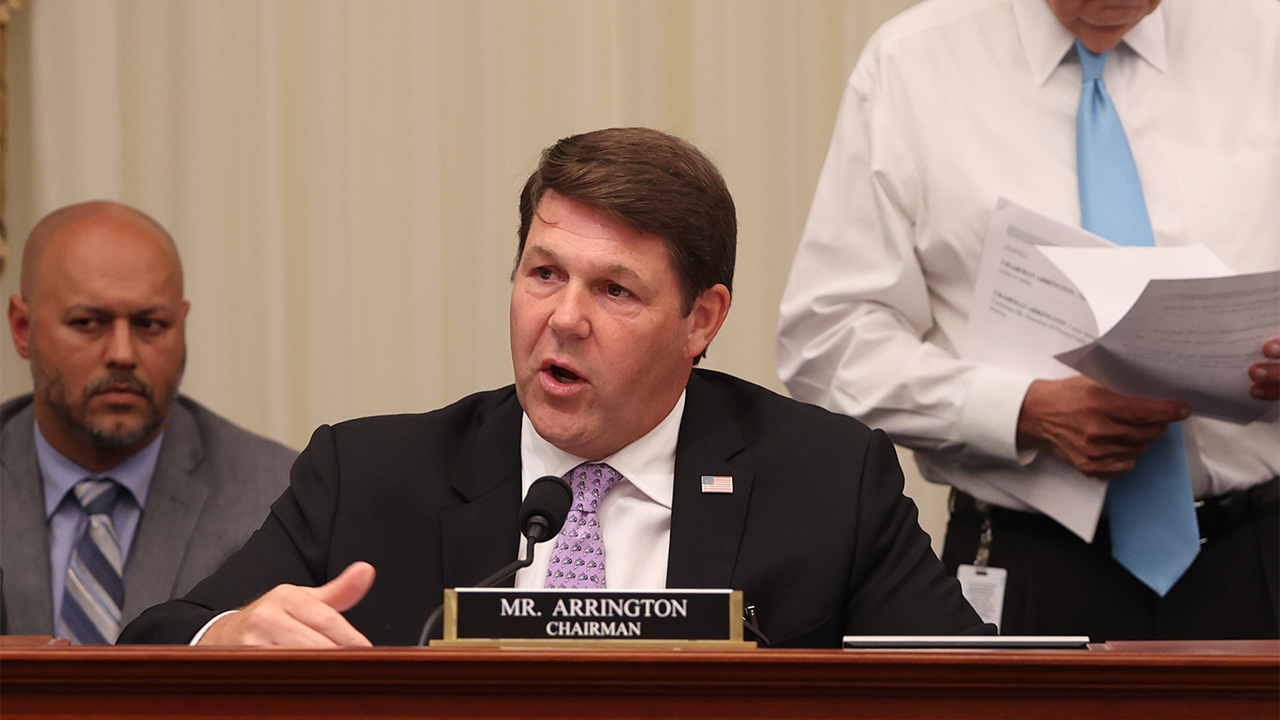
House Budget Committee Chairman Jodey Arrington (R-Texas) announced Wednesday that the committee is preparing to mark up a budget resolution that would fund President Donald Trump’s military campaign in Iran while implementing anti-fraud provisions to offset the defense spending increase.
“It’s an opportunity to solve two problems and address two challenges and advance two great causes: fund the military, provide a strong defense, win the war, achieve the objectives and do it in a way that doesn’t put our kids further in the hole,” Arrington told reporters.
The Trump administration has suggested a $200 billion funding request for the Iran war effort but has yet to submit a formal proposal. With Democrats expected to oppose a defense supplemental, Republican lawmakers believe a reconciliation bill may be the only viable path forward for advancing the president’s priorities.
“Democrats have obstructed everything,” Rep. August Pfluger (R-Texas) told Fox News Digital. “So, we believe, unfortunately, that reconciliation is the only mechanism to move the rest of the President’s agenda.”
The budget reconciliation process would allow Republicans to bypass the Senate’s 60-vote requirement, enabling passage with a simple majority. This legislative strategy has become increasingly important for Republicans operating with razor-thin majorities in Congress.
Senate Budget Committee Chairman Lindsey Graham (R-S.C.) is working in parallel with Arrington on the initiative. Graham announced Wednesday that his committee would begin drafting reconciliation instructions, suggesting funding increases for military and law enforcement operations alongside voter integrity measures as potential components.
“Let’s put it this way: The reconciliation train is leaving the station,” Graham posted on social media after meeting with Arrington to discuss the second megabill.
Despite broad Republican support for defense funding and fraud-prevention measures, the legislation faces significant hurdles. House Speaker Mike Johnson (R-La.) operates with an extremely narrow majority, able to lose just one Republican vote on a party-line measure. This precarious margin was evident during the passage of Trump’s One Big Beautiful Bill Act in June 2025, which succeeded only after months of intraparty negotiations.
Arrington believes the ongoing conflict with Iran will serve as a unifying force to secure passage. “I think funding our military in a time of war, if there’s no sense of urgency and accountability from members of Congress to support our commander in chief, I can’t think of one,” he said.
The chairman didn’t rule out including elements of the SAVE America Act—a Trump-backed election bill that has stalled in the Senate due to Democratic opposition. However, its provisions requiring proof of citizenship and voter ID for federal elections might not meet reconciliation’s strict budget-related requirements.
The reconciliation effort comes amid heightened partisan tensions in Washington, with Republicans increasingly frustrated by what they perceive as Democratic obstruction of the Trump administration’s agenda. GOP lawmakers are particularly focused on fraud in social services, viewing potential spending cuts in that area as a way to offset the cost of additional defense funding.
Speaker Johnson, who has consistently advocated for a second budget bill, expressed support for the Senate’s movement on reconciliation. “I’m glad to know the Senate is interested in reconciliation 2.0,” the speaker said. “I have been a broken record. We need to do that. It’s an important legislative tool.”
As midterm elections approach, Republicans appear determined to demonstrate progress on key priorities, including defense spending and fiscal responsibility, positioning the reconciliation package as a critical vehicle for advancing these goals before voters head to the polls.
Fact Checker
Verify the accuracy of this article using The Disinformation Commission analysis and real-time sources.

9 Comments
Funding a war through reconciliation is an unusual move. I wonder if this sets a precedent that could be abused in the future, regardless of party in power.
That’s a valid concern. The long-term institutional implications are worth careful consideration.
Reconciliation is meant for fiscal policy, not foreign policy. I worry this sets a dangerous precedent and undermines democratic norms around military action.
Agreed, the use of reconciliation for military funding is concerning and merits close scrutiny.
While I understand the desire to provide strong defense, I’m curious about the specifics of this funding plan and how it will impact domestic priorities and the deficit.
Good point. The details and trade-offs will be crucial in evaluating this proposal objectively.
This news raises important questions about congressional oversight, bipartisanship, and the appropriate use of budget reconciliation. I hope all sides engage in thoughtful, fact-based debate.
Funding a war through budget reconciliation is a concerning development. I hope Congress carefully considers the implications and potential consequences before moving forward.
Agreed, this seems like a risky and potentially divisive approach. Transparent debate and bipartisan cooperation would be better for addressing complex foreign policy issues.