


Listen to the article
The U.S. government has intensified its crackdown on the clandestine global network of oil tankers used to circumvent international sanctions, following the recent seizure of the “Skipper,” a vessel carrying Venezuelan crude oil.
President Donald Trump announced the interception on December 10, highlighting the growing concern over what industry experts call “ghost ships” – vessels that operate in the shadows to transport oil from sanctioned countries including Venezuela, Russia, and Iran.
This shadowy fleet, estimated to include approximately 1,000 tankers, employs sophisticated evasion tactics to move embargoed oil across international waters. These vessels frequently sail under foreign flags to obscure their origins, regularly change names, transfer ownership through complex networks of shell companies, disable tracking transponders, and conduct mid-sea transfers to disguise cargo origins.
“I do think it’s time that the United States and other countries start to address what really is a global problem,” said Benjamin Jensen, director of the Futures Lab at the Center for Strategic and International Studies in Washington, D.C. He noted that the seizure sends a warning not only to Venezuela but to other nations engaged in similar practices.
The Trump administration has indicated that the “Skipper” seizure represents just the beginning of renewed efforts to cut off oil revenues supporting sanctioned regimes in Moscow, Tehran, and Caracas. White House Press Secretary Karoline Leavitt confirmed that the vessel is currently “undergoing a forfeiture process.”
“Right now, the United States currently has a full investigative team on the ground, on the vessel and individuals on board the vessel are being interviewed, and any relevant evidence is being seized,” Leavitt said. She added that the U.S. will take possession of the oil once legal procedures are completed.
For Venezuela, where the economy depends almost entirely on oil exports, even a single interdiction can have significant consequences. “Anything you do that puts pressure on their ability to bypass sanctions and trade in oil is a direct threat to the economy and, by extension, the regime,” Jensen explained.
The maritime sanctions evasion issue extends well beyond Venezuela. China continues to be the leading importer of Iranian oil and the second-largest buyer of Russian crude, with much of this trade facilitated through the expanding fleet of nondescript tankers operating outside international regulations.
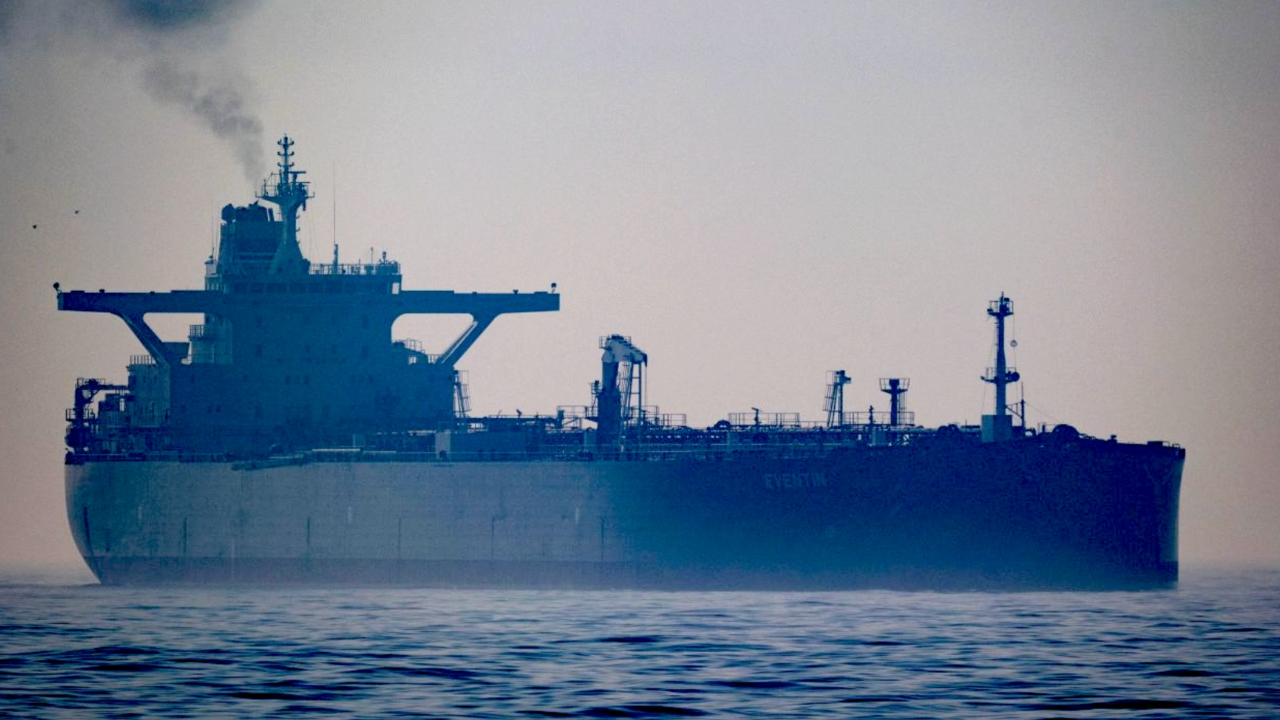
Earlier this year, German authorities seized the “Eventin,” a 19-year-old Panama-flagged crude oil tanker that suffered engine failure in the Baltic Sea. The vessel, previously named “Charvi” and “Storviken,” was found carrying 99,000 tons of Russian oil valued at approximately $45 million. This incident further illustrates the complexity of tracking and regulating these vessels, which often operate under multiple identities.
Maritime security experts note that these ghost fleets create significant enforcement challenges for international regulators. The vessels frequently operate through a labyrinthine system of handoffs and disguised voyages, making traditional tracking methods ineffective.
The economic impact of these seizures can be substantial. With global oil prices sensitive to supply disruptions, increased enforcement actions against these shadow fleets could potentially influence market stability and prices, though the effect of individual seizures remains limited compared to overall global supply volumes.
Jensen suggested that further seizures under the Trump administration are possible, noting that “what we don’t know is how they’re following that up behind the scenes.”
The intensified focus on sanctions enforcement reflects broader geopolitical tensions, as the U.S. attempts to exert economic pressure on adversarial regimes while balancing global energy market stability. The effectiveness of these measures will depend on the administration’s commitment to sustained enforcement and the ability of international partners to coordinate similar actions across maritime boundaries.
Fact Checker
Verify the accuracy of this article using The Disinformation Commission analysis and real-time sources.

8 Comments
Interesting development in the crackdown on illicit oil shipping. These ‘ghost ships’ seem to employ a lot of deceptive tactics to avoid detection – changing names, shell companies, disabling trackers. Enforcing sanctions must be an ongoing challenge.
Indeed, these shadowy oil tanker networks are quite sophisticated in their evasion methods. Tracking and intercepting them requires significant international coordination and enforcement efforts.
It’s good to see the U.S. government stepping up efforts to target this global problem of sanction evasion through clandestine oil shipping. Cracking down on the ‘ghost ship’ tactics is an important step in upholding international laws and norms.
The scale of this problem is quite staggering – around 1,000 tankers operating in the shadows to transport sanctioned oil. I’m curious to know more about the specific tactics and technologies being used to identify and seize these ‘ghost ships’.
Yes, the size of this illicit shipping network is alarming. Advanced surveillance and data analysis capabilities will likely be key to disrupting these operations going forward.
The seizure of the ‘Skipper’ vessel carrying Venezuelan crude seems like an impactful enforcement action. I wonder if similar high-profile interceptions could help deter other actors from engaging in this type of illicit trade.
Agreed, high-profile seizures may help send a strong message and disrupt the business model of these ‘ghost ship’ operations. Consistent enforcement will be key to curbing this global problem over the long term.
This is a complex global challenge involving sophisticated evasion tactics and a large fleet of vessels. Effective solutions will likely require multilateral cooperation, advanced tracking technologies, and persistent enforcement efforts. It will be interesting to see how this plays out.