


Listen to the article
Democrats secured significant victories across the country in Tuesday’s off-year elections, winning key gubernatorial races and local positions, yet the party’s ideological direction remains in flux as both centrist and progressive candidates claimed important wins.
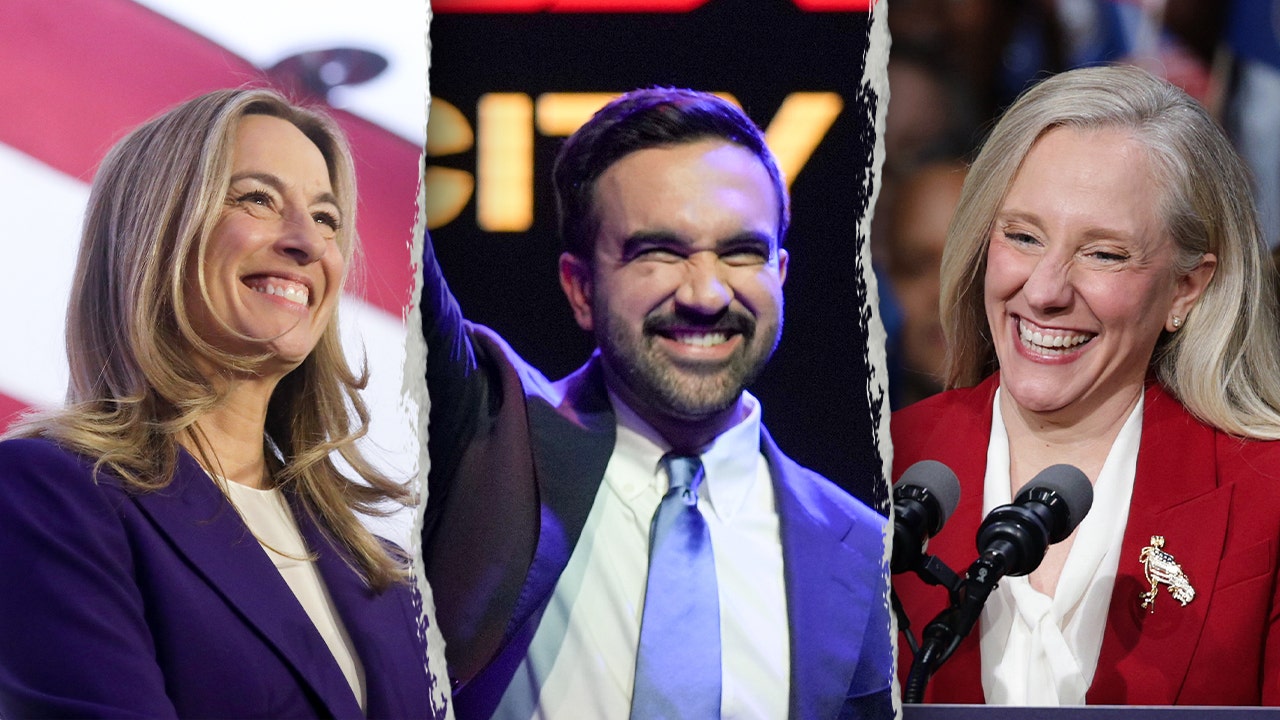
The electoral map showed a complex pattern of Democratic success. Moderate Democrats prevailed in competitive states like Virginia and New Jersey, while progressive candidates, including democratic socialists, captured victories in traditionally liberal strongholds such as New York City, where Zohran Mamdani won the mayoral race.
Jason Palmer, a former Democratic presidential primary candidate and co-founder of TOGETHER!, believes the party’s future direction will crystallize within the next year. Palmer predicts Democrats will adopt a regionally tailored approach to messaging and candidate selection in upcoming elections.
“I think what’s going to end up happening is that the Democrats are going to become a bigger tent and take in different candidates in different regions based on the politics of those regions,” Palmer told Fox News Digital. “So, you’ll see people that are more like Beshear in Kentucky across the Midwest, you’ll see some people more like Mamdani all throughout Vermont, New Hampshire, Massachusetts, etc., but the Democratic Party will have different messages for different parts of the country in the 2026 election.”
This strategic flexibility could help Democrats navigate the ideological tensions that have sometimes divided the party since 2016. The recent electoral successes included centrist victories by Abigail Spanberger in Virginia and Mikie Sherrill in New Jersey, while progressive candidates performed well in dense urban centers.
Palmer, who briefly sought the presidency during the 2024 cycle, expressed concern that some Democratic messaging has become excessively hostile toward wealth creation and entrepreneurship.
“I think they’re going too far anti-billionaire in their approach. America is a country where people can make of themselves what they want, and most of the people that are billionaires in America did not inherit their wealth,” Palmer said. “Business building is a core part of what makes America great, and I don’t think the Democratic Party should be bashing business builders.”
Instead, Palmer advocates for what he calls “conscious capitalism” as a unifying economic vision that could appeal across party lines. He sees public benefit corporations (PBCs) – businesses that balance profit motives with specific social or environmental goals – as increasingly attractive to younger Americans seeking purpose-driven work.
“I think conscious capitalism is where our economy is ultimately going,” Palmer said. “More and more young people want to work at purpose-driven companies, and they’re okay with them being for-profit companies.”
Palmer suggested this trend toward meaningful employment partially fills a void left by declining religious participation among younger Americans. “I think a lot of people are trying to get their purpose through work, and there are a lot of companies that provide that purpose and that family feeling,” he noted.
To implement conscious capitalism as policy, Palmer proposed a two-tier corporate tax structure that would offer lower rates to companies that adopt mission-driven principles and regularly publish impact metrics, while maintaining higher rates for purely profit-driven enterprises.
Looking ahead to the 2026 midterm elections, now less than a year away, Palmer advised Democrats to recruit younger candidates with entrepreneurial backgrounds for competitive districts nationwide. He plans to release a list of endorsed candidates in their 20s and 30s who share his vision of conscious capitalism.
The party’s ability to balance its progressive and moderate wings while crafting a coherent economic message will likely determine whether Democrats can build on their recent electoral successes in next year’s congressional races, where control of both chambers remains closely contested.
House Minority Leader Hakeem Jeffries and Senate Minority Leader Chuck Schumer will play crucial roles in shaping the party’s legislative agenda and campaign messaging as Democrats attempt to reclaim congressional majorities in 2026.
Fact Checker
Verify the accuracy of this article using The Disinformation Commission analysis and real-time sources.

18 Comments
The election results highlight the complexity of the Democratic coalition. Moderates and progressives both secured important wins, suggesting the need for nuanced policymaking. It will be a delicate balancing act.
Absolutely. Uniting the party around a cohesive vision while respecting regional differences will be crucial for the Democrats moving ahead.
It’s an interesting approach, but the Democrats will need to be vigilant about maintaining core principles and values across the country. Regionalism shouldn’t come at the expense of a cohesive national vision.
Agreed. Balancing local relevance with national unity will be critical. They’ll need to thread that needle carefully.
The election results suggest voters want a Democratic Party that is responsive to local needs and concerns. But the party will also need to articulate a clear, unifying message nationally. Finding that balance will be key.
Absolutely. The Democrats will have to work hard to avoid becoming too fragmented and ensure they can still drive meaningful change at the federal level.
It’s encouraging to see the Democrats taking a more nuanced approach to messaging and candidate selection. Tailoring the party’s platform to regional dynamics could pay off, but they’ll need to be mindful of maintaining core principles.
Well said. Striking the right balance between local relevance and national unity will be critical for the Democrats going forward.
It’s an interesting strategy, but the Democrats will need to be vigilant about ensuring their regional approach doesn’t lead to too much fragmentation. Balancing local relevance with national unity will be a key challenge going forward.
Absolutely. They’ll need to find ways to empower diverse voices while still projecting a clear, consistent brand. It’s a fine line to walk, but could pay off if executed well.
Interesting to see the Democrats taking a regionally tailored approach. Voters seem to be seeking a range of perspectives, not a one-size-fits-all platform. Curious to see how this evolves going forward.
Yes, it will be important for the party to find the right balance between national messaging and local relevance. Appealing to diverse voter bases is key.
I’m curious to see how the Democrats’ regional strategy plays out. Tailoring the message to local needs could resonate, but risks fracturing the party if not done carefully.
Good point. The party will need to find ways to maintain unity while allowing for diverse approaches. It’s a fine line to walk.
The election results underscore the diversity of the Democratic coalition. Moderates and progressives both had success, suggesting voters want a party that can address a range of issues and perspectives. It will be interesting to see how the party navigates this moving ahead.
Agreed. The Democrats will need to find ways to harness that diversity while still projecting a coherent vision. It’s a delicate balancing act, but one that could pay dividends if done well.
Adopting a regionally tailored approach could be a smart move for the Democrats, but they’ll need to be careful not to lose sight of their core values and principles. Maintaining unity while respecting local differences will be crucial.
Well put. The party will have to work hard to ensure their regional strategy doesn’t come at the expense of a strong, cohesive national message and vision.