


Listen to the article
Florida’s Governor DeSantis Labels CAIR and Muslim Brotherhood as “Foreign Terrorist Organizations”
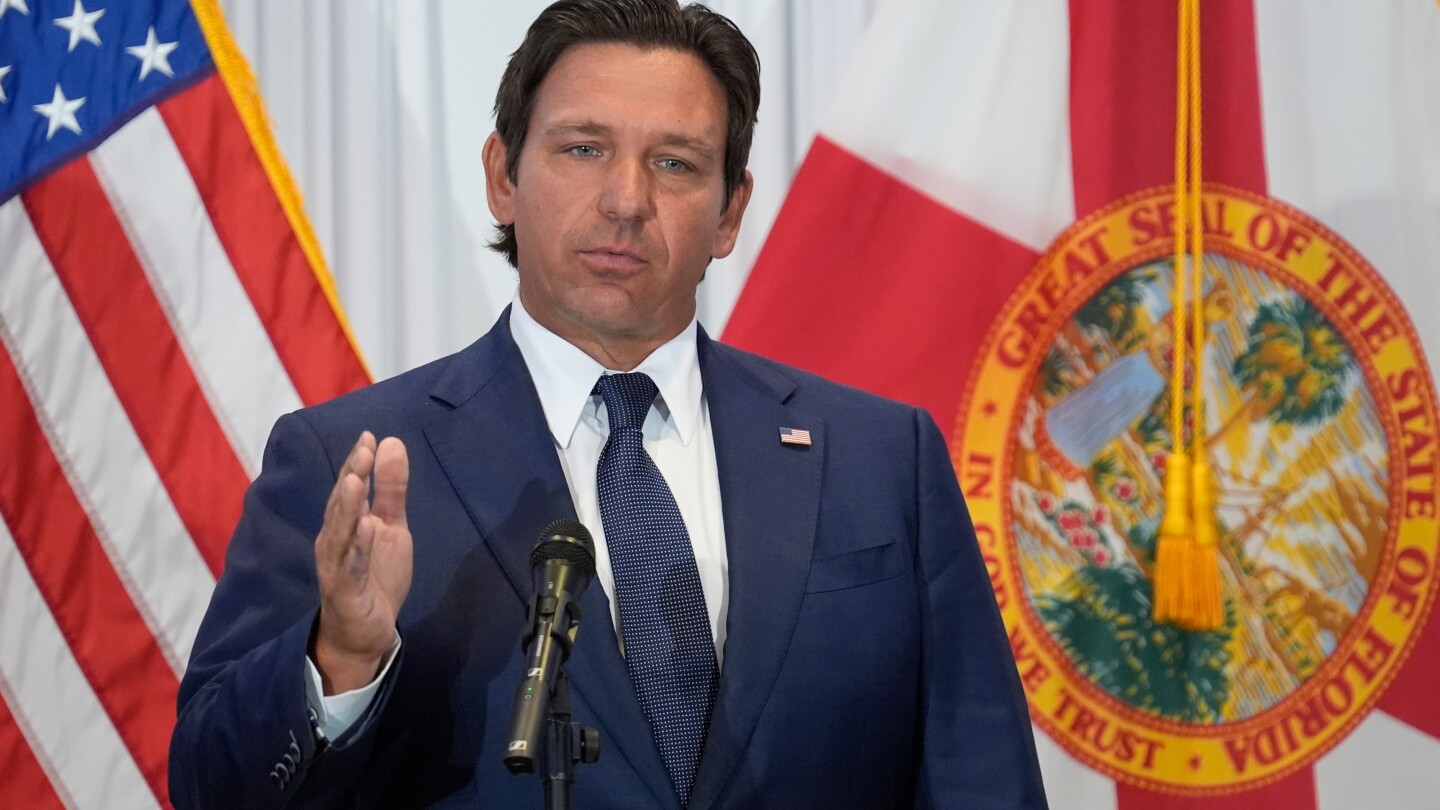
In a controversial executive order announced Monday, Florida Governor Ron DeSantis has designated the Council on American-Islamic Relations (CAIR) and the Muslim Brotherhood as “foreign terrorist organizations.” The proclamation, shared via the governor’s social media account on X, follows a similar action taken by Texas Governor Greg Abbott last month.
The executive order prohibits Florida state agencies from awarding contracts, providing employment, or disbursing funds to these organizations or to individuals who have provided them with material support. This restriction applies across all executive and cabinet agencies within the state.
CAIR, one of the nation’s largest Muslim civil rights and advocacy organizations, immediately condemned the governor’s action. In a statement released jointly by CAIR’s national office and its Florida chapter, the organization announced plans to file a lawsuit challenging what they described as an “unconstitutional” and “defamatory” proclamation.
Legal experts note that neither CAIR nor the Muslim Brotherhood has been designated as a foreign terrorist organization by the federal government, raising questions about the governor’s authority to make such designations at the state level.
Founded in 1994, CAIR operates 25 chapters across the United States and has become a prominent voice for American Muslims in civil rights matters, anti-discrimination efforts, and community advocacy. The organization regularly provides legal assistance to Muslims facing religious discrimination and works to improve public understanding of Islam.
This is not the first time CAIR has faced such a designation at the state level. Last month, the organization filed a federal lawsuit against Texas Governor Abbott’s similar proclamation, arguing that it violated the U.S. Constitution and had no basis in Texas law. That legal challenge remains pending, with constitutional scholars watching closely as it could set precedents for state-level terrorist designations.
The Muslim Brotherhood, the other organization named in DeSantis’s order, was established in Egypt in 1928 and has since expanded globally with numerous branches and affiliated movements. While the organization’s leadership maintains it abandoned violence decades ago and now seeks to implement Islamic governance through democratic processes, it remains controversial.
Several Middle Eastern governments, particularly autocratic regimes in Egypt, Saudi Arabia, and the United Arab Emirates, have designated the Muslim Brotherhood as a terrorist organization, viewing the group as a political threat. However, most Western democracies, including the United States, have not applied such designations to the organization as a whole.
Political analysts suggest the timing of DeSantis’s order may be connected to growing tensions surrounding the Israel-Hamas conflict and the broader debate about U.S. policy in the Middle East. Since October 2023, advocacy organizations like CAIR have been vocal in criticizing U.S. support for Israel’s military operations in Gaza.
Civil liberties organizations have expressed concern that such designations could have a chilling effect on legitimate political speech and religious expression. The American Civil Liberties Union has previously argued that similar measures risk undermining First Amendment protections for religious and political minorities.
The governor’s office defended the order as necessary for state security, though critics question whether state governments possess the authority or expertise to make determinations typically reserved for federal intelligence and security agencies.
As legal challenges move forward, the situation highlights growing tensions between state and federal authority in matters of national security and the increasing politicization of terrorism designations in American governance.
Fact Checker
Verify the accuracy of this article using The Disinformation Commission analysis and real-time sources.

14 Comments
While national security is a valid concern, the governor’s decision to label CAIR and the Muslim Brotherhood as ‘terrorist organizations’ appears to be an overreach that could have serious consequences for civil liberties in Florida. I hope the courts carefully examine the evidence and rationale behind this executive order, and that fundamental rights are protected.
Absolutely. The lack of transparency and clear criteria for these designations is deeply worrying. The legal challenges will be crucial in determining whether the governor’s actions are justified or an unconstitutional infringement on the rights of Florida’s citizens.
This is a concerning development that merits close scrutiny. Labeling prominent Muslim advocacy groups as ‘terrorist organizations’ without compelling evidence sets a dangerous precedent and could have serious consequences for civil liberties. I hope the legal challenges are successful in overturning this executive order.
I agree, the governor’s actions seem to be more about political posturing than genuine security concerns. The courts will play a crucial role in upholding the fundamental rights of all Floridians.
While I understand the governor’s desire to address potential security concerns, this move appears to be more about political posturing than substantive policy. Designating major civil rights groups as ‘terrorist organizations’ without a rigorous, fact-based process is troubling and risks infringing on fundamental freedoms.
Absolutely. The lack of clear, transparent criteria for these designations is very worrying. I hope the courts step in to protect the rights of all Floridians, regardless of their religious or ethnic background.
This strikes me as a concerning overreach by the governor. Labeling prominent Muslim advocacy groups as ‘terrorist organizations’ without clear evidence seems like political grandstanding that could further marginalize Muslim communities in Florida. I hope cooler heads prevail, and that this decision is ultimately reversed.
I agree, this looks like an attempt to score political points rather than an objective assessment of potential security threats. The legal challenges will be crucial in determining if the governor’s actions are justified.
This executive order by the governor is deeply troubling and raises serious concerns about the protection of civil liberties in Florida. Designating major Muslim advocacy groups as ‘terrorist organizations’ without clear evidence sets a worrying precedent that could have far-reaching consequences for the state’s diverse communities. I hope the legal challenges are successful in overturning this decision.
I share your concerns. The governor’s actions seem to be more about political grandstanding than a genuine effort to address security threats. The legal process will be crucial in ensuring that fundamental rights and freedoms are upheld in Florida.
While I understand the need to address potential security threats, the governor’s decision to designate CAIR and the Muslim Brotherhood as ‘terrorist organizations’ appears to be a hasty and politically-motivated move. I hope the legal process will carefully examine the evidence and ensure that fundamental rights are protected.
Absolutely. Labeling prominent civil rights groups as ‘terrorists’ without a thorough, fact-based investigation is deeply concerning and could set a dangerous precedent. The courts will need to carefully weigh the merits of this decision.
Quite a controversial move by Governor DeSantis. While I understand the need for national security, designating major civil rights groups as ‘terrorist organizations’ seems heavy-handed and potentially unconstitutional. I hope the legal challenges are successful in protecting free speech and religious freedom.
I share your concerns about the constitutionality of this action. It will be important to see how the courts rule on CAIR’s lawsuit.