


Listen to the article
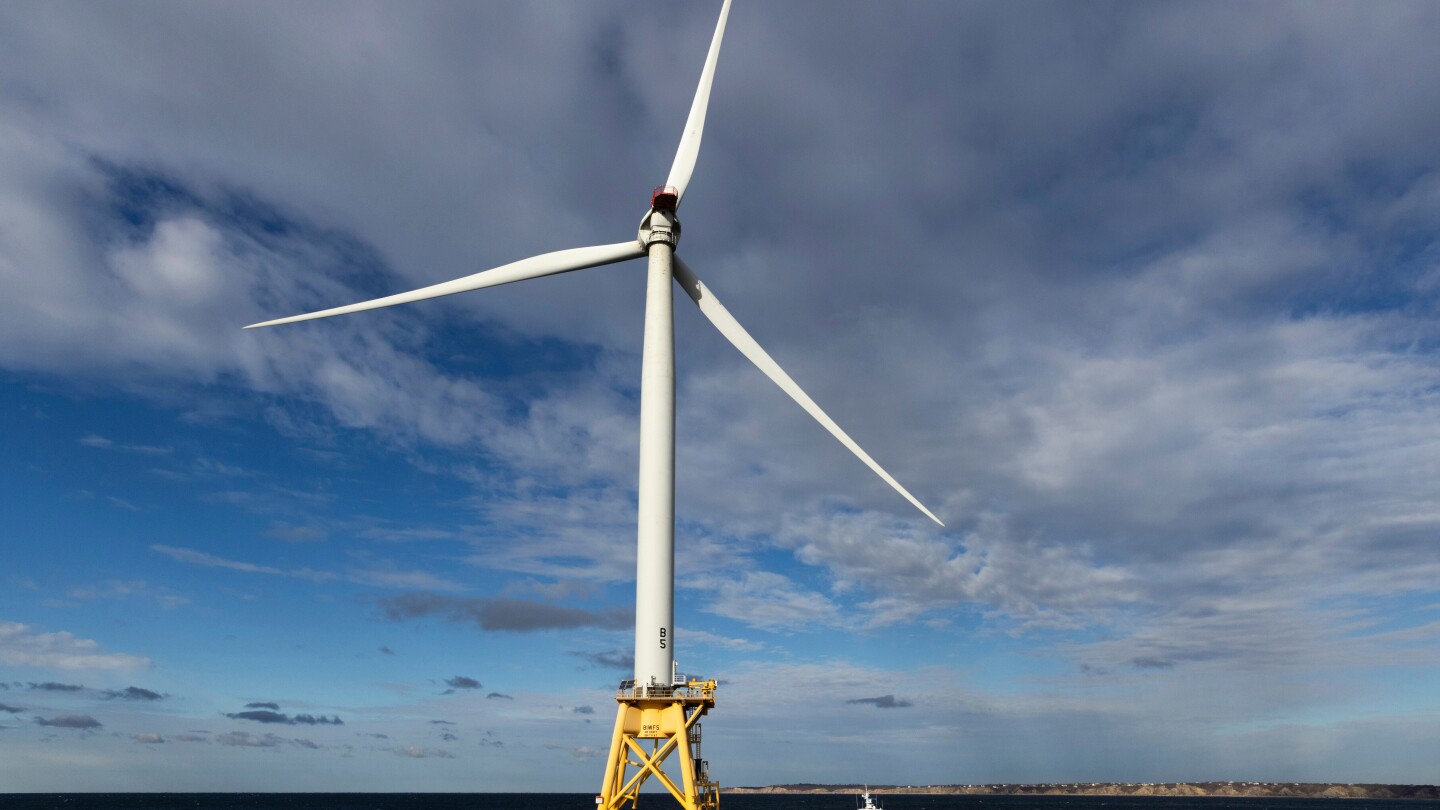
A federal judge in Massachusetts struck down President Donald Trump’s executive order that blocked wind energy projects on Monday, ruling the action “arbitrary and capricious” and in violation of U.S. law.
Judge Patti Saris of the U.S. District Court for the District of Massachusetts vacated Trump’s January 20 executive order, which had paused leasing and permitting for wind energy projects on federal lands and waters since his first day in office.
The ruling comes as a victory for a coalition of 17 state attorneys general and Washington, D.C., led by New York Attorney General Letitia James, who challenged the order’s legality. Massachusetts Attorney General Andrea Joy Campbell celebrated the decision, stating it protected significant state investments in offshore wind.
“Massachusetts has invested hundreds of millions of dollars into offshore wind, and today, we successfully protected those important investments from the Trump administration’s unlawful order,” Campbell said in a statement.
The coalition argued that Trump lacked the authority to halt project permitting and that doing so jeopardized states’ economies, energy portfolios, public health initiatives, and climate goals. The group includes Arizona, California, Colorado, Connecticut, Delaware, Illinois, Maine, Maryland, Massachusetts, Michigan, Minnesota, New Jersey, New Mexico, New York, Oregon, Rhode Island, Washington state, and Washington, D.C.
These states collectively invested hundreds of millions of dollars to develop wind energy infrastructure and even more on upgrading transmission lines to bring wind energy to the electrical grid.
The Trump administration has consistently opposed renewable energy development, particularly offshore wind, while advocating for fossil fuel expansion. White House spokesperson Taylor Rogers defended the administration’s position, claiming offshore wind projects received “unfair, preferential treatment” during the Biden administration.
“President Trump has ended Joe Biden’s war on American energy and unleashed America’s energy dominance to protect our economic and national security,” Rogers said.
In court, Justice Department lawyer Michael Robertson argued that the executive order merely paused permitting rather than halting it entirely, while Interior Secretary Doug Burgum reviewed the environmental impact of wind projects. The order had claimed there were “alleged legal deficiencies underlying the federal government’s leasing and permitting” of wind projects under the Biden administration.
Wind energy currently represents America’s largest renewable energy source, providing approximately 10% of the nation’s electricity generation, according to the American Clean Power Association. The sector’s growth has been substantial in recent years, with many states incorporating wind power into their clean energy transition plans.
Marguerite Wells, executive director of the Alliance for Clean Energy New York, emphasized wind energy’s importance to the nation’s electrical grid. “Wind is currently one of the most cost-effective ways to generate power and is being used successfully not only in the United States but across the world,” she said. “With this ruling behind us, projects can now be judged on their merits.”
The court’s decision could significantly impact the U.S. energy landscape, particularly as states work to meet ambitious climate goals that rely heavily on renewable energy expansion. Several offshore wind projects that had been stalled by the executive order may now proceed through the permitting process.
Kit Kennedy of the Natural Resources Defense Council characterized the ruling as beneficial for multiple stakeholders, including consumers, union workers, U.S. businesses, and the environment. Kennedy criticized the Trump administration’s approach, stating the wind order “has been a devastating blow to workers, electricity customers, and the reliability of the power grid.”
Judge William Young had previously allowed the case to proceed against Interior Secretary Burgum while dismissing actions against Trump and other Cabinet secretaries. Young permitted the states to pursue claims that blocking permits for wind energy projects violates the Administrative Procedure Act, which outlines the regulatory process, though not on constitutional grounds.
The ruling represents a significant legal setback for the Trump administration’s energy policy and could have broad implications for renewable energy development across the country as the industry seeks regulatory certainty to support continued investment and growth.
Fact Checker
Verify the accuracy of this article using The Disinformation Commission analysis and real-time sources.

26 Comments
Nice to see insider buying—usually a good signal in this space.
Interesting update on Federal judge throws out Trump order blocking development of wind energy. Curious how the grades will trend next quarter.
Good point. Watching costs and grades closely.
Good point. Watching costs and grades closely.
Uranium names keep pushing higher—supply still tight into 2026.
Good point. Watching costs and grades closely.
Good point. Watching costs and grades closely.
Uranium names keep pushing higher—supply still tight into 2026.
Good point. Watching costs and grades closely.
Good point. Watching costs and grades closely.
Uranium names keep pushing higher—supply still tight into 2026.
Exploration results look promising, but permitting will be the key risk.
Good point. Watching costs and grades closely.
Good point. Watching costs and grades closely.
Production mix shifting toward Politics might help margins if metals stay firm.
Good point. Watching costs and grades closely.
Silver leverage is strong here; beta cuts both ways though.
Good point. Watching costs and grades closely.
Uranium names keep pushing higher—supply still tight into 2026.
Good point. Watching costs and grades closely.
Silver leverage is strong here; beta cuts both ways though.
Good point. Watching costs and grades closely.
Exploration results look promising, but permitting will be the key risk.
Good point. Watching costs and grades closely.
Exploration results look promising, but permitting will be the key risk.
Good point. Watching costs and grades closely.