


Listen to the article
A federal judge indicated Tuesday he will likely deny a request to temporarily halt President Donald Trump’s controversial White House ballroom project, dealing a blow to preservationists who sought to pause the construction.
U.S. District Judge Richard Leon said during a hearing that the National Trust for Historic Preservation failed to demonstrate “irreparable harm” would occur if the project continues, though he plans to issue his final decision on the restraining order by Wednesday.
The judge did caution the administration against making underground decisions about plumbing and gas lines that would predetermine the scope of the above-ground ballroom construction. “The court will address it, I assure you of that,” Leon warned, indicating he would intervene if the administration attempted to circumvent proper procedures.
While denying immediate relief, Leon scheduled another hearing in January on the Trust’s broader request to pause the ballroom project until it undergoes independent reviews and receives congressional approval.
Trump quickly claimed victory at a Hanukkah event Tuesday night, thanking the judge for his “courage in making the proper decision.” In his remarks, Trump referenced a $400 million cost for the ballroom, notably higher than the previously announced $300 million price tag.
The controversy centers on Trump’s decision to bypass traditional oversight channels. The administration began construction without first seeking input from two key federal review panels: the National Capital Planning Commission and the Commission of Fine Arts. Both bodies typically provide crucial oversight for major changes to the White House grounds.
Trump has systematically stacked the planning commission with allies, including chairman Will Scharf, who previously indicated he expected to receive the ballroom plans this month. During Tuesday’s hearing, Leon referenced a two-week timeline for plan submission. Adam Gustafson, principal deputy assistant attorney general, confirmed the administration had “initiated outreach” to the panel but hadn’t set a specific date.
In a move that further diminished oversight, Trump recently dismissed all members of the Commission of Fine Arts without naming replacements.
The administration’s legal team argued the Trust lacks standing to sue and claimed construction must continue for unspecified national security reasons. Gustafson also asserted Trump is exempt from the federal laws the Trust claims he violated.
“Irreparable harm” cannot be demonstrated, Gustafson maintained, because ballroom plans remain unfinalized and above-ground construction isn’t scheduled to begin until April at earliest.
Tad Heuer, representing the National Trust, countered that each day construction proceeds without independent review allows the government to say “wait and find out” about the ballroom’s eventual appearance. “It’s not about the need for a ballroom. It’s about the need to follow the law,” Heuer argued.
Carol Quillen, president and CEO of the National Trust, reiterated the organization remains “fully committed to upholding the interests of the American people and advocating for compliance with the law,” including proper review and public comment opportunities.
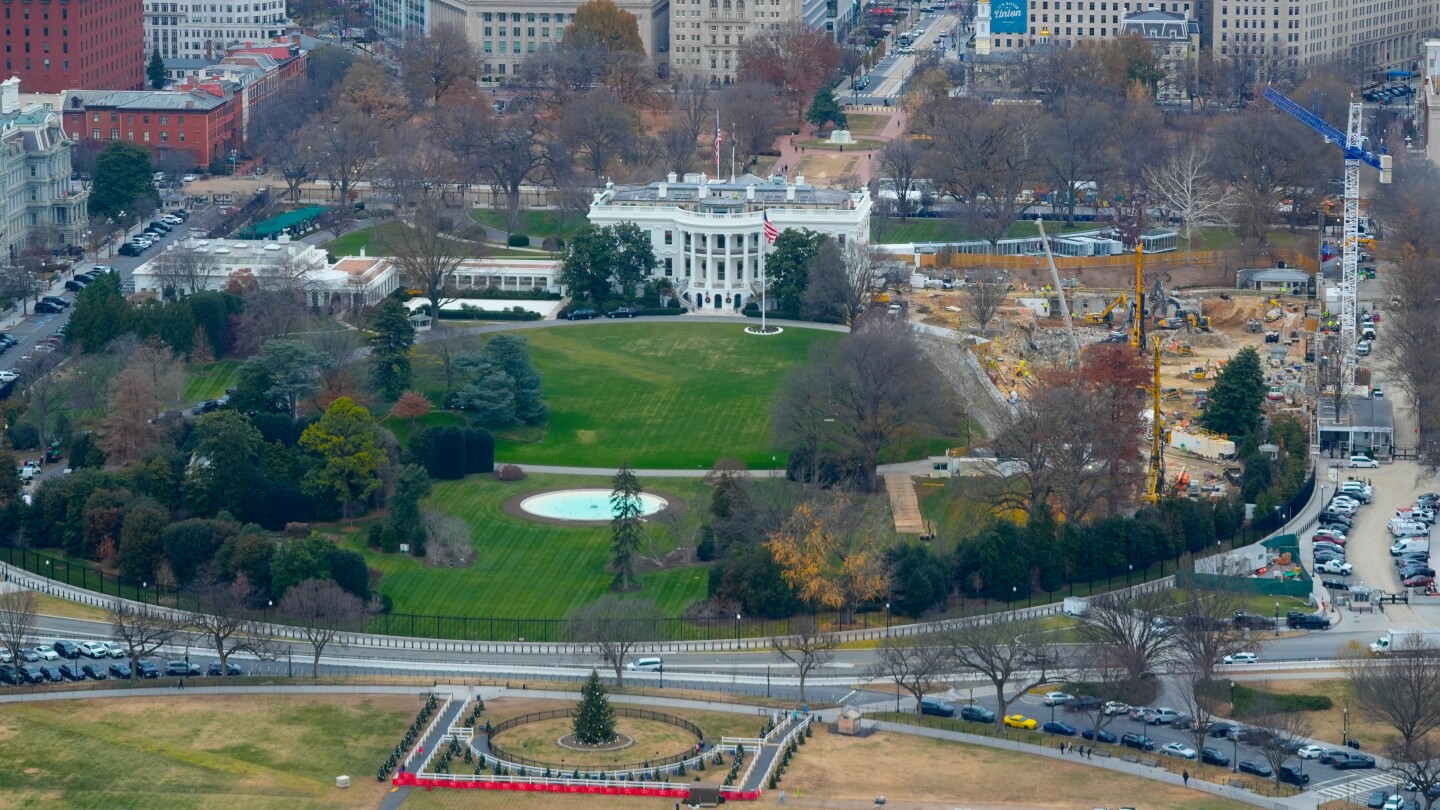
The White House announced the ballroom project over the summer, and by late October, Trump had already demolished the East Wing to make way for the new facility. The president has claimed the ballroom, designed to accommodate 999 people, will be funded entirely through private donations rather than taxpayer money.
The case highlights tensions between presidential prerogatives and historic preservation concerns at one of America’s most iconic buildings. Preservationists worry the project could permanently alter the historic character of the White House complex without proper oversight, while the administration maintains the president has authority to make improvements to the executive residence.
Fact Checker
Verify the accuracy of this article using The Disinformation Commission analysis and real-time sources.

8 Comments
While the judge appears inclined to deny the immediate restraining order, his warning about the administration trying to circumvent procedures is notable. Transparency and proper reviews are essential for a project of this scale and historical significance.
This legal battle over the White House ballroom project highlights the ongoing tensions between development and historic preservation. It will be interesting to see how the judge navigates these competing interests in his final ruling.
Absolutely. These types of cases often involve complex trade-offs, and the judge will need to carefully weigh the various factors at play. It’s good he seems committed to a thorough review process.
This is an interesting legal battle over Trump’s controversial ballroom project. I’m curious to see how the judge’s final decision on the restraining order shakes out, and whether the administration will try to circumvent proper procedures.
The broader request for a pause on the ballroom project until independent reviews and congressional approval is an important step. Preserving historical sites is crucial, but the project’s details and impacts also need to be fully understood.
I’m a bit skeptical of Trump’s claims of victory here. The judge’s comments suggest he has concerns about the administration’s conduct, even if he’s not granting the immediate restraining order. This is far from over.
It’s good the judge is signaling he’ll intervene if the administration tries to make decisions that predetermine the scope of construction without proper reviews. Preserving historical sites is important, but the project details also need to be carefully examined.
Agreed. The judge seems to be taking a balanced approach, denying immediate relief but keeping the door open for a broader review in January. It will be important to see how this all plays out.