


Listen to the article
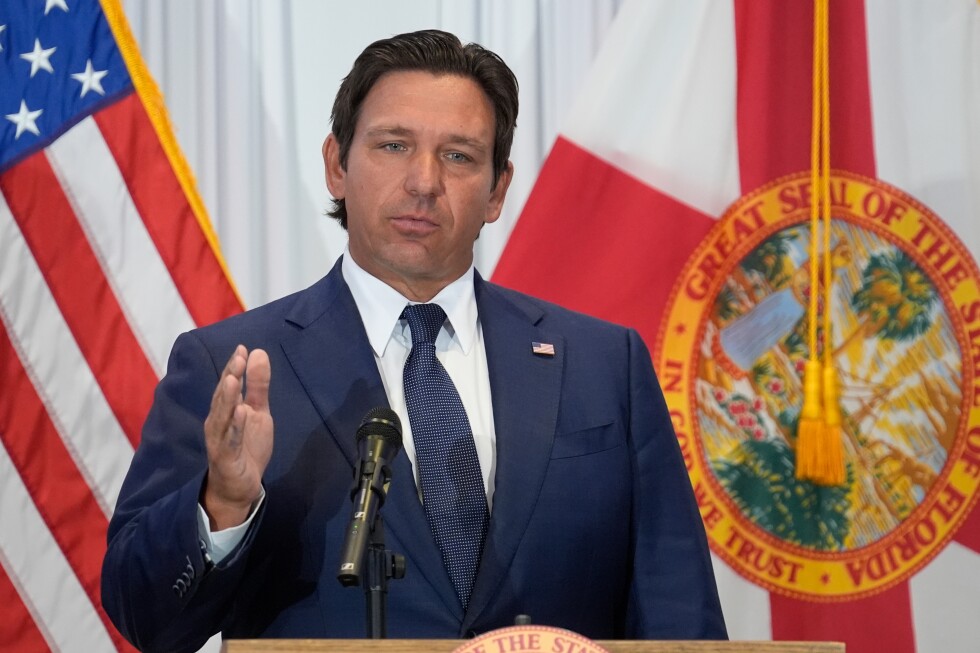
A federal judge has temporarily blocked Florida Governor Ron DeSantis from enforcing an executive order that designated two Muslim organizations as foreign terrorist groups, ruling that the action likely violates constitutional protections.
U.S. District Judge Mark E. Walker issued a preliminary injunction on Wednesday, preventing the state from implementing the controversial order while legal challenges proceed. In his ruling, Walker sharply criticized the governor’s actions, writing that the First Amendment “bars the governor from continuing the troubling trend of using an executive office to make a political statement at the expense of others’ constitutional rights.”
The executive order, issued in late 2023, targeted the Council on American-Islamic Relations (CAIR) and the Muslim Brotherhood, labeling both as terrorist organizations. CAIR, one of the largest Muslim civil rights organizations in America with more than 20 chapters nationwide, promptly filed a lawsuit in December alongside other civil rights groups.
The legal challenge argues that DeSantis overstepped his authority by unilaterally designating these organizations as terrorist groups—a power typically reserved for federal authorities. The lawsuit contends the order is both unlawful and unconstitutional.
“The question before this Court is whether the Governor can, in a non-emergency situation, unilaterally designate one of the largest Muslim civil rights groups in America as a ‘terrorist organization’ and withhold government benefits from anyone providing material support or resources to the group,” Judge Walker noted in his decision.
DeSantis’s order directed Florida state agencies to prevent the named organizations and anyone providing them “material support” from receiving state contracts, employment opportunities, or funding from any executive or cabinet agency. This broad restriction potentially affects numerous individuals and entities across Florida, which is home to an estimated 500,000 Muslim residents.
CAIR has consistently maintained that it has always condemned terrorism and violence. The organization alleges in its lawsuit that DeSantis targeted them specifically for defending free speech rights, particularly in cases where government officials attempted to silence or punish individuals expressing support for Palestinian human rights.
The timing of DeSantis’s order coincides with rising tensions and increased reports of Islamophobia during more than two years of conflict in Gaza. Civil rights advocates have noted that anti-Muslim bias has taken various forms since September 11, 2001, and appears to be intensifying amid the ongoing Middle East conflicts.
The Muslim Brotherhood, the other organization named in the order, is a pan-Arab Islamist political movement with branches across several countries. In January 2024, President Donald Trump issued a separate executive order designating three Middle Eastern branches of the Muslim Brotherhood as terrorist organizations, though the federal designation differs significantly from DeSantis’s state-level action.
Legal experts have questioned the constitutional validity of a state governor attempting to designate terrorist organizations, pointing out that such determinations typically fall under federal jurisdiction through agencies like the U.S. State Department.
The governor’s office did not immediately respond to requests for comment on Wednesday evening following Judge Walker’s ruling. The injunction will remain in effect while the lawsuit proceeds through the federal court system.
The case highlights ongoing tensions between state-level political actions and federal authority, particularly on matters related to national security and civil liberties. It also underscores the complex intersection of free speech protections, religious freedom, and counterterrorism efforts in American governance.
As the legal battle continues, civil liberties organizations are closely monitoring the case for its potential implications on state powers and the protection of minority religious groups across the country.
Fact Checker
Verify the accuracy of this article using The Disinformation Commission analysis and real-time sources.

12 Comments
While I understand the governor’s intent to address potential security concerns, designating these Muslim organizations as ‘terrorists’ without due process is a clear overreach. I’m glad the courts have stepped in to protect their constitutional rights.
This ruling is an important affirmation of the First Amendment’s protections for civil rights organizations, even when they are unpopular with those in power. I hope it serves as a warning against such blatant attempts at political discrimination.
Absolutely. Targeting minority groups in this way is unacceptable, regardless of the political motivations. The judge’s decision upholds core American values of equality and due process.
I’m glad to see the courts step in to block this blatantly unconstitutional attempt to target Muslim civil rights groups. Designating them as ‘terrorists’ without due process is unacceptable.
This is a concerning development. Designating civil rights groups as ‘terrorist organizations’ without due process raises serious constitutional concerns. I hope the judge’s ruling is upheld to protect fundamental freedoms.
Agreed. The governor’s actions seem politically motivated and clearly unconstitutional. I’m glad the courts stepped in to block this overreach.
The governor’s attempt to label Muslim groups as ‘terrorists’ is troubling and smacks of discrimination. I’m glad the judge recognized this as a likely violation of the First Amendment.
This is an important victory for civil liberties and the rule of law. The governor’s actions appear to be a transparent attempt to score political points by scapegoating minority groups. I’m glad the judge saw through this.
Agreed. Using the power of the state to brand organizations as ‘terrorists’ for political gain is a dangerous abuse of authority. The judge’s ruling is a welcome check on such overreach.
While I understand concerns about extremism, the governor’s sweeping designation of these Muslim groups as ‘foreign terrorists’ is highly problematic. I’m glad the courts have stepped in to protect their constitutional rights.
This ruling is an important check on executive overreach. The governor shouldn’t be able to unilaterally brand organizations as ‘terrorists’ without following proper legal procedures. Preserving civil liberties is crucial.
Absolutely. The judge’s decision upholds fundamental constitutional principles. I hope this sets a precedent against such politically-motivated attacks on minority groups.