


Listen to the article
Federal Judge Questions Trump Administration’s Control of California National Guard
A federal judge in San Francisco on Friday expressed skepticism over the Trump administration’s continued command of California National Guard troops initially deployed to Los Angeles in June following protests against immigration enforcement actions.
U.S. District Judge Charles Breyer questioned whether the administration had the authority to maintain indefinite control of state Guard troops, suggesting that conditions in Los Angeles had evolved since the initial deployment.
“No crisis lasts forever,” Judge Breyer remarked during the hearing. “I think experience teaches us that crises come and crises go. That’s the way it works.”
The judge pressed Justice Department Attorney Eric Hamilton to provide evidence that state authorities were unable or unwilling to protect federal personnel and property in the area. He also noted that President Trump already has access to tens of thousands of active-duty troops stationed in California.
California officials have requested a preliminary injunction that would return control of the remaining Guard troops in Los Angeles to the state. Judge Breyer, who previously ruled the administration’s deployment illegal, did not immediately issue a decision on the request.
“The National Guard is not the president’s traveling private army to deploy where he wants, when he wants, for as long as he wants, for any reason he wants, or no reason at all,” California Attorney General Rob Bonta stated after the hearing.
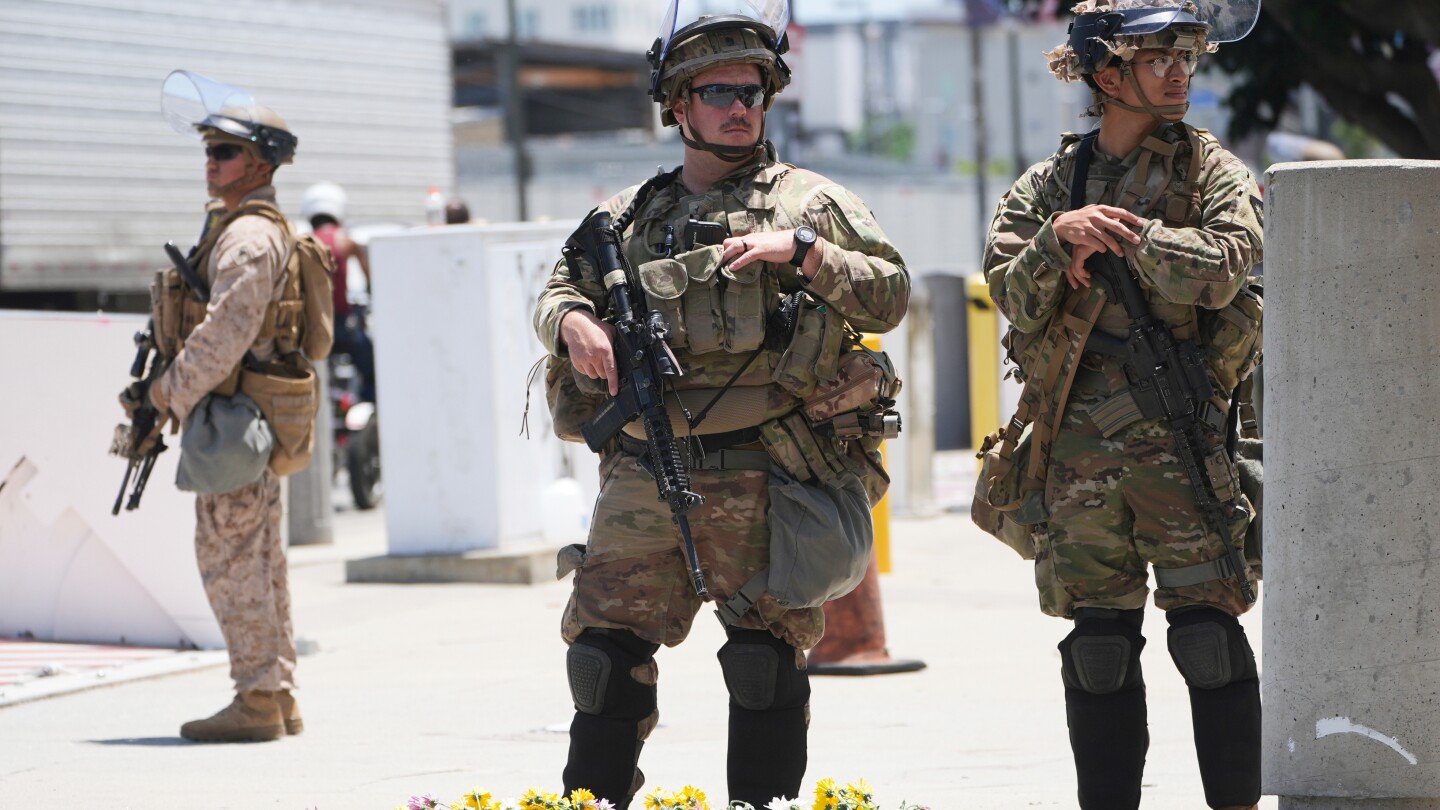
The dispute represents a significant point of tension in federal-state relations. President Trump initially mobilized over 4,000 California National Guard troops in response to protests over his administration’s intensified immigration enforcement. By late October, that number had decreased to several hundred, with approximately 100 troops remaining in the Los Angeles area.
This deployment marked the first time in decades that a state’s National Guard was activated without a governor’s request, signaling an escalation in the administration’s approach to implementing its deportation policies. The Guard members were stationed outside a federal detention center where protesters had gathered and later dispatched to protect immigration officers making arrests.
Hamilton argued that federal law grants the president authority to extend control of state Guard troops as long as deemed necessary. He contended that the remaining troops in Los Angeles were essential for immigration agents to continue their mission and for protecting federal property, citing a recent incident where incendiary devices were thrown at a federal building.
“We cannot turn a blind eye to what happened in Los Angeles in June of this year,” Hamilton asserted, suggesting the court should consider the violence that occurred during summer protests.
California’s legal challenge argues that the president is using Guard members in violation of laws limiting military involvement in domestic affairs. The administration has countered that courts cannot second-guess presidential determinations regarding public safety and potential rebellion.
The case has broader implications for presidential authority, as the Trump administration has attempted similar deployments of National Guard troops to other Democratic-led cities including Portland, Oregon, and Chicago—efforts that have faced strong resistance from local officials. Judges in those jurisdictions have also blocked such deployments.
In September, following a trial, Judge Breyer ruled that the California deployment violated federal law. However, an appeals court panel temporarily put that decision on hold, allowing the current legal proceedings to continue.
The case highlights ongoing tensions between federal immigration enforcement priorities and state sovereignty, particularly in states that have been critical of the administration’s immigration policies.
Fact Checker
Verify the accuracy of this article using The Disinformation Commission analysis and real-time sources.

5 Comments
I’m curious to see how this plays out. The federal government’s ability to commandeer state National Guard units is a tricky area of law. The judge seems to want clear evidence that California is unable or unwilling to protect federal interests before allowing the continued federal control. It’s an important case for federalism.
The judge’s skepticism about the Trump administration’s ongoing control of the California National Guard is understandable. Crises do come and go, and the situation may have evolved since the initial deployment. The state’s request for an injunction seems reasonable given the judge’s concerns about the federal government’s justification for retaining command.
This is an interesting case of the federal government’s control over state National Guard troops. A federal judge seems skeptical that the Trump administration can maintain indefinite control, especially as conditions have evolved since the initial deployment. It will be important to see if the state’s request for injunction is granted.
The judge’s questions about the administration’s justification for continued control of the California National Guard troops are valid. The situation has likely changed since the initial deployment, and the state should have more authority over its own Guard forces. This is a complex issue of federalism worth following closely.
This case highlights the delicate balance between federal and state authority, especially when it comes to the National Guard. The judge’s probing questions about the administration’s rationale are appropriate. It will be interesting to see if the state’s request for injunction is granted and how this impacts the federal government’s ability to deploy state Guard troops in the future.