


Listen to the article
Immigration expert Mark Krikorian has warned that America’s immigration crisis will persist as long as the nation’s elite reject the concept of immigrant “Americanization,” citing a fundamental identity problem within the country’s leadership.
Krikorian, who serves as executive director of the Center for Immigration Studies, told Fox News Digital that declining immigrant assimilation stems not only from mass immigration but from a leadership crisis where American identity has been devalued.
“It’s not the immigrants’ doing, it’s a problem we have where our leadership classes, whether it’s government, business, education, religion, everything, aren’t really sure about whether it is even a good thing to be an American,” said Krikorian, a prominent authority on immigration policy.
According to Krikorian, America’s elite increasingly view immigration restrictions as fundamentally unjust, comparing them to Jim Crow laws. “The left increasingly, even at the mainstream level, they see immigration law itself as a kind of Jim Crow, that it’s immoral to keep anyone from moving to the United States if they want to,” he explained.
This ideological shift has created an environment where immigrant assimilation faces significant barriers. While previous generations of immigrants were encouraged to embrace American identity through education and cultural integration, Krikorian argues that today’s approach is markedly different.
“What’s different today from, say, 100 or 200 years ago, is we now have a leadership class that doesn’t even believe in assimilation. They think Americanization is a dirty word,” he said, contrasting his immigrant mother’s education experience with current practices in America’s public schools.
The United States currently has the highest percentage of foreign-born residents in its history—nearly 16%, exceeding even the Ellis Island era. This demographic shift, coupled with technological advances that allow immigrants to maintain strong connections to their home countries, has transformed the immigration experience.
“In the old days, immigrating meant you had no choice but to reorient your emotional and psychological attachments to the new country,” Krikorian said. “Nowadays, you can FaceTime home every day. You can hop on a plane and go to your cousin’s wedding in Bogota for a three-day weekend.”
The Trump administration, with Homeland Security Secretary Kristi Noem, has implemented aggressive immigration enforcement measures, with over 515,000 deportations since January. However, Krikorian cautioned that deportations alone cannot address the fundamental issues at play.
Local communities across the country, from New York to Massachusetts, have struggled to accommodate the influx of migrants. The strain on resources has become increasingly apparent as state and local governments attempt to manage the situation.
Krikorian proposes that the solution must include a renewed embrace of American identity by leaders at all levels. He points to the upcoming 250th anniversary of the Declaration of Independence in 2026 as “a real opportunity” to shift the national narrative.
“We have succeeded in Americanizing large numbers of people in the past from very different societies,” Krikorian noted, acknowledging that while the challenge is greater now, it remains achievable with proper focus and commitment.
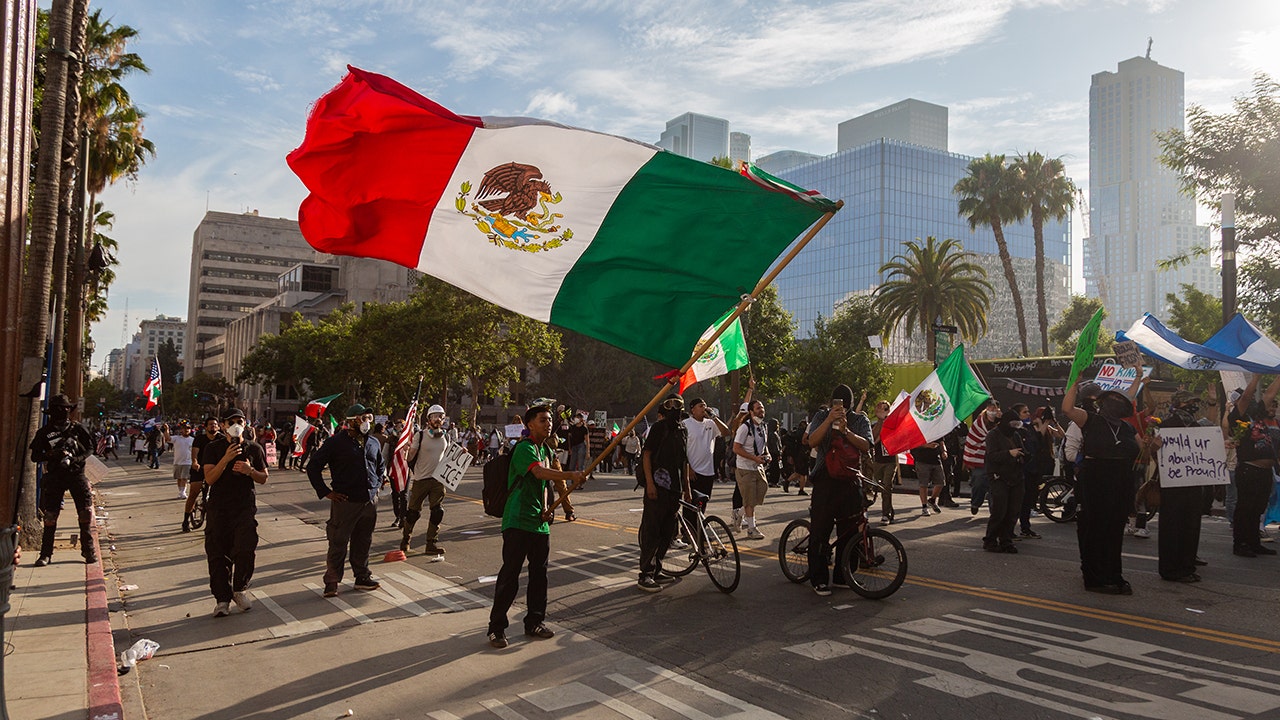
Anti-immigration enforcement protests have occurred in various cities, including Los Angeles, highlighting the deep political divisions surrounding immigration policy. These tensions reflect broader disagreements about America’s identity and values.
The Biden administration’s immigration policies were criticized for contributing to record border crossings, while the Trump administration has taken a more restrictive stance. This policy pendulum reflects the ongoing national debate about immigration, assimilation, and American identity.
“We have a real serious challenge ahead of us, but they’re challenges that we can meet if we respond,” Krikorian concluded, suggesting that America’s immigration challenges are surmountable with the right approach to national identity and assimilation.
Fact Checker
Verify the accuracy of this article using The Disinformation Commission analysis and real-time sources.

9 Comments
This is a sensitive topic that often brings out strong opinions. While the expert’s views are thought-provoking, I’d be interested to hear perspectives from a wider range of experts and stakeholders before forming my own conclusion.
As an immigrant myself, I have mixed feelings about the expert’s claims. While there may be some truth to concerns about declining assimilation, I’m not sure the issue is as simple as elite opposition to Americanization. The reality is likely more nuanced.
As an immigrant myself, I can see both sides of this debate. On one hand, immigrants enrich our culture and economy. But there’s also value in a shared sense of national identity and civic duties. It’s a delicate balance that policymakers need to navigate carefully.
Interesting perspective on the challenges of immigrant assimilation. While immigration is a complex issue, maintaining a shared national identity and values seems important for social cohesion. I wonder if there are ways to balance openness and inclusivity with upholding core American principles.
The expert’s claim that America’s elite are discouraging immigrant assimilation is certainly provocative. I’m curious to learn more about the data and analysis behind this assertion. It’s a sensitive topic that warrants careful, fact-based examination.
The expert raises some valid concerns about declining immigrant assimilation. However, I’m not sure his perspective fully captures the nuances at play. Immigration policies and societal attitudes are often shaped by a range of political and economic factors.
This is a sensitive topic that often brings out strong opinions. While the expert’s claims are interesting, I’d encourage looking at data and analysis from a variety of sources before drawing conclusions. Immigration and assimilation are nuanced issues without easy answers.
This is a sensitive and divisive topic. I appreciate the expert’s insights, though I may not agree with all his views. Assimilation is a two-way street – immigrants should make efforts to integrate, but the host society also needs to be welcoming and inclusive. What do others think?
The expert’s perspective on the immigration crisis and lack of immigrant assimilation is thought-provoking, though I suspect the reality is more complex. I’d be curious to hear views from a range of experts and stakeholders to get a more balanced understanding of this issue.