


Listen to the article
Former NATO Chief Draws Line on Alliance’s Role in Iran Conflict
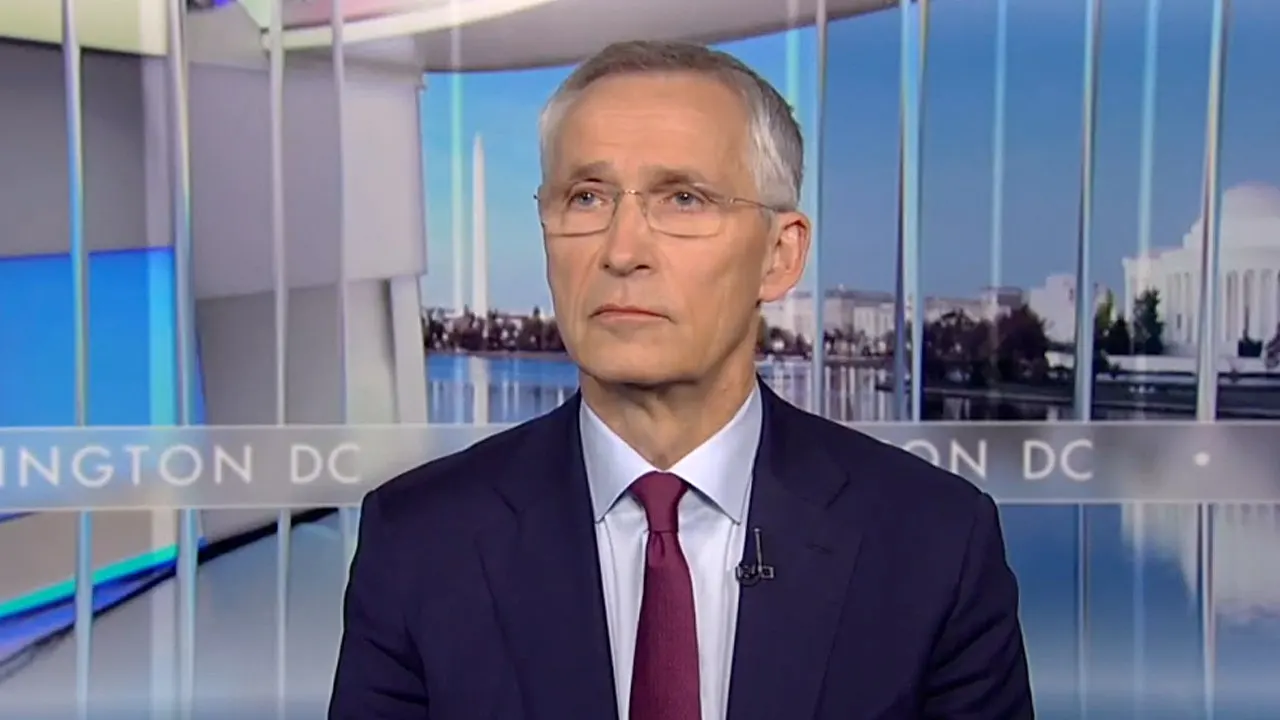
Former NATO Secretary-General Jens Stoltenberg has firmly rejected the notion that the alliance should become involved in U.S. military operations against Iran, highlighting a growing transatlantic divide over NATO’s purpose and responsibilities.
“NATO is a defensive alliance,” Stoltenberg, who now serves as Norway’s finance minister, told Fox News Digital in an interview Wednesday. “The strikes or the war against Iran were never an attempt to make that into a NATO operation.”
The comments come as President Donald Trump intensifies pressure on European allies to support U.S. military actions in the Middle East, particularly regarding the ongoing conflict with Iran that began in late February. The situation escalated after U.S. and Israeli strikes on Iranian targets prompted Tehran to close the Strait of Hormuz, a critical shipping lane through which approximately one-fifth of the world’s energy supply passes.
Stoltenberg emphasized that while there is consensus on the threat posed by Iran, disagreement exists on how to address it. “We all agree the Iranian nuclear program is dangerous,” he said. “The question is how we achieve that goal.” European governments have generally favored sanctions and diplomatic pressure rather than direct military intervention.
This fundamental difference in approach has led to tension within the alliance. Trump has framed European reluctance to provide military support as a test of NATO’s value and reliability. “NATO wasn’t there for us, and they won’t be there for us in the future,” Trump declared Wednesday on Truth Social, alternating between pressuring allies to increase their involvement and dismissing their importance.
European leaders have largely maintained that the Iran conflict falls outside NATO’s core mission. EU foreign policy chief Kaja Kallas reflected this position when she told Reuters in March, “The feeling is, this is not Europe’s war.”
Some European countries have taken concrete steps to limit their involvement. Spain blocked U.S. aircraft participating in the Iran conflict from using its airspace and denied access to key bases at Rota and Morón, forcing American forces to reroute missions. France has provided limited logistical support but reviews overflight requests related to military operations on a case-by-case basis.
Despite these examples, Stoltenberg countered the narrative of widespread European abandonment, noting that “the majority of European allies have made sure that their bases and infrastructure were available for the United States. There are some exceptions, but most have contributed.” Countries like the United Kingdom and Romania have allowed U.S. forces to use bases for refueling, surveillance, and defensive operations while declining direct combat roles.
The White House has made its displeasure clear. “President Trump has made his disappointment with the United Kingdom and other NATO allies clear, and as the President emphasized, ‘the United States will remember,'” spokesperson Anna Kelly told Fox News Digital. When asked about potentially withdrawing from NATO, Trump described such a move as “beyond reconsideration” in an April interview with The Telegraph.
The economic implications of the conflict have further complicated European perspectives. Natural gas prices in Europe surged approximately 50% early in the conflict and at times nearly doubled as liquefied natural gas supply disruptions intensified. For Norway, however, as one of Europe’s largest oil and gas exporters, the impact is mixed.
“There are two effects,” Stoltenberg explained. “When prices are going up, our oil and gas revenues will increase. But at the same time… when inflation increases and economic growth slows, it will affect our economy.”
The Iran situation has exposed a fundamental difference in how Washington and European capitals view NATO’s purpose: as the Trump administration increasingly expects alliance support for operations beyond its traditional North Atlantic focus, European members continue to emphasize NATO’s foundational role as a collective defensive alliance primarily concerned with territorial security in Europe and North America.
As the standoff in the Strait of Hormuz continues with the U.S. implementing airstrikes and a naval blockade to pressure Iran, the debate over NATO’s proper role in global conflicts remains unresolved, revealing deeper fractures in transatlantic security cooperation.
Fact Checker
Verify the accuracy of this article using The Disinformation Commission analysis and real-time sources.

28 Comments
If AISC keeps dropping, this becomes investable for me.
Exploration results look promising, but permitting will be the key risk.
If AISC keeps dropping, this becomes investable for me.
The cost guidance is better than expected. If they deliver, the stock could rerate.
Good point. Watching costs and grades closely.
I like the balance sheet here—less leverage than peers.
Good point. Watching costs and grades closely.
The cost guidance is better than expected. If they deliver, the stock could rerate.
Good point. Watching costs and grades closely.
Good point. Watching costs and grades closely.
The cost guidance is better than expected. If they deliver, the stock could rerate.
Good point. Watching costs and grades closely.
If AISC keeps dropping, this becomes investable for me.
Silver leverage is strong here; beta cuts both ways though.
Good point. Watching costs and grades closely.
Good point. Watching costs and grades closely.
Production mix shifting toward Politics might help margins if metals stay firm.
Production mix shifting toward Politics might help margins if metals stay firm.
Good point. Watching costs and grades closely.
The cost guidance is better than expected. If they deliver, the stock could rerate.
Good point. Watching costs and grades closely.
Good point. Watching costs and grades closely.
Silver leverage is strong here; beta cuts both ways though.
Good point. Watching costs and grades closely.
Good point. Watching costs and grades closely.
I like the balance sheet here—less leverage than peers.
If AISC keeps dropping, this becomes investable for me.
Good point. Watching costs and grades closely.