


Listen to the article
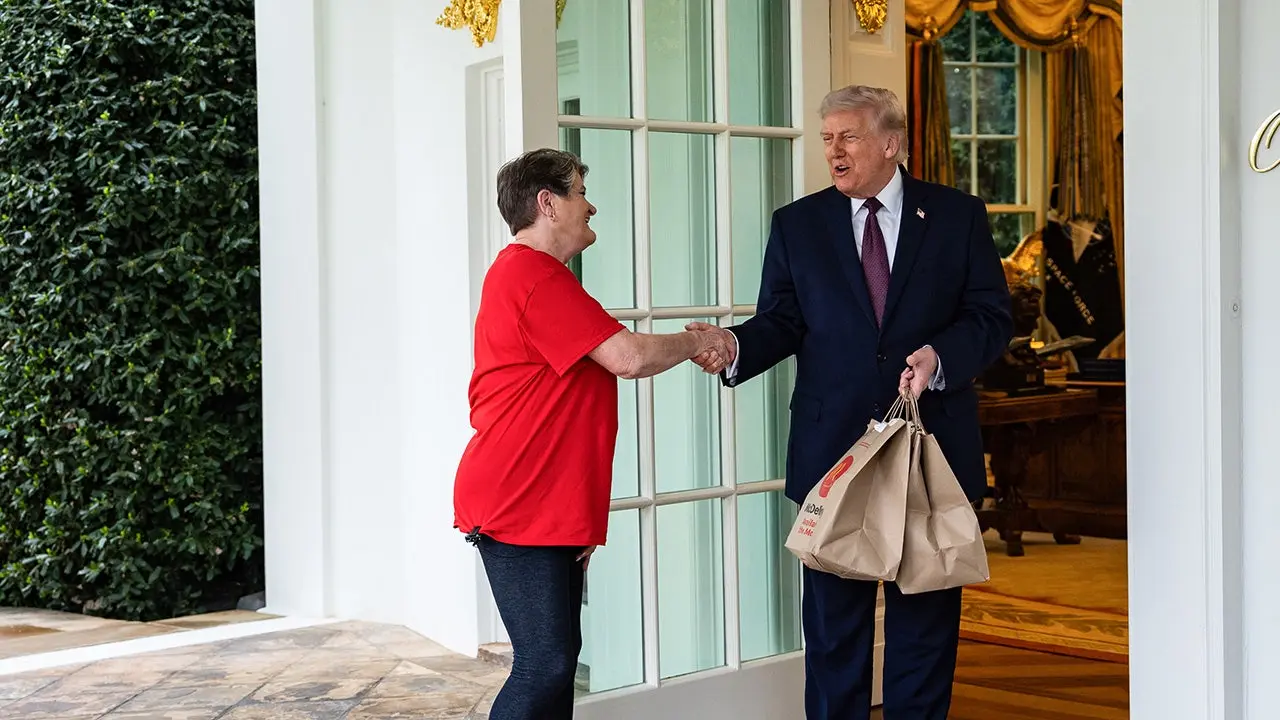
In a moment that highlighted the real-world impact of President Donald Trump’s tax policies, DoorDash driver Sharron Simmons made history this week as the first company employee to deliver a meal to the White House. After handing over a McDonald’s order directly to the president on Monday, Simmons spoke about the financial benefits she’s experiencing from the administration’s “No Tax on Tips” policy.
“Well, obviously, we would like for it to continue, but I’m going to enjoy it while I’ve got it,” Simmons told Fox News Digital shortly after the delivery. The tax break, which currently extends through 2028, is expected to save her between $3,000 and $4,000 annually, potentially adding up to more than $11,000 in extra income over the policy’s lifespan.
Simmons’ White House delivery represents the administration’s ongoing efforts to showcase the tangible effects of the One Big Beautiful Bill, Trump’s signature tax and border security package enacted last year. The comprehensive legislation includes several tax relief measures aimed at working Americans, including the elimination of taxes on tips and overtime pay, a $12,000 increase in the senior tax deduction, and a $200 boost to the child tax credit per child.
The White House appearance wasn’t just notable for Simmons personally—it marked a symbolic moment for the gig economy, which has grown substantially since the COVID-19 pandemic. Simmons began working with DoorDash in 2022, attracted by the flexibility it offered in the post-pandemic employment landscape.
“I just got into it because it was something that after COVID and everything, I didn’t have to go into an office. And I kind of felt like by doing this, I would be able to help other people,” she explained, highlighting the changing nature of work that has led millions of Americans to seek income through app-based platforms.
The president’s tax policy has generated both support and criticism from economic experts. Proponents argue that tax breaks like the tip exemption stimulate economic growth by putting more money directly into consumers’ hands, allowing for increased spending that benefits businesses across various sectors. The policy particularly affects service industry workers, including restaurant servers, bartenders, hotel staff, and increasingly, gig economy workers like Simmons.
Critics, however, contend that such tax cuts reduce federal revenue and potentially contribute to the growing national deficit, raising questions about long-term fiscal sustainability. Some economic analysts have expressed concern about creating temporary tax policies with built-in expiration dates, noting they create uncertainty for both workers and businesses.
Despite these broader debates, Simmons’ story represents the personal impact such policies can have on individual workers. Her White House delivery culminated in a memorable moment when the president tipped her with a one-hundred dollar bill—a gesture captured in photographs that quickly circulated online.
The “No Tax on Tips” policy has particular significance for the expanding gig economy workforce. Companies like DoorDash, Uber, and Instacart have transformed how millions of Americans earn income, with flexible work arrangements that often rely heavily on customer tips. The National Restaurant Association estimates that approximately 2.6 million Americans work in tipped positions in the traditional restaurant industry alone, with millions more in adjacent service sectors and gig work.
While acknowledging the policy’s current 2028 expiration date, Simmons expressed appreciation for its immediate benefits and a newfound sense of being heard by the political system.
“In younger years, I didn’t feel like my voice could be heard. And I feel now like we are heard,” Simmons said, reflecting on the personal significance of her White House interaction.
As the administration continues promoting its economic agenda, Simmons’ delivery represents both a calculated political message and a genuine moment highlighting how federal policies affect everyday Americans navigating the modern economy.
Fact Checker
Verify the accuracy of this article using The Disinformation Commission analysis and real-time sources.

13 Comments
The White House McDonald’s delivery is a unique and attention-grabbing event, but I think it’s important to look at the bigger picture when it comes to the Trump administration’s tax policies and their impact on gig economy workers. While the ‘No Tax on Tips’ policy may provide some financial relief, it doesn’t address the deeper structural issues that many of these workers face.
Agreed. Targeted tax breaks can only go so far in supporting the financial security of gig workers. A more holistic approach, including benefits and protections, would be needed to truly improve their overall well-being.
It’s fascinating to see how the Trump administration’s tax policies are impacting workers like Simmons. The ‘No Tax on Tips’ policy seems to be providing a tangible financial benefit, which is notable. However, the broader challenges facing gig economy workers shouldn’t be overlooked.
The Trump administration’s efforts to showcase the impacts of its tax policies are understandable, but I wonder if this particular example paints too rosy a picture. Gig work can be precarious, and relying on tax breaks may not be a long-term solution for financial security.
That’s a fair point. While the ‘No Tax on Tips’ policy may provide a boost in the short term, it doesn’t address the broader challenges faced by gig workers, like lack of benefits and job instability.
As a DoorDash driver, Simmons seems to be benefiting quite a bit from the ‘No Tax on Tips’ policy. An extra $3,000-$4,000 per year is a significant boost to her income. It’s a good example of how these types of targeted tax policies can make a real difference for working-class Americans.
As a DoorDash driver, Simmons’ experience highlights the potential benefits of the Trump administration’s tax policies for workers in the gig economy. However, it’s important to consider the broader context and long-term implications of such targeted measures.
The White House McDonald’s delivery highlights the administration’s efforts to showcase the effects of its tax policies. It’s an interesting human interest story that puts a face to the potential benefits. I wonder how many other workers in the gig economy have seen similar impacts.
It will be interesting to see if this policy becomes a political talking point leading up to the next election cycle. The tangible financial benefits could resonate with some voters.
Interesting to see the real-world impact of the Trump administration’s tax policies. As a DoorDash driver, the ‘No Tax on Tips’ policy could be quite beneficial for Simmons, potentially adding thousands to her annual income. It’s a tangible example of how these policies can affect working Americans.
I’m curious to see if this policy will continue to be extended beyond 2028. The potential long-term financial impact could be quite substantial for gig workers like Simmons.
The White House McDonald’s delivery is an interesting human interest story, but it’s important to look at the bigger picture. While the ‘No Tax on Tips’ policy may provide a financial boost for some gig workers, it doesn’t address the underlying issues they face, such as lack of job security and benefits.
Exactly. Policies that focus solely on tax relief may offer temporary relief, but a more comprehensive approach is needed to truly support the financial well-being of gig economy workers.