


Listen to the article
The U.S. Justice Department has quietly withdrawn from an agreement with Houston that aimed to address illegal dumping in predominantly Black and Latino neighborhoods, part of a broader dismantling of environmental justice initiatives under the Trump administration.
The federal monitoring program, which began in 2023 and was set to continue until June 2026, ended earlier this year without public announcement, according to three former law enforcement officials who spoke on condition of anonymity. The decision parallels a similar move in rural Alabama, where the DOJ recently terminated a settlement addressing wastewater problems in predominantly Black communities.
Community advocates in Houston’s Trinity/Houston Gardens neighborhood report that without federal oversight, city officials have become less responsive to residents’ concerns about persistent illegal dumping.
“We have nothing to fight with anymore,” said resident Huey German-Wilson, who leads the Trinity/Houston Gardens Super Neighborhood community group. “We’ve got a watered-down EPA. We’ve got no assistance from the DOJ. The city has no reason to respond to us, and we’re finding that they are truly ignoring us.”
The Justice Department declined to comment on the termination of the agreement, and Houston officials did not respond to requests for comment.
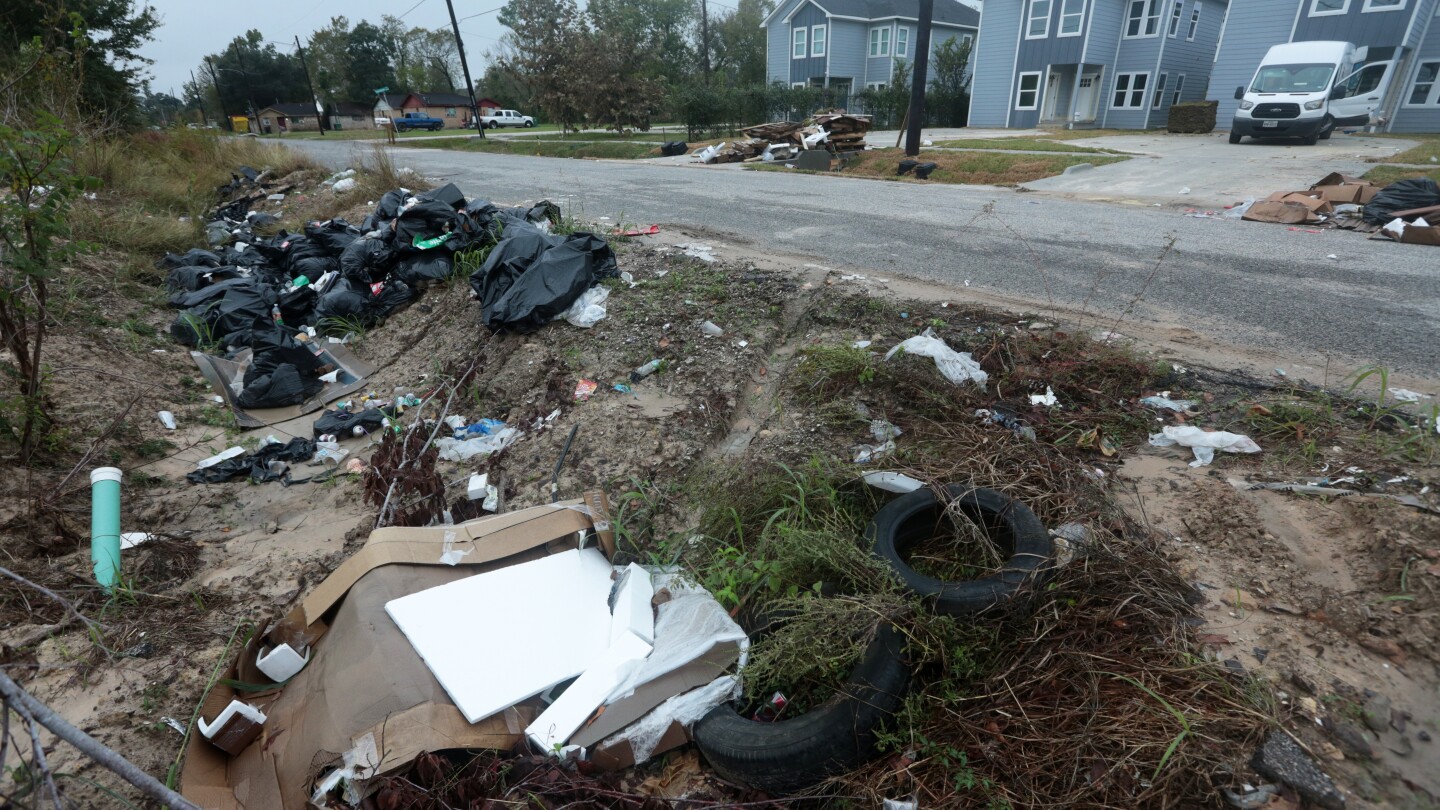
The original DOJ investigation in 2023 found that the Houston neighborhood had been overwhelmed by illegal dumping of trash, medical waste, mattresses, and even dead bodies and “rotting carcasses” – descriptions that local officials contested as exaggerated. The settlement required three years of federal monitoring, public data reporting, and community outreach.
Former Houston Mayor Sylvester Turner, who died earlier this year after winning a U.S. House seat, had initially called the DOJ investigation “absurd, baseless and without merit,” though his administration ultimately agreed to the federal monitoring. The city has previously highlighted its efforts to combat illegal dumping through a multimillion-dollar initiative called One Clean Houston.
The cancellation of the Houston agreement comes as part of a broader policy shift. The Trump administration has directed federal agencies to eliminate jobs and programs dedicated to environmental justice following the president’s executive order to halt diversity, equity and inclusion programs across the federal government.
“The DOJ will no longer push ‘environmental justice’ as viewed through a distorting, DEI lens,” Assistant Attorney General Harmeet Dhillon said in April when announcing the end of the Alabama agreement. “President Trump made it clear: Americans deserve a government committed to serving every individual with dignity and respect, and to expending taxpayer resources in accordance with the national interest, not arbitrary criteria.”
The Alabama settlement had addressed severe sanitation issues in Lowndes County, a majority-Black area between Selma and Montgomery where soil conditions make traditional septic systems ineffective. Residents had been exposed to raw sewage due to what federal investigators described as a pattern of inaction and neglect by officials.
On Tuesday, the Justice Department announced significant changes to its regulations under Title VI of the Civil Rights Act of 1964, requiring “proof of actual discrimination, rather than enforcing race- or sex-based quotas or assumptions.” The department stated it was ending regulations that “required recipients of federal funding to make decisions based on race.”
In Houston, illegal dumping has long been contentious. The DOJ’s involvement began after Lone Star Legal Aid filed a complaint documenting how city response times for cleanup were significantly slower in Black and Latino neighborhoods compared to predominantly white communities.
German-Wilson noted that during the first year of federal monitoring, the city’s performance improved markedly with faster pickups, new vehicles, and additional workers. “We could email everybody,” she said, “and they were listening very intently to see what they could do differently.”
This year, Houston has received thousands of illegal dumping complaints, according to publicly available city data. The backlog was evident during a recent visit to the neighborhood, where piles of trash and debris included mattresses, construction waste, a toilet, mulch, wooden fence pieces, and car parts. Some piles began as uncollected yard waste.
“We also find animals dumped in the midst of all of this,” German-Wilson said. “It’s never-ending.”
Environmental justice advocates have criticized the termination of both settlements as shortsighted. Catherine Coleman Flowers, who filed the civil rights complaint that prompted the Alabama investigation, expressed frustration with the administration’s approach.
“What I find appalling about this administration’s position is these people have not gone out into the community to see how folks are impacted,” Flowers said. “The message they’re sending is they really don’t understand what they’re doing. There are Americans across the board suffering from these issues.”
Fact Checker
Verify the accuracy of this article using The Disinformation Commission analysis and real-time sources.

20 Comments
This is troubling news. Environmental justice issues must remain a priority, even if politically inconvenient. Monitoring and enforcement are critical to protect vulnerable communities from illegal dumping and pollution.
You’re right, this withdrawal of federal oversight is a worrying step backwards. Marginalized neighborhoods deserve the same environmental protections as wealthier areas.
The DOJ’s decision to end this monitoring program is very disappointing. Addressing illegal dumping and environmental racism should be a top priority, not an afterthought. Residents of all communities deserve equal access to a clean and healthy environment.
I agree completely. This move by the DOJ is a clear step backwards in the fight for environmental justice. The federal government must do more to ensure that marginalized communities are not disproportionately burdened by environmental hazards.
The DOJ’s decision to end this monitoring program is deeply concerning. Illegal dumping disproportionately impacts minority and low-income communities – this undermines environmental justice and public health.
Agreed, this sends a troubling message about the administration’s priorities. Vulnerable communities should not be left to fend for themselves against environmental hazards.
The DOJ’s decision to end this monitoring program is very troubling. Illegal dumping disproportionately impacts marginalized communities – this is a clear environmental justice issue that needs to be addressed.
You’re absolutely right. This withdrawal of federal oversight is a major setback in the fight for environmental justice. Vulnerable residents should not be left to bear the burden of illegal dumping alone.
This move by the DOJ is highly concerning. Addressing illegal dumping and environmental racism should be a priority, not an afterthought. Residents deserve better protection and support.
I agree, this decision sends the wrong message. All communities deserve equal access to a clean and healthy environment, regardless of their demographics or income levels.
The DOJ’s retreat from this environmental justice initiative is very concerning. Illegal dumping disproportionately affects marginalized communities, and federal oversight and enforcement are crucial to address this issue.
Agreed, this is a worrying development. All residents deserve to live in a clean and safe environment, regardless of their race or socioeconomic status. The DOJ should be strengthening, not weakening, its commitment to environmental justice.
This decision by the DOJ is deeply troubling. Illegal dumping is a serious environmental and public health issue that disproportionately impacts low-income and minority communities. Federal oversight and enforcement are essential to address these disparities.
You make an excellent point. The withdrawal of this monitoring program is a major setback for environmental justice. The DOJ should be doing more, not less, to protect vulnerable communities from the harms of illegal dumping and pollution.
This is a concerning development. The DOJ’s withdrawal from this environmental justice initiative is a worrying sign that the administration is backtracking on its commitment to protecting vulnerable communities from illegal dumping and other environmental harms.
Absolutely. This decision undermines efforts to ensure equitable access to a clean and healthy environment for all residents, regardless of their race or socioeconomic status. The DOJ should be strengthening, not weakening, its support for environmental justice programs.
This is a disappointing step backwards for environmental justice. Illegal dumping is a serious problem that harms public health, and low-income and minority communities deserve robust protection and support.
I share your concerns. The DOJ’s decision to end this monitoring program undermines efforts to ensure equitable access to a clean and healthy environment for all.
It’s disappointing to see the DOJ retreat from this important environmental justice initiative. Illegal dumping is a serious issue that harms public health, especially in disadvantaged areas.
This is a regrettable development. The federal government should be strengthening, not weakening, its efforts to address environmental injustices in underserved communities.