


Listen to the article
Catholic Charities Rio Grande Valley Faces Federal Funding Suspension After DHS Investigation
Catholic Charities of the Rio Grande Valley has been suspended from receiving federal funds and now faces an unusually severe six-year debarment following a Department of Homeland Security investigation that uncovered major grant violations, according to internal DHS documents.
The action, taken by FEMA on behalf of DHS on November 19-20, follows months of warnings and data reviews that auditors claim revealed sweeping inaccuracies, significant gaps in migrant records, and substantial billing outside federally allowed timeframes. The suspension applies only to this South Texas affiliate, not to Catholic Charities USA or any other Catholic Charities chapters nationwide.
In a formal Notice of Suspension and Proposed Debarment, DHS officials accused the organization of submitting migrant data so inconsistent that the agency could not verify whether many of the people it reported serving had ever appeared in DHS databases.
“The proposed punishment is extraordinarily severe for a nonprofit organization,” noted one government contracting expert familiar with federal debarment procedures. “While standard debarments typically run three years, DHS is seeking a six-year ban, citing what it describes as a ‘pervasive’ pattern of problems spanning multiple programs over multiple years.”
If finalized, the designation would effectively cut the Rio Grande Valley organization off from most federal funding streams and flag it in the government-wide System for Award Management, warning agencies and pass-through partners not to issue new grants or contracts.
The DHS findings center heavily on migrant intake data the nonprofit submitted to justify millions of dollars in payments through FEMA’s Emergency Food and Shelter-Humanitarian program and its newer Shelter Services Program. FEMA stated it had requested names, alien registration numbers (A-numbers), countries of origin, and evidence of DHS encounters for individuals the organization claimed to assist.
According to investigators, Catholic Charities RGV assured FEMA that all migrants had A-numbers properly recorded and claimed its spreadsheets were accurate within a 4.99% margin of error. However, auditors reported a dramatically different reality, with sample reviews showing A-numbers frequently missing, truncated to just four digits, or replaced with phone numbers and other unrelated data.
Error rates reached as high as 42% across three different spreadsheets reviewed by the agency. In one test of 100 names, FEMA reported it could not locate 61 of them in DHS systems at all, raising questions about whether services were actually provided to these individuals.
Investigators also highlighted at least 248 instances where the organization allegedly billed for services outside the 45-day window federal rules allow for migrants released from DHS custody. The agency noted such activity could potentially constitute “criminal activity,” though DHS has not indicated whether it plans to refer the case for criminal prosecution.
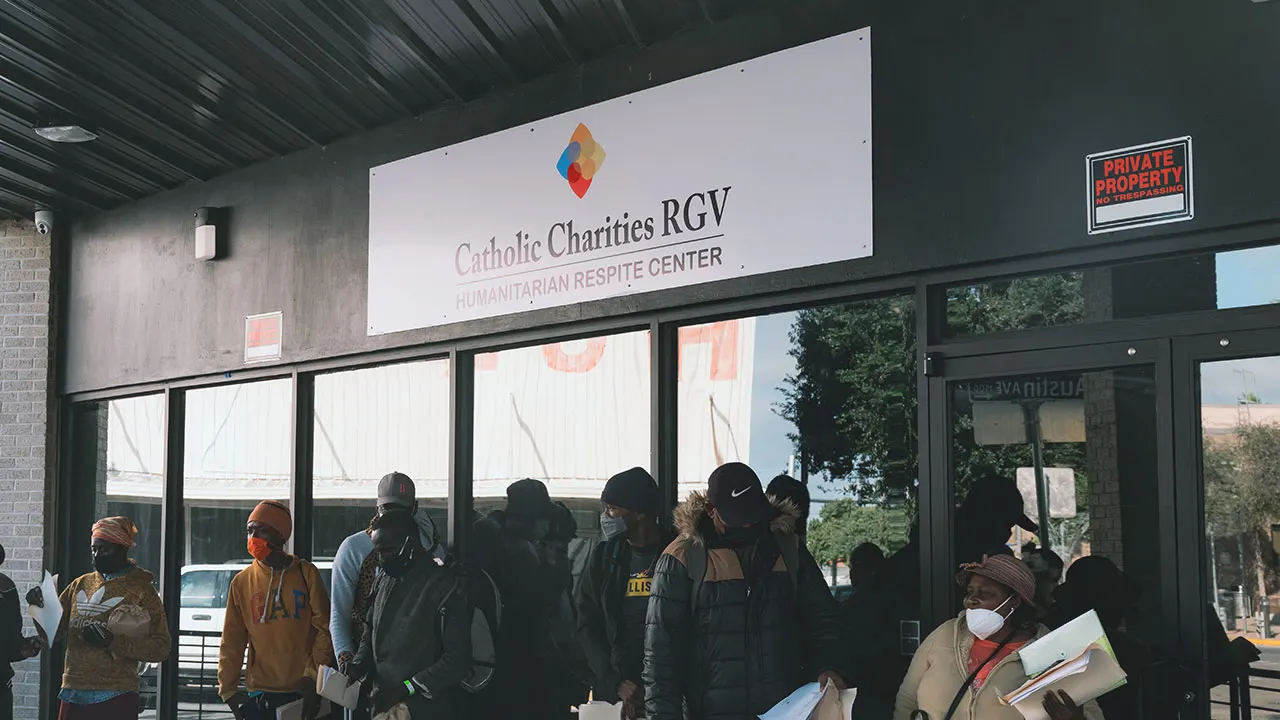
Sister Norma Pimentel, who leads the Rio Grande Valley branch, has been a prominent national figure in migrant ministry for years. Her Humanitarian Respite Center processed more than 1,500 migrants daily at the height of border crossings, and she has received praise from the Vatican for her humanitarian work. Sister Pimentel has been an outspoken advocate against restrictive immigration policies, particularly the Remain in Mexico policy, which she said caused migrant families to suffer “tremendously.”
The organization’s prominence has made it a political focal point in Texas, where Attorney General Ken Paxton has pursued cases against several Catholic migrant shelters, accusing them of encouraging illegal immigration. A judge earlier this year blocked Paxton from deposing Sister Pimentel in a separate legal matter involving Annunciation House in El Paso.
Catholic Charities of the Rio Grande Valley now has 30 days to respond, submit documentation, or request a meeting to argue it remains “presently responsible.” If it does not provide an adequate response, the six-year debarment would likely take effect.
While the organization continues operating during the suspension period, it cannot receive new federal awards until the matter is resolved. It is unclear whether other local shelters or municipal partners can absorb the South Texas caseload if the nonprofit ultimately loses its federal funding. Although CCRGV currently serves far fewer migrants than in previous years, it remains one of the region’s key intake points for newly arrived migrants.
DHS indicated to reporters that further debarments may occur as investigations remain ongoing, suggesting possible broader implications for migrant services funding across the border region.
Fact Checker
Verify the accuracy of this article using The Disinformation Commission analysis and real-time sources.

15 Comments
A 6-year debarment seems like an extremely harsh punishment for a nonprofit organization. I hope there is room for Catholic Charities to remediate the issues and potentially have the punishment reduced through the proper legal channels.
Agreed, the severity of the proposed debarment is concerning. Transparency and accountability are important, but the punishment should fit the violations if they can be properly addressed.
Maintaining proper oversight and accountability in government-funded social services programs is crucial. While the alleged violations by Catholic Charities are concerning, I hope there is an opportunity for them to address the issues and potentially avoid such a severe punishment.
You make a good point. These types of programs need strong controls, but also fair and proportionate consequences when problems arise. I’m curious to see how this case is ultimately resolved.
This is an interesting case that highlights the challenges of overseeing and administering migrant support programs. I’ll be curious to see how this situation develops and whether the Catholic Charities organization is able to address the alleged issues.
You raise a good point. It will be important for all parties involved to work constructively to resolve this in a way that protects the interests of the migrants being served.
This seems like a serious case of alleged misconduct in a migrant program. I’m curious to learn more about the details of the DHS investigation and what specific violations were uncovered. It will be important to ensure proper oversight and accountability in these types of government-funded social services programs.
Agreed, the proposed debarment of 6 years does seem quite severe. I wonder if there are opportunities for the organization to address the issues and potentially have the punishment reduced.
The DHS investigation uncovered some significant alleged problems, including inconsistent migrant data and billing issues. I wonder what steps Catholic Charities will take to address these concerns and regain the trust of the government and public.
Migrant programs and social services can be complex to manage, especially with government funding involved. I hope the truth comes out through a fair and thorough investigation process. Maintaining integrity in these programs is critical.
This is a complex issue involving government funding, migrant support services, and allegations of misconduct. I’ll be following this story closely to see how it develops and what the ultimate resolution is for Catholic Charities and the migrants they serve.
This is a tricky situation that highlights the challenges of administering migrant support programs. I’ll be interested to see what additional details emerge from the DHS investigation and how Catholic Charities responds to the allegations.
This is a complex situation involving migrant support services, government funding, and allegations of misconduct. I’ll be following this story closely to see how it unfolds and what the ultimate resolution is.
The alleged misconduct in this migrant program is troubling, but a 6-year debarment seems like an extremely harsh punishment. I hope there is room for Catholic Charities to address the issues and potentially have the punishment reduced through the proper channels.
Agreed, the severity of the proposed debarment is concerning. Transparency and accountability are important, but the consequences should fit the violations if they can be properly remedied.