


Listen to the article
Democratic Governors Chart Affordability-Focused Strategy for 2026 Elections
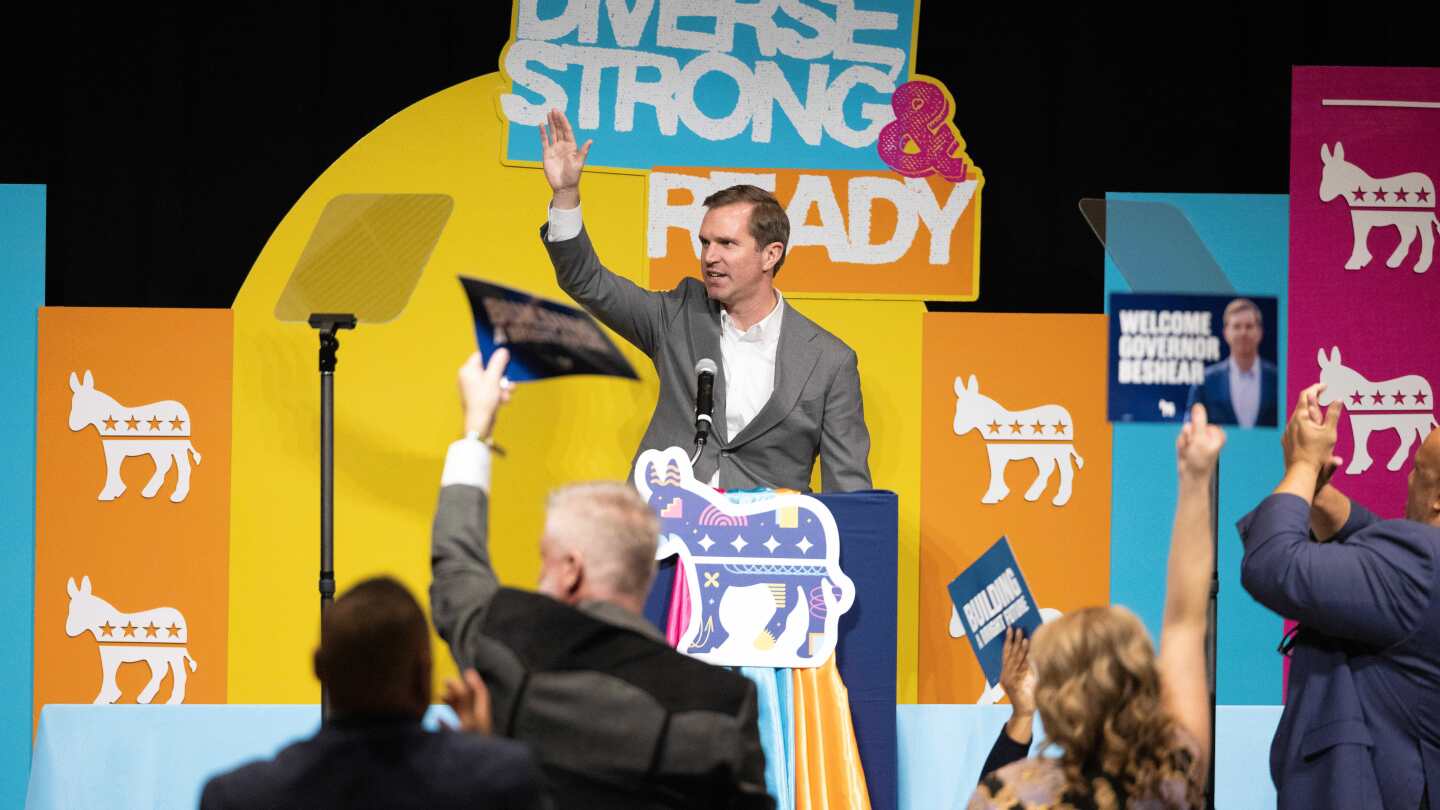
Democratic governors gathered in Phoenix this weekend to strategize for the 2026 midterm elections, seeking to build on their recent victories in New Jersey and Virginia despite Republican dominance at the federal level.
With Donald Trump back in the White House and Republicans controlling both houses of Congress, Democratic state leaders are coalescing around a focused economic message they believe can resonate even in conservative-leaning states.
“We have to be laser focused on people’s everyday concerns and how hard life is right now for the American people,” said Kentucky Governor Andy Beshear, the newly appointed chairman of the Democratic Governors Association and a potential 2028 presidential candidate. “Everybody wants the economy of tomorrow, but paying the bills today is absolutely critical.”
The strategy allows Democrats to challenge Trump’s economic policies without alienating his supporters. “Yes, we can judge a president, and we should judge this president,” Beshear noted. “But we never judge those voters.”
This strategic pivot comes as blue states face unprecedented pressure from the Trump administration. The president has deployed the National Guard in California, Oregon, and Illinois over their Democratic governors’ objections, demanded detailed voter data, and threatened to withhold food assistance from states that don’t comply with his immigration enforcement demands.
A dozen candidates and incumbent governors at the meeting emphasized their plans to focus on housing costs, child care expenses, utility bills, and grocery prices during Trump’s second term. This unified messaging approach, however, masks significant divisions within the party about how directly to confront Trump and how to address rising costs.
The recent election of moderate national security Democrats Mikie Sherrill and Abigail Spanberger as governors in New Jersey and Virginia, alongside democratic socialist Zohran Mamdani’s victory in the New York mayoral race, demonstrates the diverse approaches to affordability within the party.
The affordability strategy carries risks. Economic conditions could shift, making price concerns less urgent for voters. Additionally, Democrats who win in 2026 may struggle to deliver on cost reduction promises, potentially creating an opening for Republicans in subsequent elections.
New Mexico Governor Michelle Lujan Grisham, who is term-limited, emphasized that Democratic incumbents seeking reelection must demonstrate tangible results while also confronting the Trump administration. “Deliver for me. But don’t forget to fight this,” she said. “They do want both, and finding ways to cross-cut those and marry that I think is going to be a winning set of messages.”
The White House has noticed Democrats’ messaging shift and has begun adjusting its own economic focus. Trump is scheduled to visit Pennsylvania on Tuesday to highlight his inflation-reduction efforts. While he has reduced tariffs on beef and other consumer goods, he has also dismissed affordability concerns as “a Democrat scam” and continues to blame his predecessor for inflation increases that occurred after his return to office.
Currently, inflation is tracking at 3% annually, up from 2.3% in April when Trump implemented extensive import taxes. Treasury Secretary Scott Bessent projected on CBS’s “Face the Nation” that inflation will “roll down strongly next year.”
Democratic governors and candidates widely acknowledged their party’s failure to connect with voters’ economic anxieties in 2024. “I think if there was any failure in the presidential election, it’s we forgot what real people care about,” said Oregon Governor Tina Kotek, who is expected to seek reelection in 2026.
Keisha Lance Bottoms, former Atlanta mayor now running for Georgia governor, echoed this sentiment: “We’ve got to listen to people.”
When Abigail Spanberger takes office in January, Democrats will control 24 governors’ mansions—a significant improvement from their low of 16 following the 2016 election, but still behind Republicans’ 26. In 2026, thirty-six states will hold gubernatorial elections.
The most competitive races are expected in swing states that flipped from Biden to Trump between 2020 and 2024, including Arizona, where Democratic Governor Katie Hobbs seeks reelection, and Nevada, where Republican Governor Joe Lombardo is running for a second term. Wisconsin, Michigan, and Georgia all have open seats likely to attract strong candidate fields and substantial campaign spending.
While Republican-dominated Kansas looks challenging for Democrats following Governor Laura Kelly’s retirement, the party is eyeing opportunities in traditionally red states like Iowa and Ohio.
In Texas, state lawmaker Gina Hinojosa’s gubernatorial campaign emphasizes the state’s growing electoral importance. As Texas is projected to gain at least four House seats and Electoral College votes at the expense of blue states after the 2030 census, Hinojosa argues: “If we don’t flip before the end of the decade, there won’t be Democratic control of Congress or the White House. Because the math doesn’t work.”
Fact Checker
Verify the accuracy of this article using The Disinformation Commission analysis and real-time sources.

7 Comments
This feels like a smart pivot for the Democratic party. Zeroing in on the real financial struggles facing voters, rather than getting bogged down in ideological battles, could be an effective path forward. Curious to see how this plays out in the midterms and beyond.
Interesting strategy by the Democratic governors. Targeting affordability and everyday concerns of voters is a pragmatic approach, especially with Republicans controlling Congress and the White House. It will be crucial to address the real economic challenges people are facing.
I agree, an economic-focused campaign could be an effective way for Democrats to win back some moderate and independent voters. Keeping the message positive and solutions-oriented will be key.
I’m skeptical that this economic-focused strategy will be enough to overcome the partisan dynamics in US politics. While it’s a sensible approach, the deep divisions and mistrust between the parties may make it difficult for Democrats to gain traction, even on pocketbook issues. We’ll have to wait and see.
It’s smart for Democratic governors to focus on pocketbook issues like cost of living. Voters care most about their personal finances, regardless of party affiliation. An economic message that resonates across the political spectrum could pay off big in the midterms.
The Democratic governors seem to recognize the need to reconnect with working-class voters who have drifted away from the party in recent years. Honing in on pocketbook issues like the cost of living is a smart way to try to win them back.
It’s encouraging to see the Democratic governors taking a pragmatic, voter-centric approach. Focusing on the economic concerns of everyday Americans, rather than partisan attacks, could pay dividends at the ballot box. Curious to see how this strategy evolves over the next couple years.